

![[FBM] CARDS](https://cpa.rip/wp-content/uploads/cr-a1/fbm-cards-v1/fbm-cards-logo.svg)

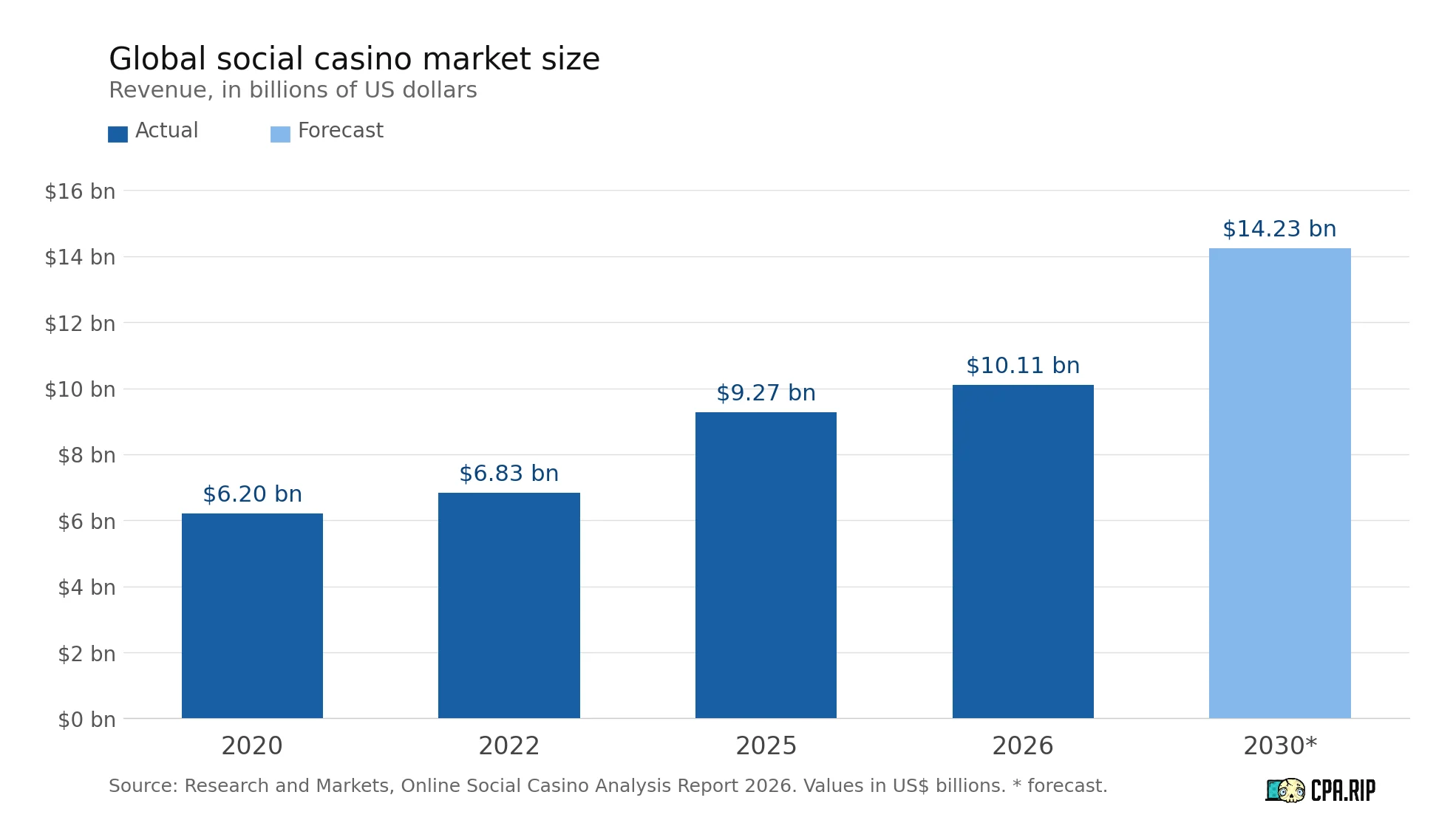
The Social Casino market grew from $6 billion to $10 billion since 2020, with growth to $14 billion expected by 2030. At the same time, only 1–5% of social casino players spend beyond free spins, and 15% of those generate 50% of all revenue.
One of the main reasons the sector keeps growing, and people keep playing social casino specifically, is the fear of losing real money. The paradox is that they spend money anyway, just on “coins” instead of “bets”.
A quick primer for those who don’t know what this is. In Social Casino you can buy in-game currency and use it to spin slots, but you cannot convert your winnings to real money, only keep spinning.
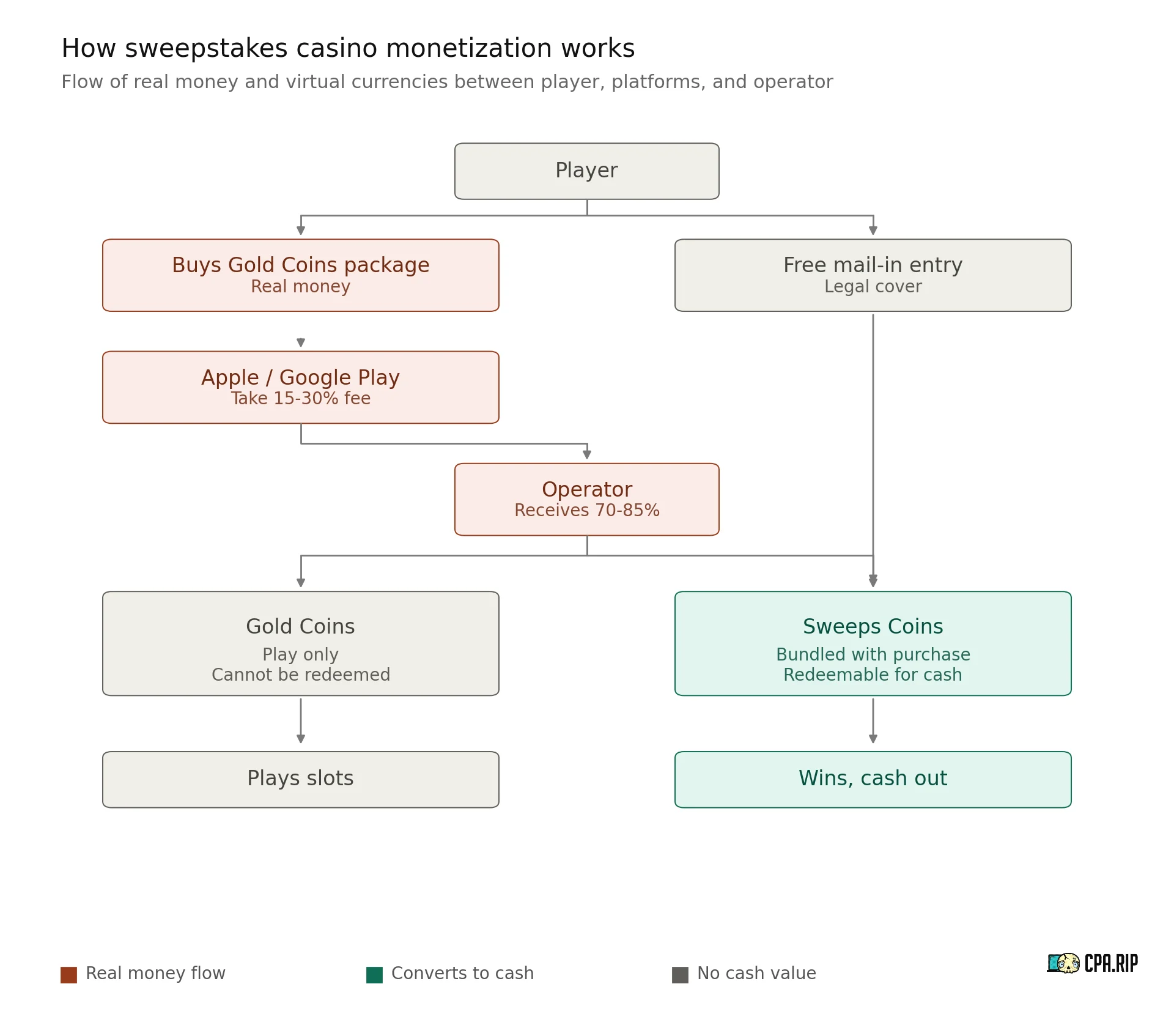
The main growth driver right now is sweepstakes casinos. They run on dual currency: Gold Coins paid for with real money for entertainment, and Sweeps Coins given “as a bonus” with the purchase. Those “bonus” Sweeps Coins can then be redeemed for real money if you win on them. Legally it is a “promotion”, in practice a casino, and it operates in 40+ US states, while regular online casinos are legal only in eight. US sweepstakes sector revenue grew from $3.1 billion in 2022 to roughly $11 billion in 2025.
Bloomberg this week published an investigation into one of the sector’s largest operators, High 5 Games. In February 2025, a federal jury in Tacoma (a city in Washington state, in the western US) awarded $24.9 million in damages to players of the High 5 Casino and High 5 Vegas apps. This was the first ever class-action verdict against a “social casino”. Inside the company, large spenders were called “whales” and retained with bonuses: one customer wrote to support saying she had an addiction and asked to close her account. Instead of blocking purchases, the company credited her with a billion bonus coins, enough for several more days of play.
Operators are not the only ones collecting money in this industry. Apple and Google take 15-30% from every purchase made inside their stores. Law firm Edelson PC is currently leading class actions against Amazon, Meta, Google, and Apple for profiting from these payments.
Since 2025, the US has started shutting down the model. Montana was first to introduce an explicit ban, followed by Connecticut, New Jersey, New York, and California. California accounted for about 20% of the industry’s revenue, and a single law wiped that out. The 2030 forecast still looks optimistic, but if the wave of bans continues, the $14 billion figure can be revised downward.







Comments