






Recently, there have been so many virtual cards that choosing the right one can sometimes be harder than issuing it. They all promise roughly the same thing: cards for advertising, different GEOs, a convenient dashboard, fast issuance, and support. But when it comes to actual work, the nice promises end and very specific questions and workarounds begin.
Will the card work where I need it to? What BINs and countries are available? How much do issuance and top-ups cost? What happens if the card stops working? Can you properly manage dozens of cards when it is no longer about one media buyer, but a team or holding company?
In my opinion, when choosing, you should look not at the number of features, but at how smoothly and transparently you can work with this tool every day.
That is why I decided to look at LuckyCards from this exact perspective.
This material was prepared by one of LuckyCards’ partners.
What Is LuckyCards?
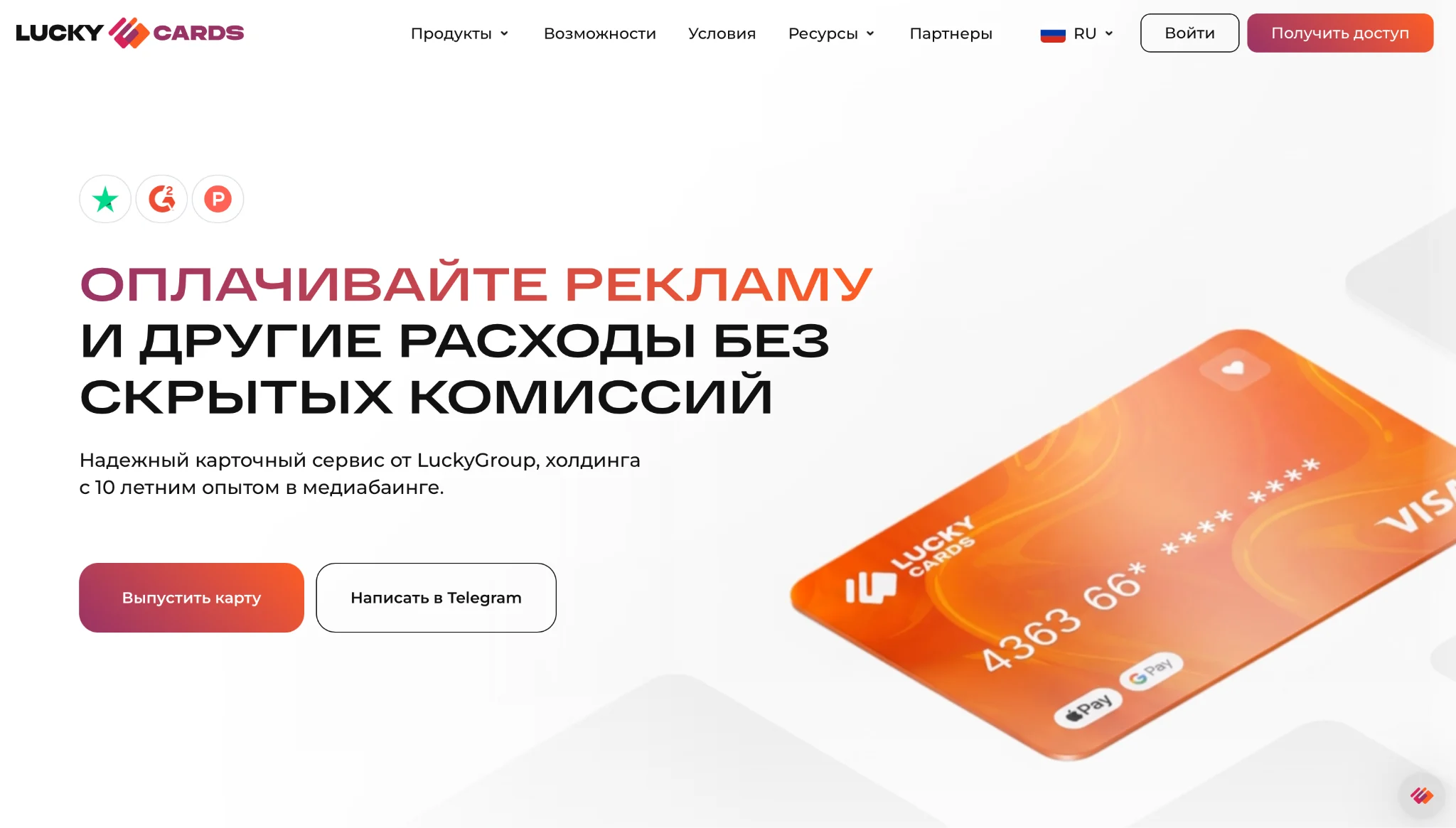
LuckyCards is a virtual Visa and Mastercard card service. You can use them to pay for advertising in Meta Ads*, Google Ads, TikTok Ads, and Taboola, as well as various work-related services, such as ChatGPT, Claude, and Gemini.
An interesting and important point: LuckyCards was originally created as an internal tool for LuckyGroup. In other words, the service emerged from the team’s own needs, rather than simply as another product in the virtual card market.
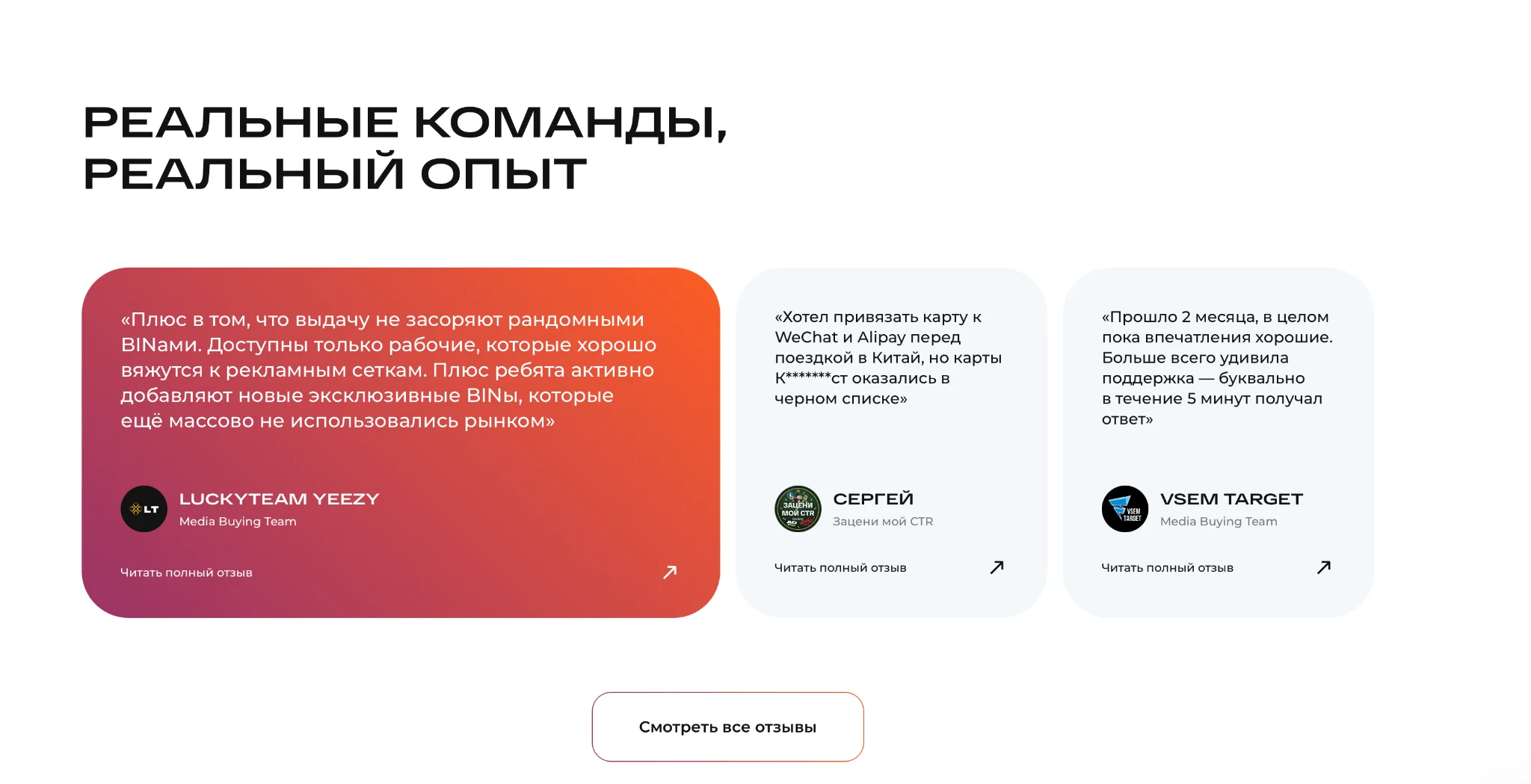
More than 350 LuckyTeam media buyers now use the cards. New BINs are first tested internally within the holding company and only then offered to clients. To me, this is a good indicator, since the payment tool is first tested against the company’s own advertising budgets.
Who Can Benefit From It
I personally came across the product when I urgently needed to issue a virtual card during one of my trips so I could link it to Apple Pay, since I did not have cash on hand.
But in practice, the service can be convenient and useful for completely different categories of clients.
Solo Media Buyers
You can issue separate cards for different ad accounts, projects, or services. For example, one card for Google Ads and another for work subscriptions. Expenses do not get mixed together, so you do not have to figure out where the money went later.
Teams
There are even more options here. You can add employees, assign roles and access permissions, set limits, and control spending on specific cards and users.
When you have a lot of cards, this is no longer a matter of convenience, but real savings of time and your own nerves.
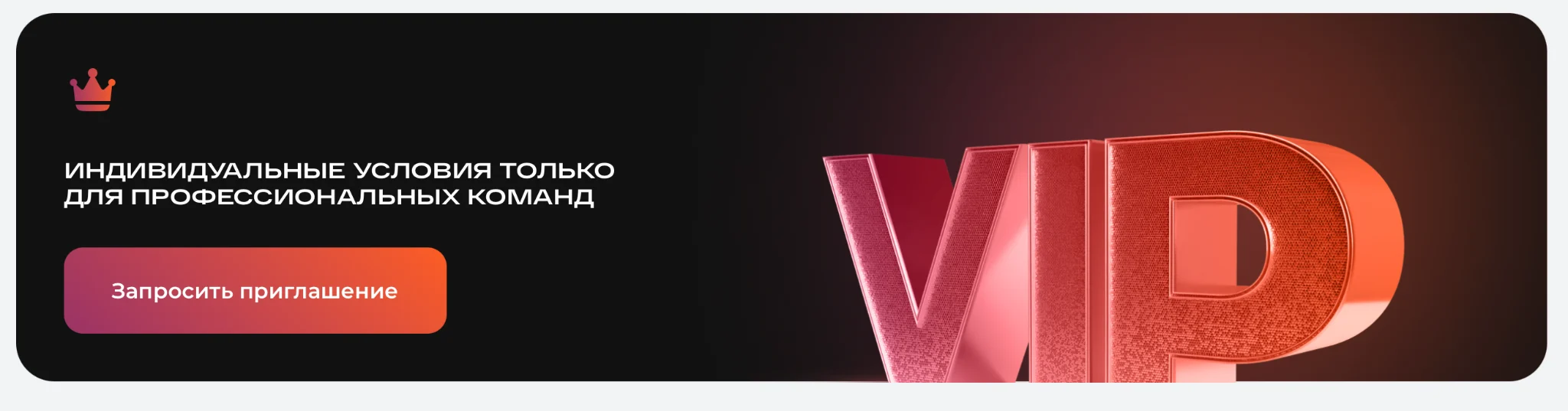
The website even has a separate banner with VIP terms for teams, so you should at least find out what the terms are.
For Everyday Expenses
You can use the cards not only for advertising, but also to pay for software, subscriptions, travel, and taxis. There is support for 3D Secure, Apple Pay, and Google Pay.
What About BINs and GEOs?
In my personal view, this is one of the key factors when choosing a card. If an ad account is tied to a specific country, the card’s issuing country also matters.
LuckyCards states that it offers 25+ Visa and Mastercard BINs across three GEOs, including the US and Europe, with some of them being exclusive and not sold to the entire market. The service adds new issuers 1-2 times per quarter. For example, for US Google Ads, you can choose a card with a US BIN. The service has announced upcoming top-ups for BINs from the UK, Hong Kong, and Singapore.
You can always view the full list of available countries, currencies, and BINs in your dashboard.
What About Pricing?
Now for the numbers. LuckyCards’ basic terms are as follows:
- card issuance: from $1,5 or €1,5;
- general balance top-up: 2,5%;
- internal transfers between the balance, cards, and teams: no fee;
- successful transactions: no fee;
- card maintenance: from $0.
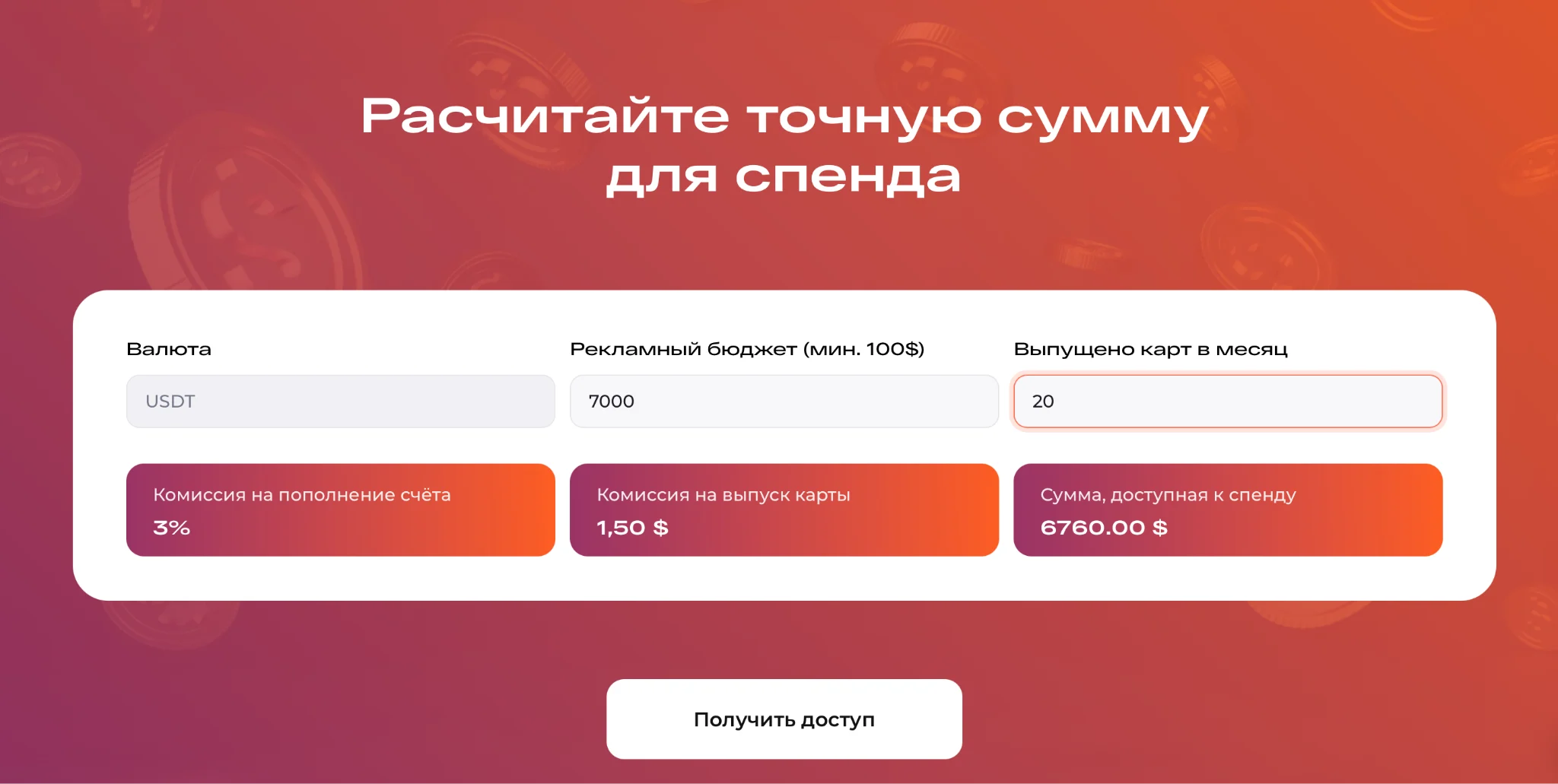
It should be noted that there is no minimum number of cards required for issuance. For example, seven cards will cost a little over 10 euros at minimum, while 15 cards will cost 15 euros or dollars. When topping up the general balance by 1000$, the fee will be 30 dollars.
There is also a referral program that lets you earn up to 35% through revenue share from top-ups made by referred users.
How to Top Up Your Balance
The minimum top-up amount is 100$ or 100 euros. WIRE, SEPA, and ACH bank transfers, as well as USDT and USDC cryptocurrency, are available.
Auto top-up is also available. It may seem basic and minor, but when ad campaigns are running through the card, an extra way to avoid discovering a zero balance in the morning never hurts.
Card Issuance
Issuing a card takes literally 10 seconds. In the cards section, you choose the BIN, currency, card type, and funding source.
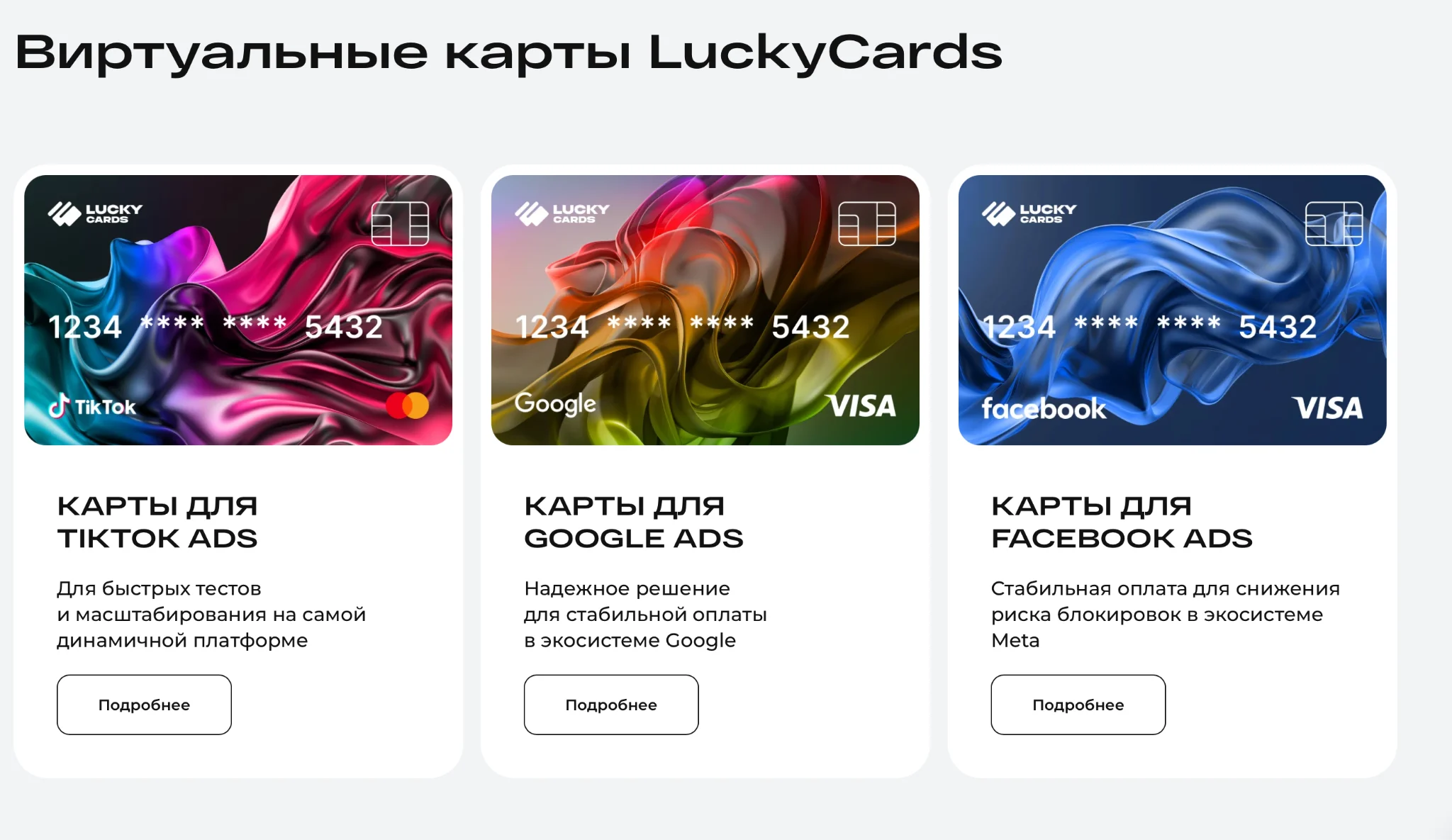
You can use limit cards, where you transfer the required amount in advance, or account-balance cards, which debit funds from the general LuckyCards balance.
If you have a lot of cards, bulk issuance is also available. Teams have API automation: you can create and distribute cards among media buyers from the CRM, as well as export transactions for audits or any other purposes.
Account cards are also worth mentioning separately. Unlike regular cards, you do not need to top them up one by one: all cards are linked to the account’s general balance, and as long as there is money on it, payment goes through from any of them. This is especially convenient when you have dozens of ad accounts and recurring charges, since you do not have to move money from card to card or worry that one of them will suddenly run out of balance.
At the same time, you do not lose control over spending: you can set a separate limit for each card and see its expenses. This creates a practical setup for teams where there is not only a shared budget, but also transparent control at the level of each card.
Expense Control
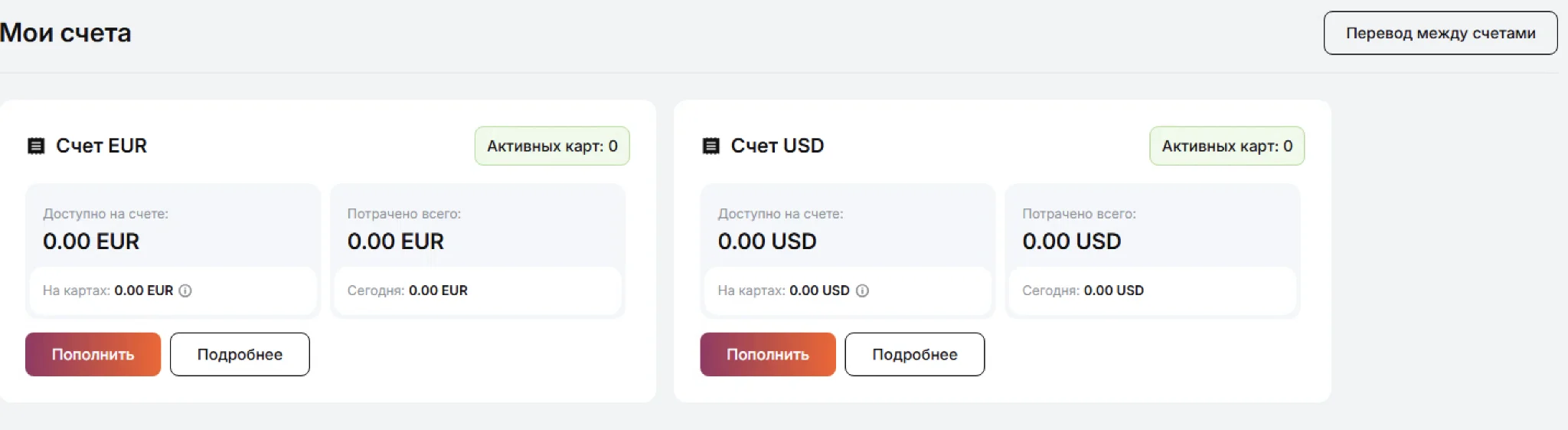
The service has a very useful and genuinely necessary feature for teams. In the dashboard, you can see the general balance, funds on cards, daily spending, and the number of active cards.
In the “Cards” section, you can view the status of each card, its BIN, and remaining balance. You can export transactions, as I mentioned above, and the Telegram bot will send you notifications about transactions involving cards and the general account.
Why is this important, you may ask? It is simple: thanks to this LuckyCards feature, financial control no longer has to turn into endless manual reconciliation of spreadsheets. This means you have time to spend on something more productive and useful.
Problem Resolution
But what if a card does not go through at a critical moment? This is a question I would put on the same level as fees and GEOs. Why?
Because any card looks great while everything is working. The most interesting part begins when a payment suddenly does not go through.
LuckyCards first recommends checking your balances, limits, and 3D Secure. If everything is fine with them, you can immediately contact support and select another BIN. Of course, 24/7 Telegram support and a personal manager are available, and your manager will always stay in touch after you register on the platform.
Sometimes the issue arises on the issuer’s side. In such cases, the service helps you switch to another BIN and, according to its terms, compensates for the switch.
You can also simply close the card and return the entire remaining balance. For cards with their own balance, the funds are returned to the general account. Of course, you should also keep in mind the processing times for such a request. They take up to 30 days, with subsequent withdrawal taking up to 60 days.
In Summary
Of course, the best virtual card will be different for each person. A solo media buyer and a large team have very different tasks.
If you work alone, cost, GEOs, the number of BINs, and ease of issuance are important. If you have a team, limits, roles, reporting, and automation are just as important. And if your volumes are already substantial, requirements for support are added, for example.
Based on its functionality, LuckyCards has solutions for all these scenarios, from several cards for one person to bulk issuance and card management for teams and holding companies.
The main takeaway for me is simple: when choosing a virtual card, you need to understand how it performs in real life. Because a good payment card is roughly like a good employee, when everything works, you do not think about it at all.
For readers: with the promo code RIP, new users receive 50 cards for free. That is enough to comfortably test the service with your own accounts and subscriptions.








Comments