

![[FBM] CARDS](https://cpa.rip/wp-content/uploads/cr-a1/fbm-cards-v1/fbm-cards-logo.svg)

An overview of the Latin American market: key figures, country-by-country regulation, the specifics of the four largest markets, and the most popular gaming formats.
LATAM Market Size by the Numbers
According to Grand View Research, online gambling revenue in Latin America reaches $7.24 billion. From 2026 to 2033, analysts forecast a compound annual market growth rate of 10.7%
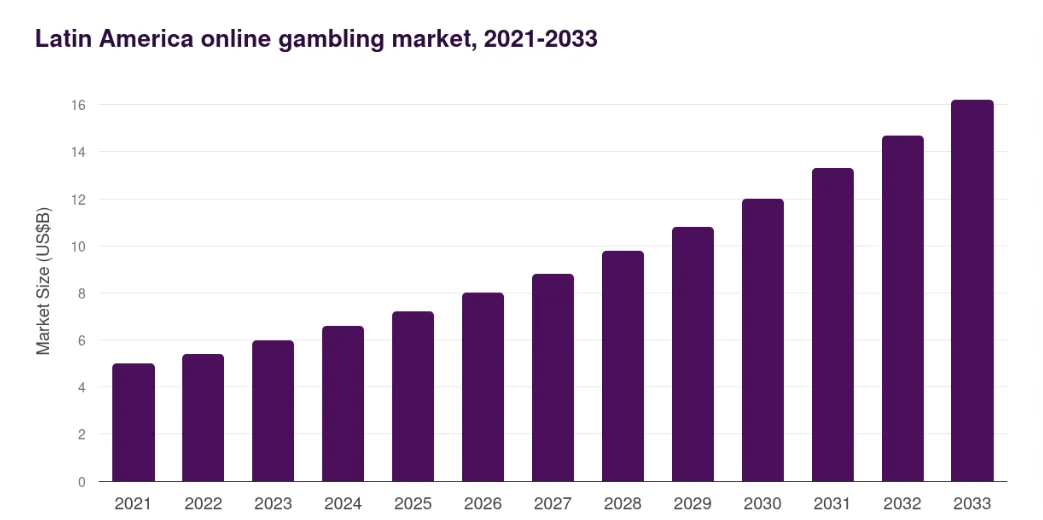
The region is home to more than 670 million people. At the same time, the audience is rapidly becoming more digital, with more than 70% of the population using smartphones. This is particularly important for iGaming, as a significant share of interaction with gaming platforms takes place directly on mobile devices.
High digital engagement is combined with a historically strong interest in gambling entertainment. In Mexico, the gambling tradition dates back to the Aztec game Patolli. Brazil has had the popular Jogo do Bicho lottery for more than 100 years. Lotteries and horse racing have traditionally been popular in Chile, Peru, and Argentina.
Daily Online Casino Traffic: Nuvei Ranking
Nuvei measures gaming activity by the number of daily visits to casino websites. According to its data, three LatAm countries rank in the global top 8, with Brazil leading the list.
Country | Global ranking | Daily visits (thousand) |
Brazil | 1 | 7 857 |
Nigeria | 2 | 5 660 |
United Kingdom | 3 | 4 827 |
Mexico | 4 | 3 597 |
Turkey | 5 | 2 238 |
Italy | 6 | 1 894 |
South Africa | 7 | 1 770 |
Colombia | 8 | 1 750 |
Gross Gaming Revenue (GGR) Forecast by Country
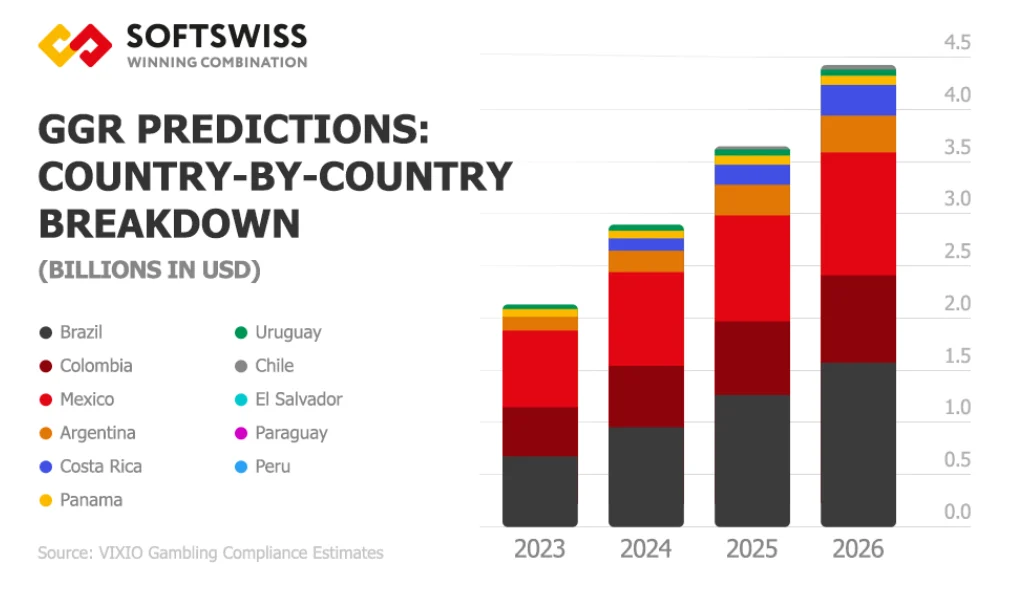
According to SoftSwiss forecasts based on VIXIO Gambling Compliance data, Latin America’s gross gaming revenue (GGR) will continue to grow steadily. By 2026, total GGR will exceed $4 billion. Brazil remains the main growth driver, accounting for the largest share and showing the highest growth rate. Mexico, Colombia, Argentina, and Costa Rica also make a significant contribution.
Online Gambling Regulation in 2026
The legal status of online gambling in Latin America varies significantly from country to country. Some jurisdictions have already legalized and regulate online betting, others maintain bans, while in some countries legislation has not yet defined a clear status for the industry.
Country | Online casino | Online betting |
Paraguay | 🟢 Regulated | 🟢 Regulated |
Uruguay | 🔴 Prohibited | 🟢 Regulated |
Brazil | 🟢 Regulated | 🟢 Regulated |
Dominican Republic | 🟢 Regulated | 🟢 Regulated |
El Salvador | 🟢 Regulated | 🟢 Regulated |
Costa Rica | 🟠 Unregulated | 🟠 Unregulated |
Venezuela | 🟠 Unregulated | 🟠 Unregulated |
Argentina | 🟡 Mixed regulation | 🟡 Mixed regulation |
Mexico | 🟢 Regulated | 🟢 Regulated |
Chile | 🟠 Unregulated | 🟠 Unregulated |
Peru | 🟢 Regulated | 🟢 Regulated |
Colombia | 🟢 Regulated | 🟢 Regulated |
Ecuador | 🟠 Unregulated | 🟢 Regulated |
Bolivia | 🔴 Prohibited | 🔴 Prohibited |
Guatemala | 🟠 Unregulated | 🟠 Unregulated |
Four Key Latin American Markets
Brazil
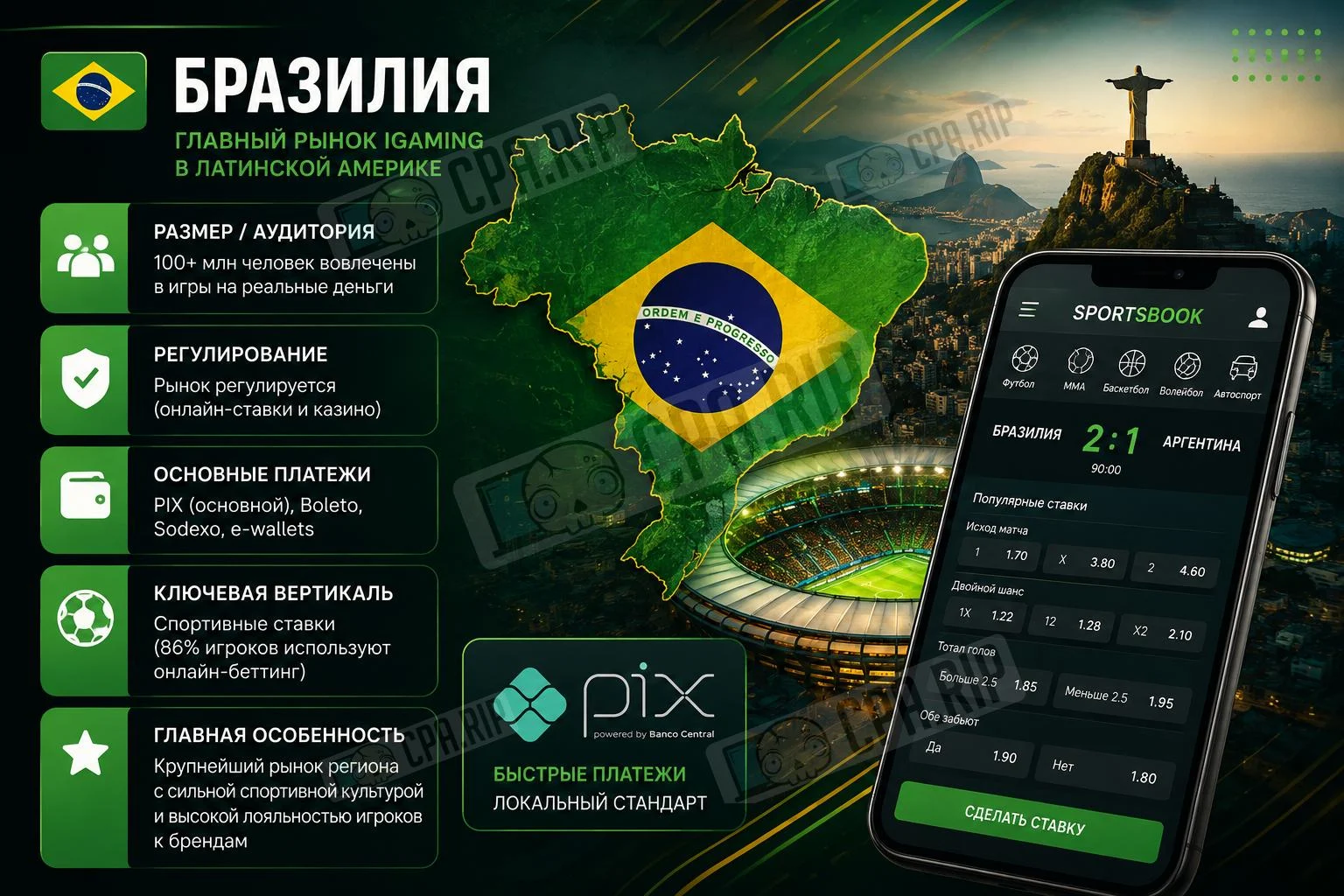
Brazil is the largest iGaming market in the region and the main source of its growth. More than 100 million people participate in real-money gaming.
Sports betting is particularly strong, with more than 86% of players using online betting services. Soccer holds a central position, but the audience is also interested in volleyball, MMA and jiu-jitsu, basketball, and motorsports.
Payments and cryptocurrency:
The primary payment method is PIX. Boleto, Sodexo, and local e-wallets are also popular. Cryptocurrencies are officially prohibited in gambling.
Player profile: the typical user is a man around 39 years old who primarily plays from a mobile device. Once trust is established, the audience can show high brand loyalty. The share of women is gradually increasing.
Mexico
Mexico is the region’s second-largest economy, with a population of more than 120 million people.
Payments and cryptocurrency:
Popular methods include OXXO, SPEI, bank cards, and e-wallets. Cryptocurrency is used but is not the dominant payment method.
Player profile: the Mexican audience is relatively young and digital. Esports betting is growing particularly quickly here. Players respond well to modern products, mobile solutions, and localized content. At the same time, trust in brands develops more slowly due to market heterogeneity.

Colombia
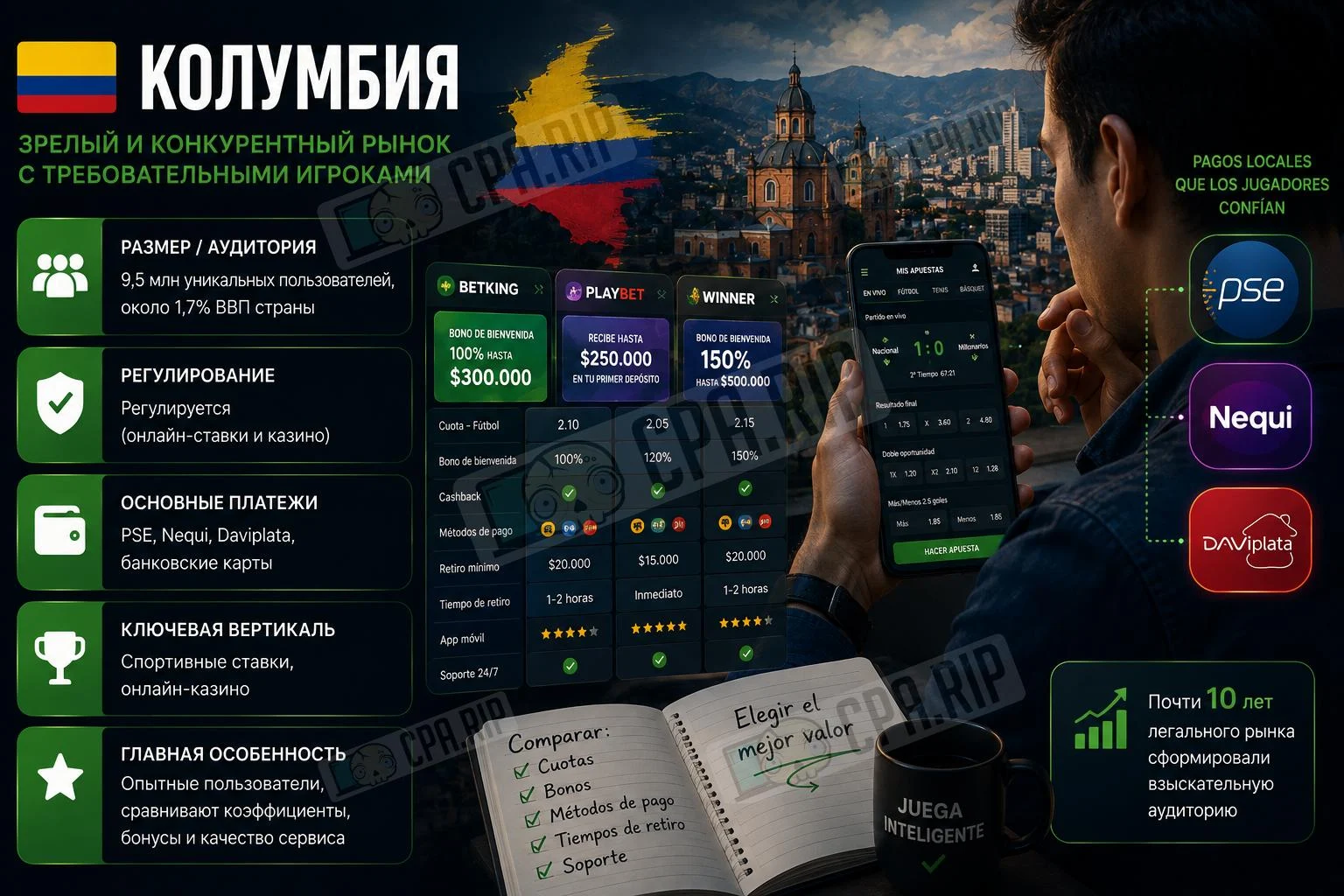
Colombia became the first LatAm country to systematically legalize online gaming back in 2016. Today, it has around 9.5 million unique users, while the industry accounts for approximately 1.7% of the country’s GDP.
The market is considered one of the most mature and competitive in the region. Players already have nearly a decade of experience with legal betting. They are well versed in offers and compare odds, promotions, and service quality. The novelty effect no longer works here, so you need to compete on product quality.
Payments and cryptocurrency:
Key methods include PSE (bank transfers), Nequi, Daviplata, and bank cards. Cryptocurrency is present but does not play as significant a role as it does in Argentina.
Player profile: the Colombian player is a relatively experienced user accustomed to a legal market. They carefully compare terms and pay attention to platform convenience, support quality, and bonus policies. Overall, the audience is more demanding than in the region’s less mature markets.
Argentina
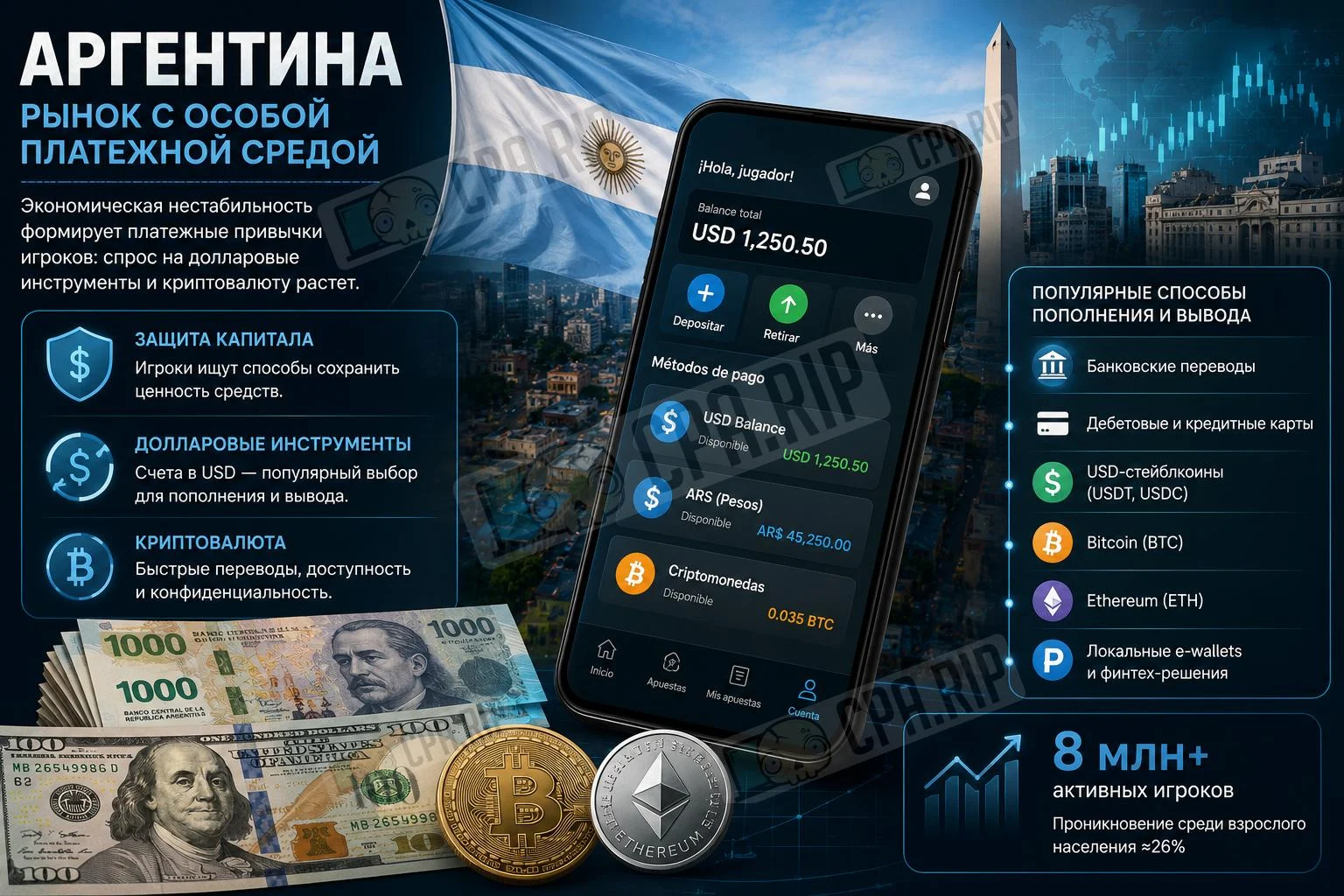
Argentina’s iGaming market is estimated at $2.5-3.36 billion per year. The country has around 8 million active players, and penetration among the adult population reaches nearly 26%.
Payments and cryptocurrency:
Due to the peso’s high volatility, many players prefer U.S. dollar accounts and cryptocurrency options as a way to protect their capital. Crypto plays a noticeably more important role here than in most other countries in the region.
Player profile: Argentine players differ noticeably due to economic instability. They are more sensitive to currency risks and often prefer dollar accounts and cryptocurrency. At the same time, the audience is active and fairly engaged, especially in major cities.
Gaming Content in Latin America
Differences between countries are particularly visible in gaming preferences. At the same time, several verticals remain the most important for the region.
Sports Betting
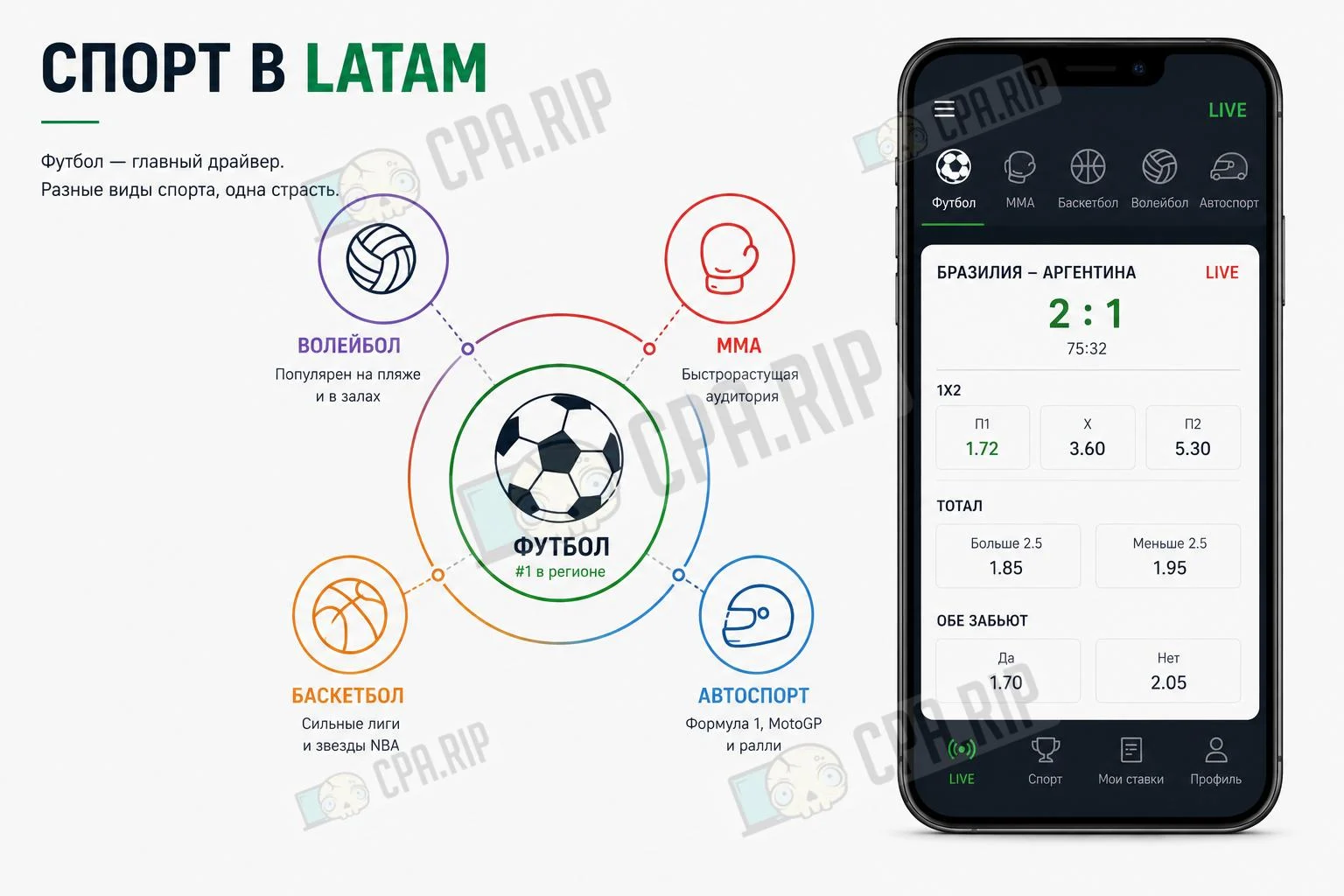
Sports betting is one of LatAm’s leading verticals. The main reason is the region’s strong sports culture, above all the popularity of soccer.
In Brazil, soccer is complemented by volleyball, MMA and jiu-jitsu, basketball, and motorsports.
Combining betting and casino makes it possible to attract a broader audience and increase its engagement.
Slots and Table Games
Slots remain a core online casino category thanks to simple mechanics, a fast gameplay cycle, and a broad range of content.
Roulette and blackjack are particularly popular among users who prefer the classic casino format.
For LatAm, not only language localization is important, but also adapting the currency, interface, payments, and user experience to each specific country.
Fish Games
Fish games are a dynamic arcade format in which players shoot fish and other characters, earning winnings for targets.
The genre’s popularity is supported by fast gameplay, competitive elements, bosses with major prizes, and vibrant graphics.
According to KA Gaming, Argentina, Brazil, Chile, and Peru stand out among the LatAm countries where the format is particularly popular.
While the average monthly betting volume in fish games in Asia is $12-25 million, the figure reaches $8.5 million in Argentina.

Crash Games
Crash games are built around a simple mechanic: the player places a bet and must cash out before the multiplier drops.
The fast gameplay cycle and simple rules are well suited to the mobile format.
Popular products in this segment include Aviator and Space XY.
Bingo and Lottery Games
Bingo and lottery formats have an additional advantage in the region thanks to their historical popularity.
Online bingo attracts players through its social component, while scratch cards and other fast formats make it possible to get a result almost immediately.








Comments