



On October 22, the Rhode Island Attorney General’s Office filed a lawsuit against Meta. The company is accused of knowing about fraudulent advertising on Facebook and Instagram but continuing to profit from it and failing to take sufficient steps to block it.
This is the first such lawsuit against Meta at the state level. In May 2026, Santa Clara County filed a similar lawsuit in California.
The new lawsuit cites internal Meta documents previously reported on by Reuters. According to this data, the company may have generated around $16 billion, or 10% of its 2024 revenue, from fraudulent ads and ads for prohibited or restricted products. We wrote about these figures back in November 2025.
Meta’s internal documents also mentioned roughly 15 billion daily impressions for ads with a high risk of fraud.
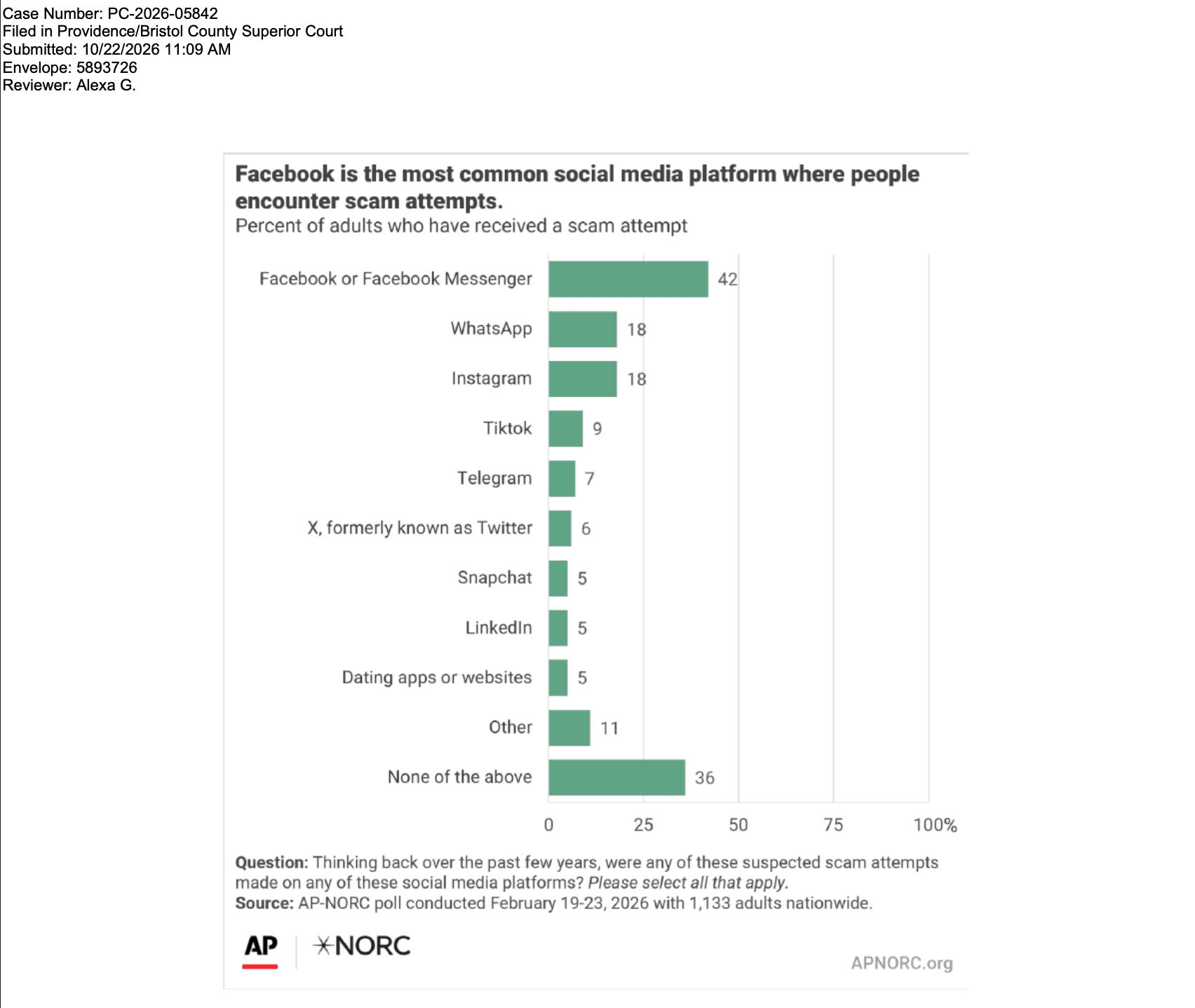
The lawsuit also cites the results of an AP-NORC survey from February 2026. Among people who encountered fraud attempts, 42% named Facebook or Messenger, 18% each named Instagram and WhatsApp, and 9% named TikTok.
According to the Attorney General’s Office, Meta’s AI tools helped fraudsters create and optimize ads. At the same time, suspicious advertisers were not always blocked. In some cases, they were simply charged more for advertising.
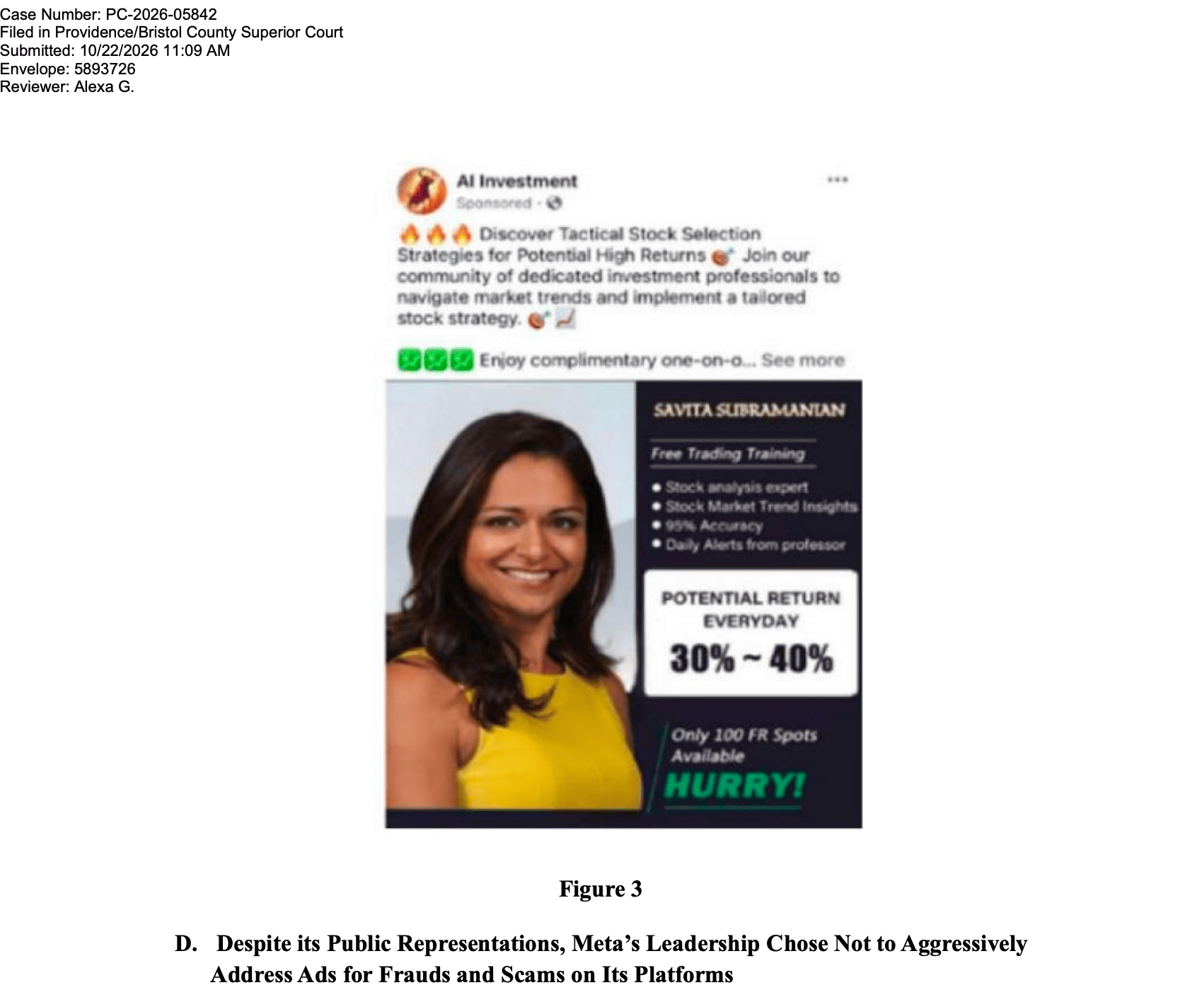
The lawsuit also mentions another court case in which fraudsters used the name and photo of one of Bank of America’s executives. The ads promised returns of 30-40% per day and directed users to WhatsApp, where they were persuaded to trade stocks.
Chinese Ad Agencies and Crypto Advertising
A separate part of the lawsuit focuses on Chinese advertisers. According to the Attorney General’s Office, some agencies gained access to Meta’s privileged ad accounts, which allowed them to bypass standard reviews.
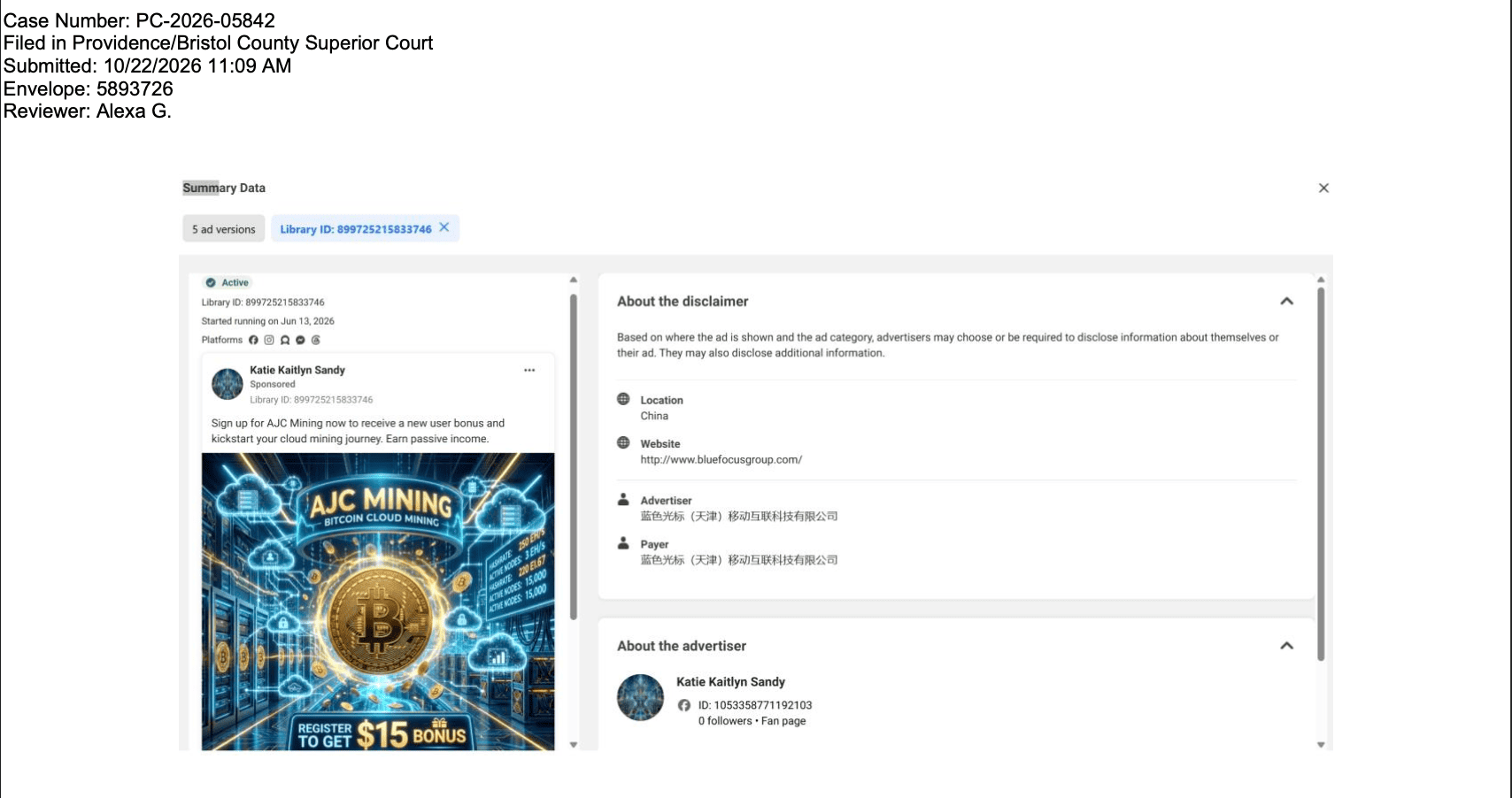
For example, the Blue Focus agency advertised accounts that could launch ads without the usual approval wait. It also promised to provide another account in case of a ban.
The lawsuit includes a screenshot of an AJC Mining crypto ad offering cloud mining earnings, placed through such an agency.
According to internal documents cited in the lawsuit, Meta identified 800 Chinese ad accounts that generated $28 million in one month from ads that violated the rules. At the same time, 75% of that amount came from Meta’s trusted partner accounts.
Examples of Fraudulent Advertising
Examples in the lawsuit include ads for scam investments, ineffective or dangerous dietary supplements and treatments, as well as fraudulent ads impersonating celebrities and banks.
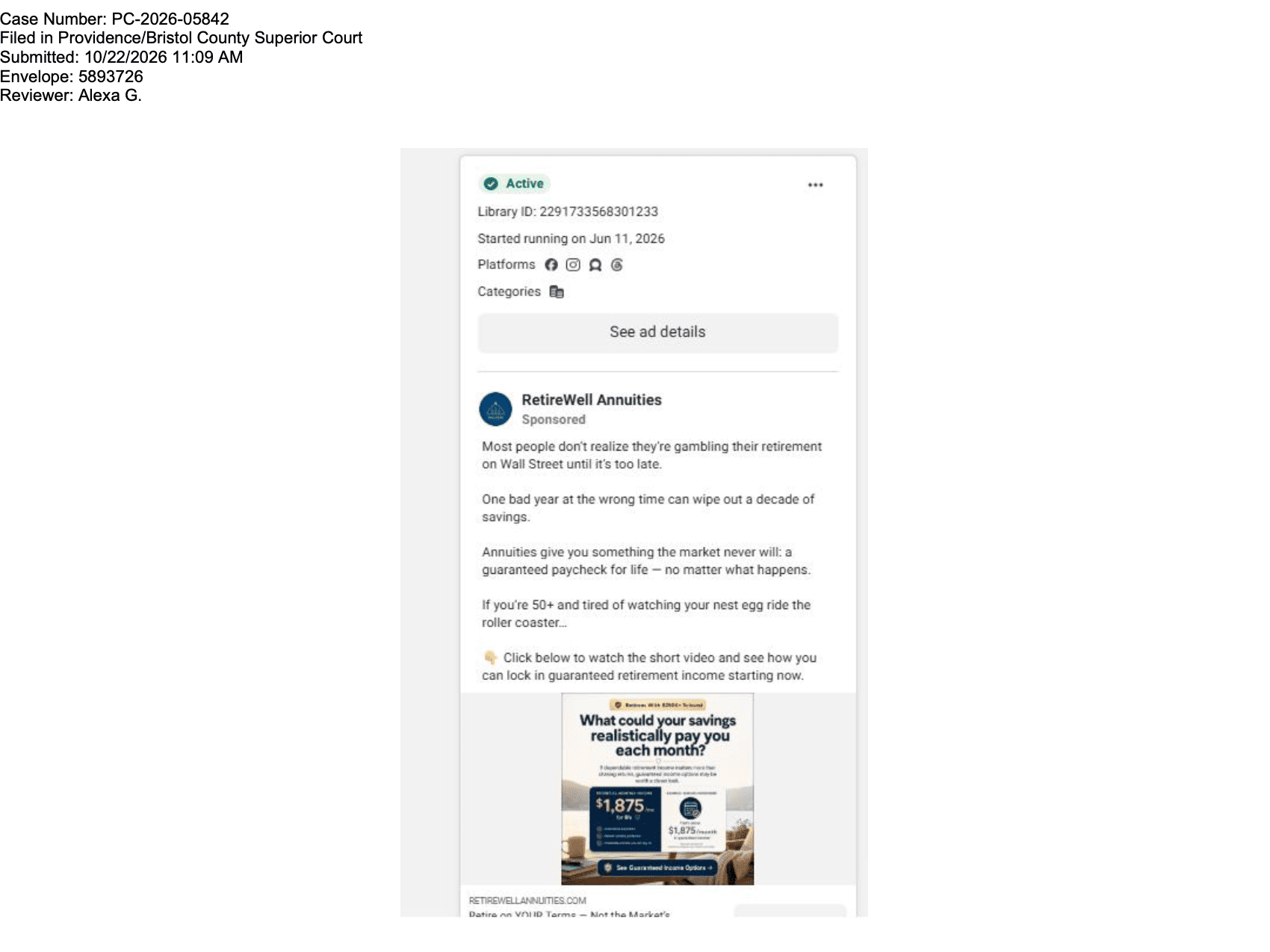
For example, ads for retirement payouts promised users guaranteed lifetime income with no market risk. The listed phone number turned out to be fake.
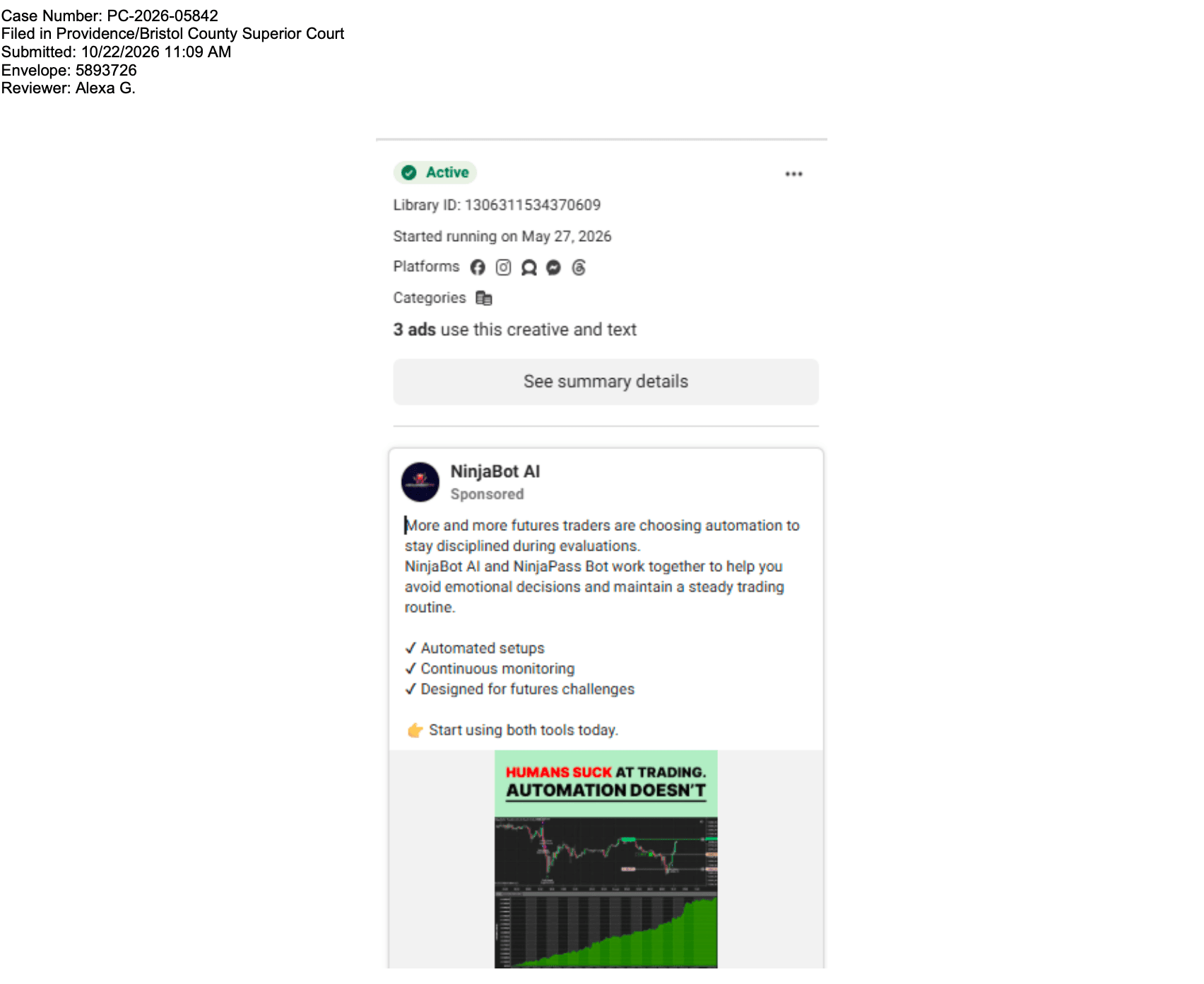
In another case, an AI trading system was advertised. Users were directed to a site with a limited offer to buy a license for $397. The ad used a chart that created the impression of consistent profits. The lawsuit also mentions user complaints about problems withdrawing invested money.
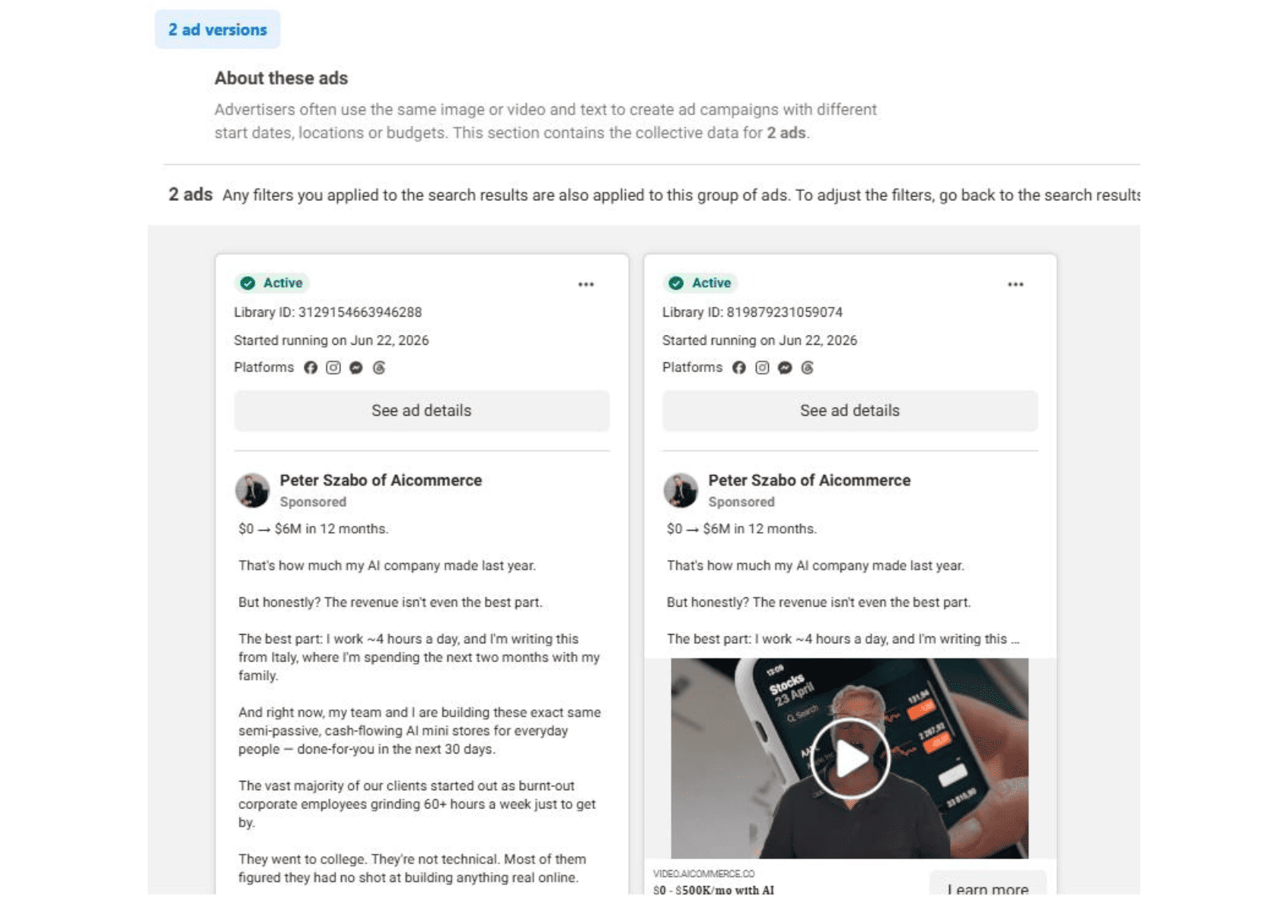
There were also offers to make money by automating businesses with AI. For example, Aicommerce advertised training on AI services that could then be sold to companies. The advertiser claimed to work only four hours a day and said its company had earned $6 million in a year.
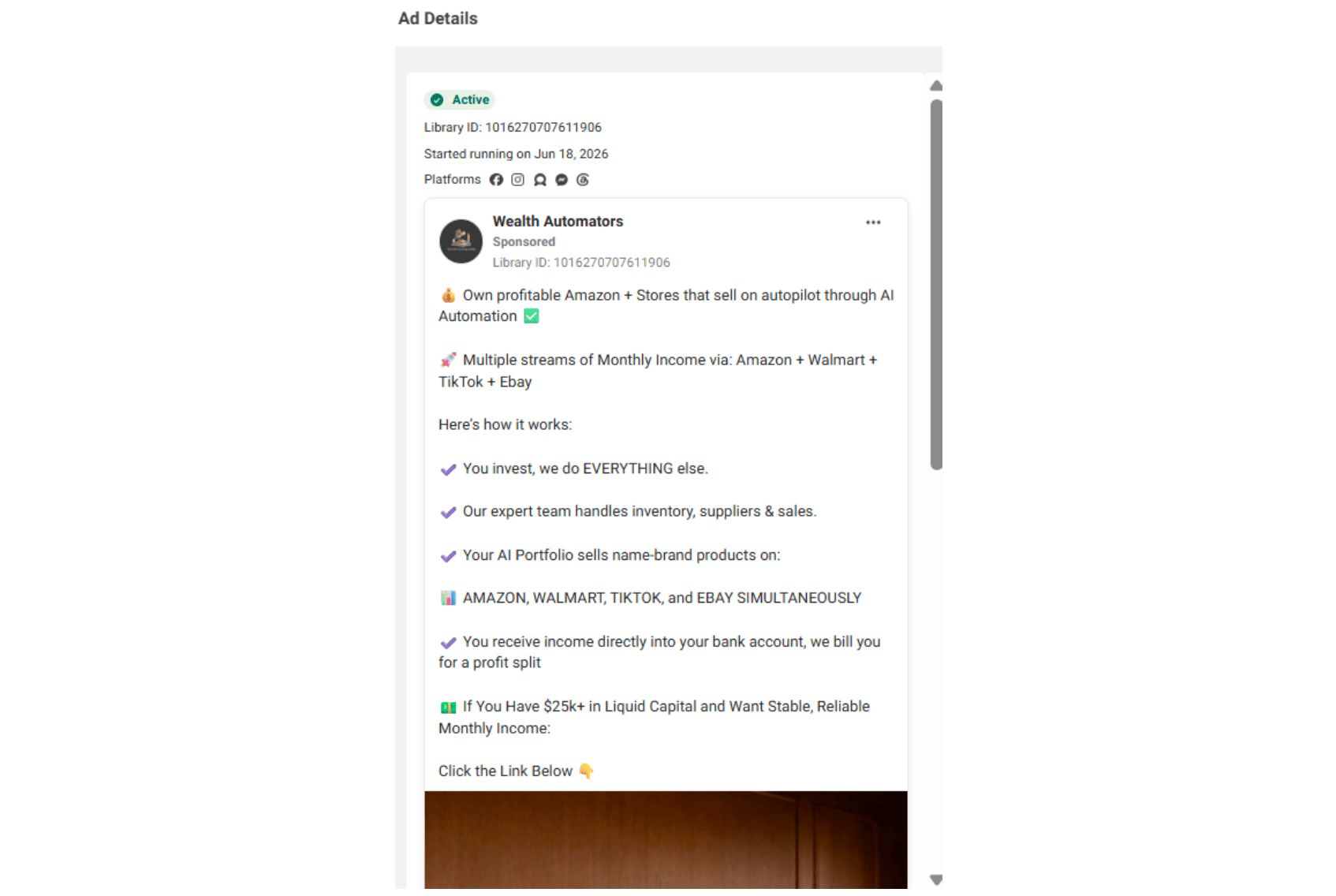
Wealth Automators offered investments in automated stores on Amazon, Walmart, TikTok and eBay. To participate, you needed at least $25 000 in available capital, while the video ad cited $35 000. Users were promised that the service’s team would do all the work for them.
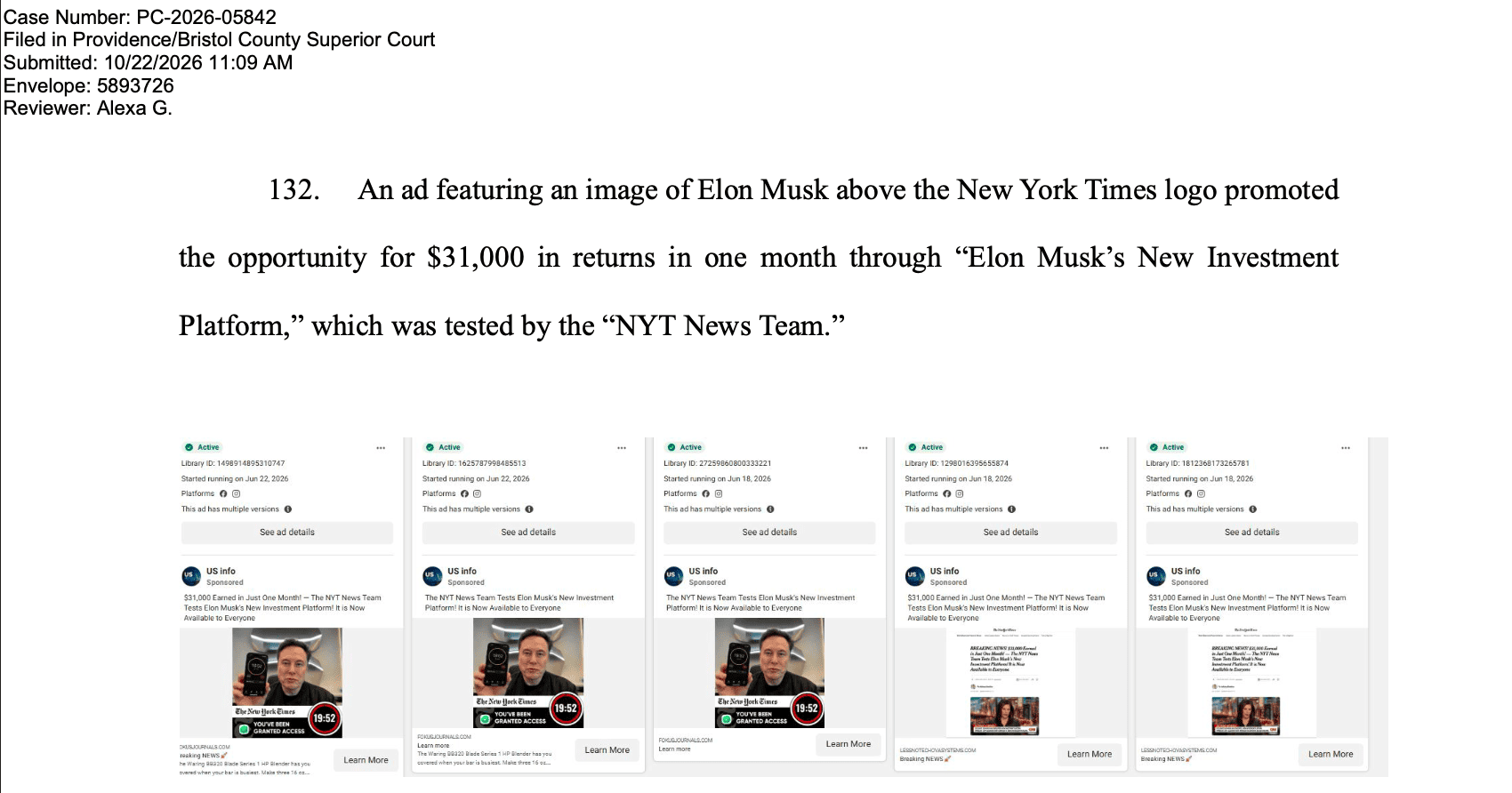
The lawsuit also cites ads featuring Elon Musk and The New York Times logo. Users were promised $31к in monthly income through “Musk’s new investment platform,” allegedly vetted by the publication’s editorial team.
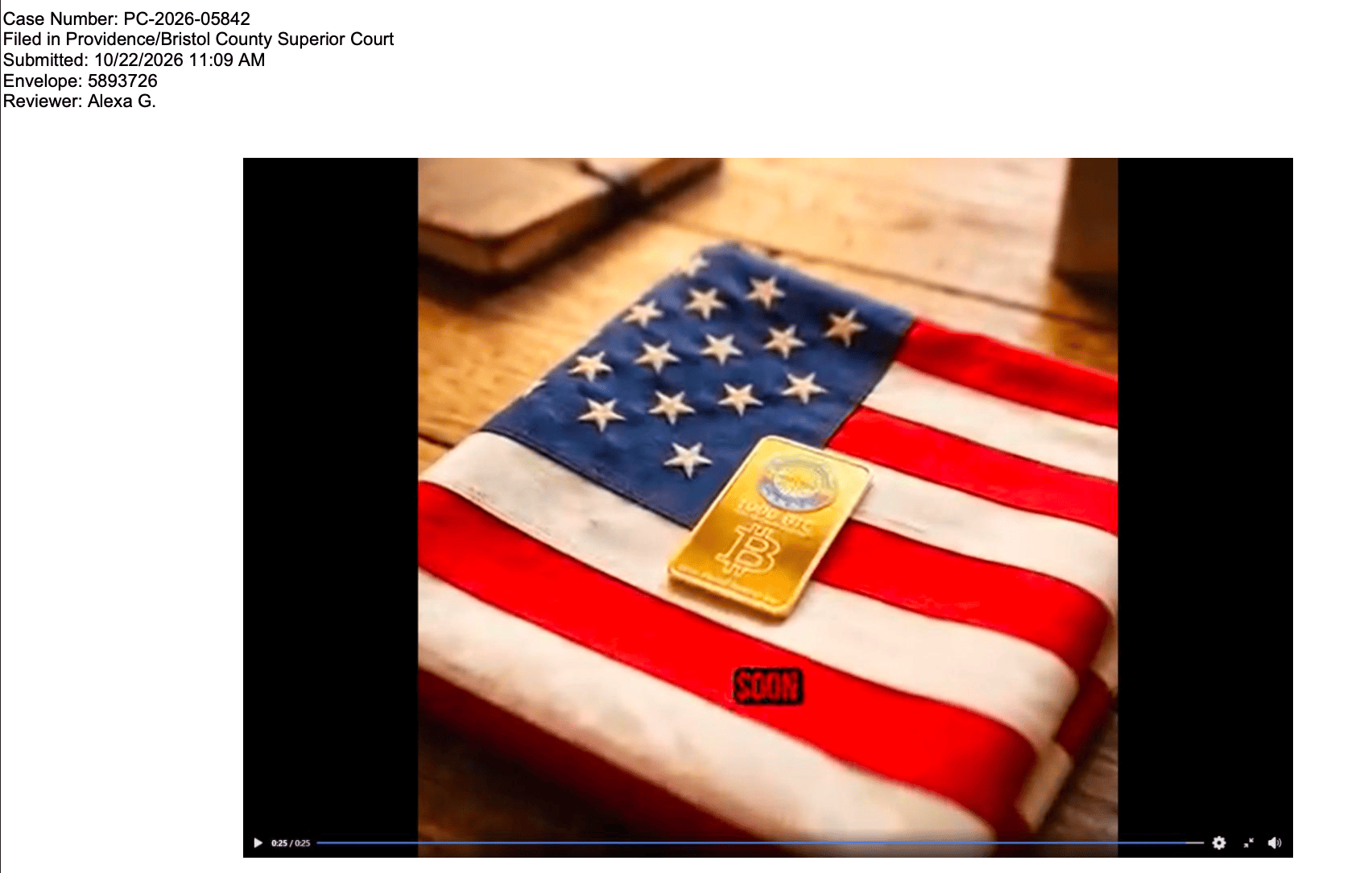
Another example is an ad for gold bars featuring a Donald Trump deepfake. In the video, he allegedly urged people to buy gold before the offer ran out. According to the Attorney General’s Office, the ad received 350,000 to 400,000 impressions.
Medical Offers and Fake Benefits
In another example, an ad promised to reverse Alzheimer’s disease in 45 days. According to the lawsuit, more than 2,000 versions of this ad were active in Meta Ad Library at the same time. A page cited in the lawsuit, designed to look like CNN Health, promised to achieve this with cinnamon and honey.
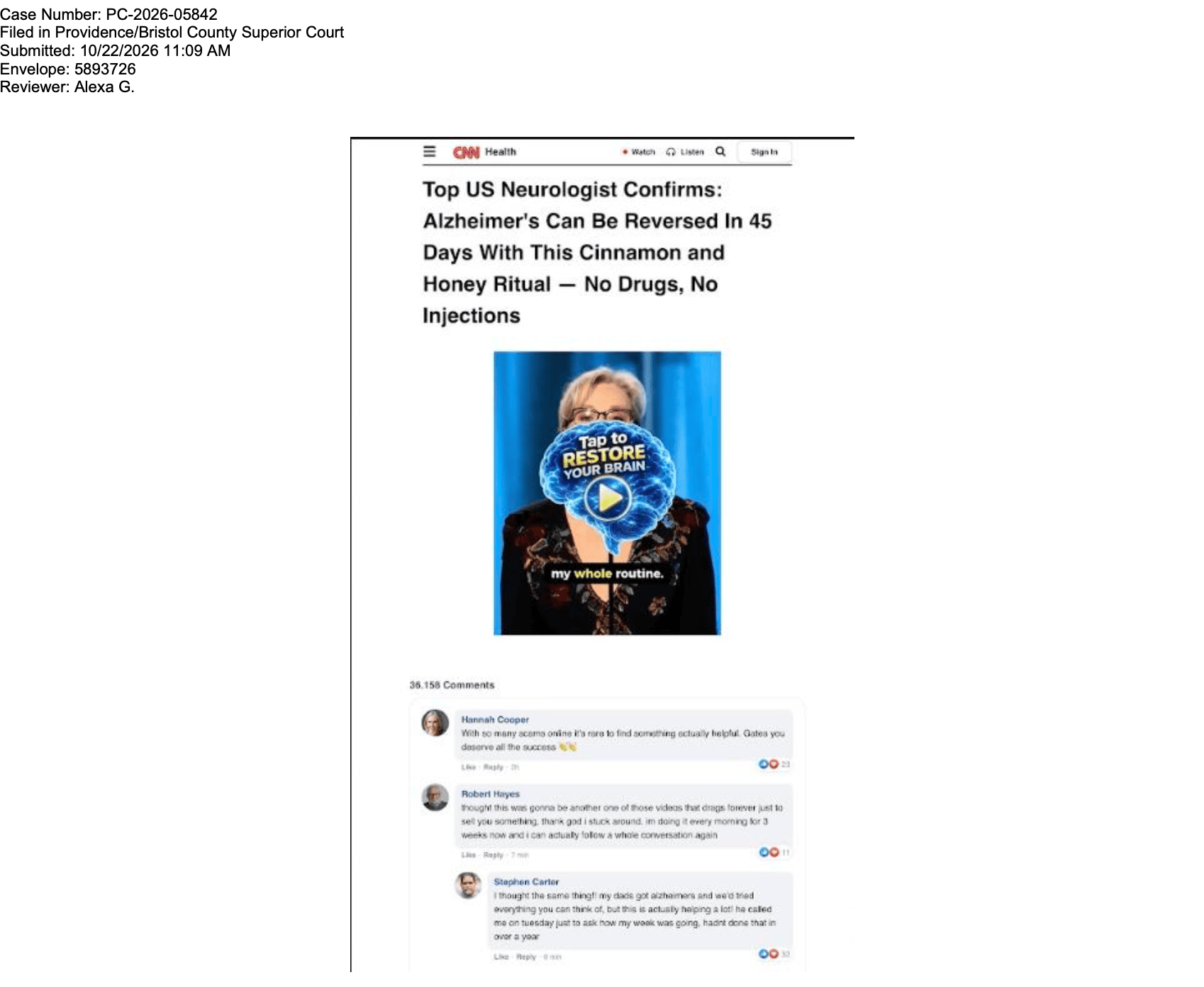
Images of celebrities were also used for promotion, including Morgan Freeman, Meryl Streep and Dr. Oz. At the same time, identical comments with the same names and texts appeared under different ads.
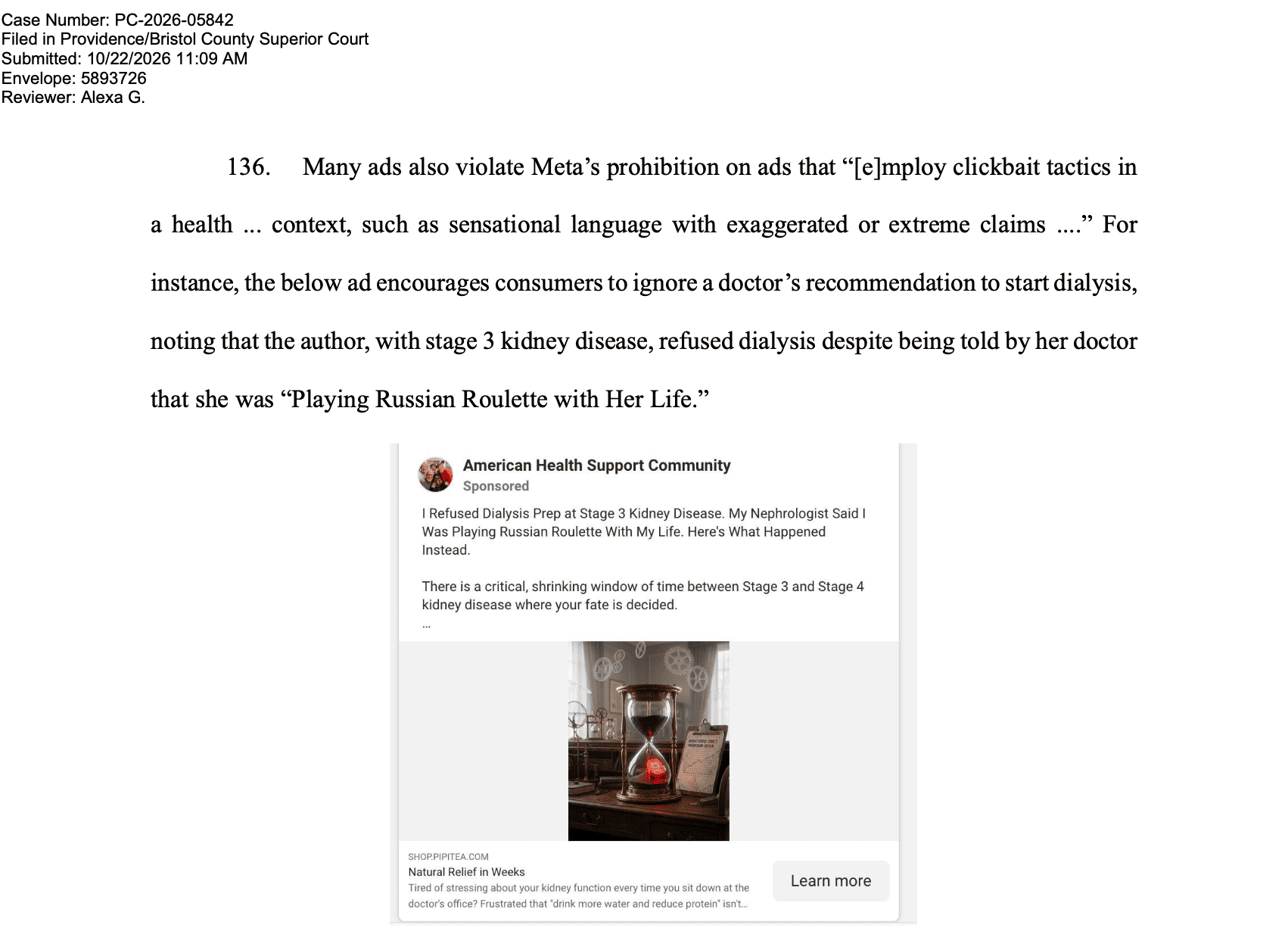
There were also ads urging people to ignore doctors’ recommendations. For example, one described refusing dialysis for kidney disease despite a doctor’s warnings.
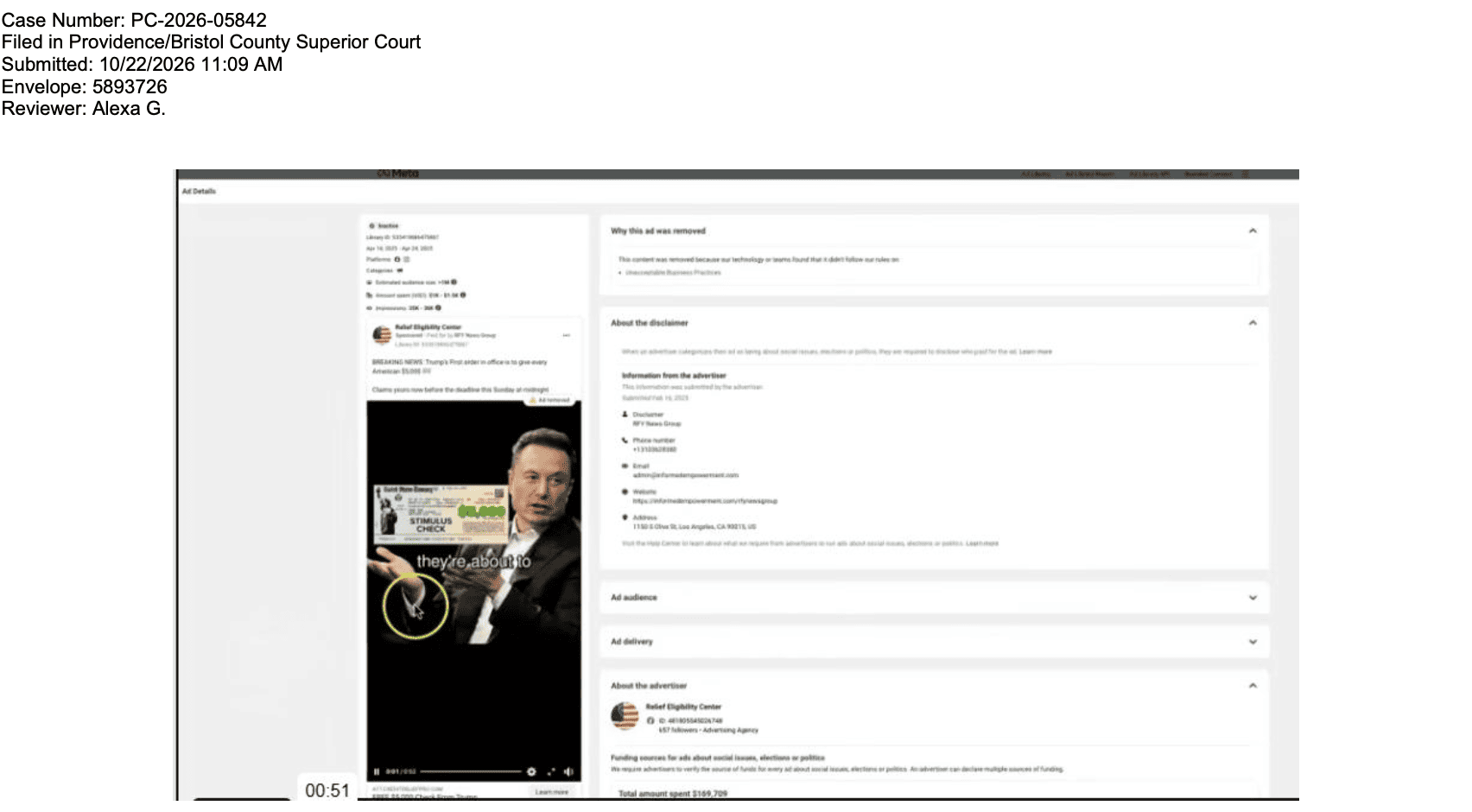
The lawsuit separately mentions fake government payments. One ad used an image of Elon Musk and a fake video promising users a $5000 payment on behalf of the Trump administration. The ad targeted people over age 65.
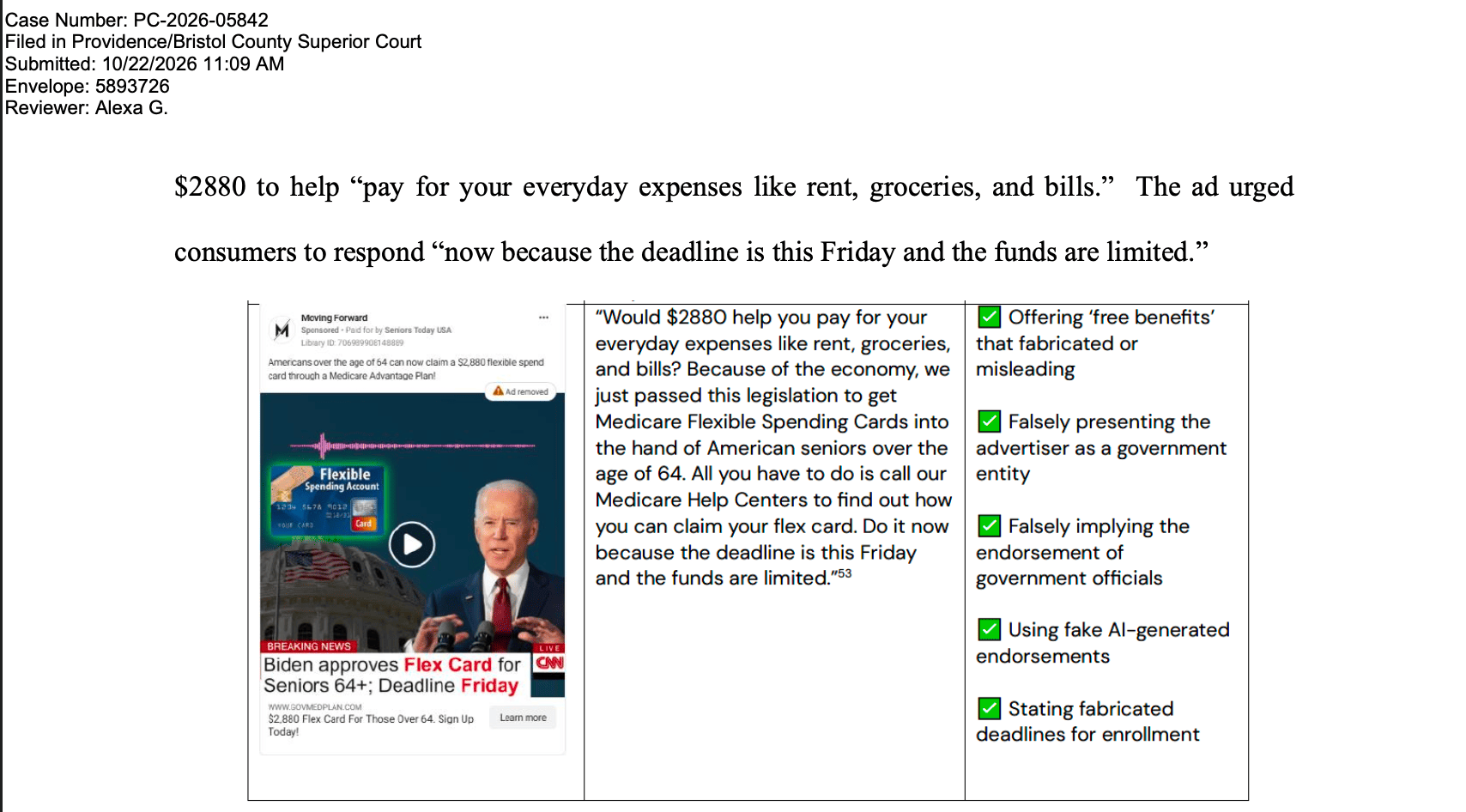
The document also cites a May 2026 investigation by the Center for Countering Digital Hate. Researchers found 93 779 fraudulent ads related to the Medicare program. Common tactics included fictional payments, the use of politicians’ images, fake endorsements and artificially created application deadlines.
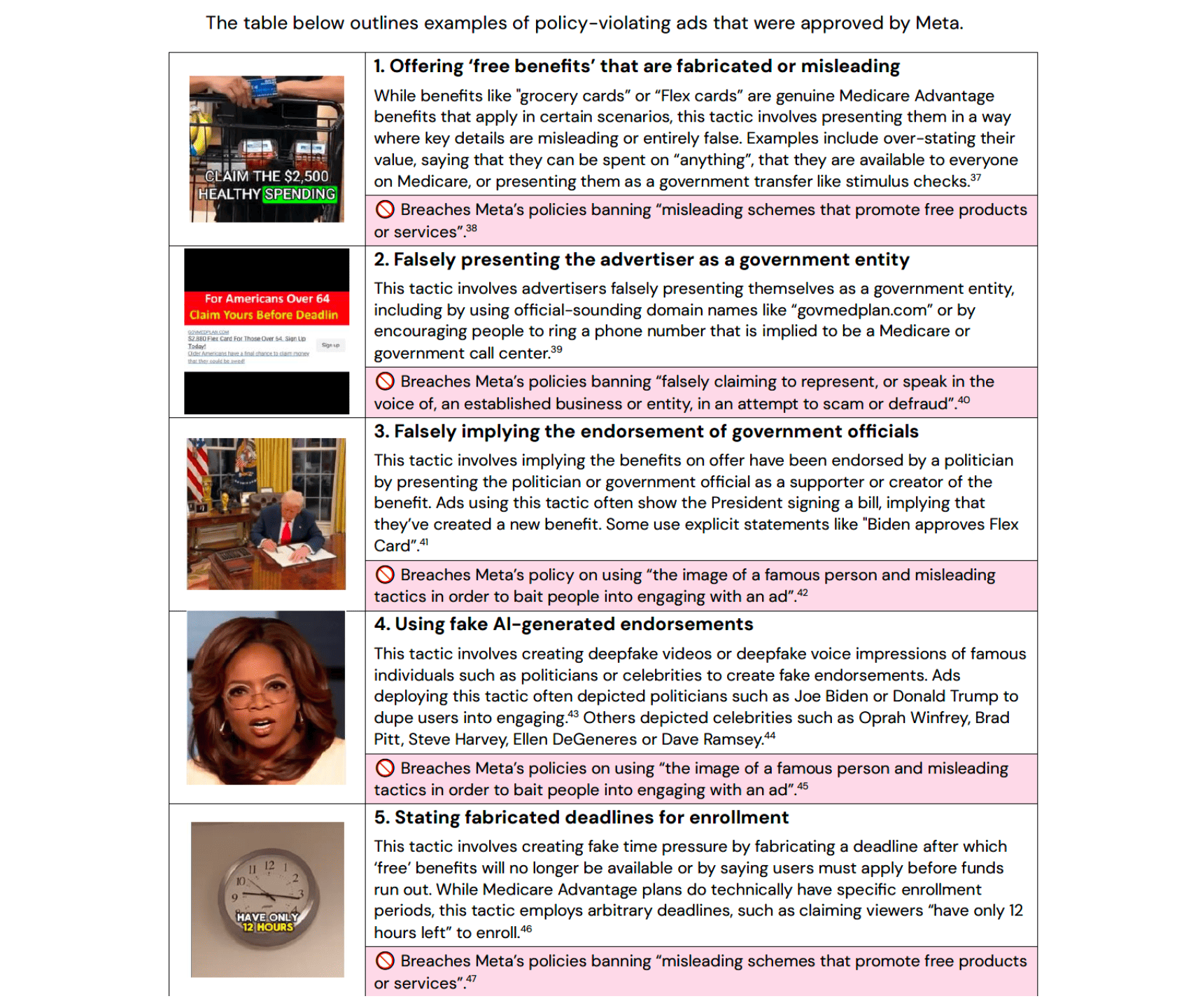
For example, an ad using Joe Biden’s image promised users $2880 for rent, groceries and bill payments. It also claimed that you had to apply by Friday because funds were limited.
The lawsuit also mentions advertising for an AI app for creating intimate deepfakes. Despite the ban on such content, the Attorney General’s Office found ads for services that allow you to create explicit images and videos from ordinary photos.


What the Attorney General’s Office Is Seeking
The Attorney General’s Office is now seeking to recover fines and allegedly illegally obtained revenue from Meta, return money to affected state residents and require the company to take action against scam ads.
Meta denies the allegations. The company says it is actively fighting fraud and states that it removed more than 159 million scam ads in 2025.
For now, these are only allegations by the Attorney General’s Office. The court has not yet determined whether Meta violated the law.
- Source: https://riag.ri.gov/press-releases/attorney-general-neronha-sues-meta-fraudulent-advertisements
- Download the lawsuit: https://riag.ri.gov/media/9381/download








Comments