

![[FBM] CARDS](https://cpa.rip/wp-content/uploads/cr-a1/fbm-cards-v1/fbm-cards-logo.svg)

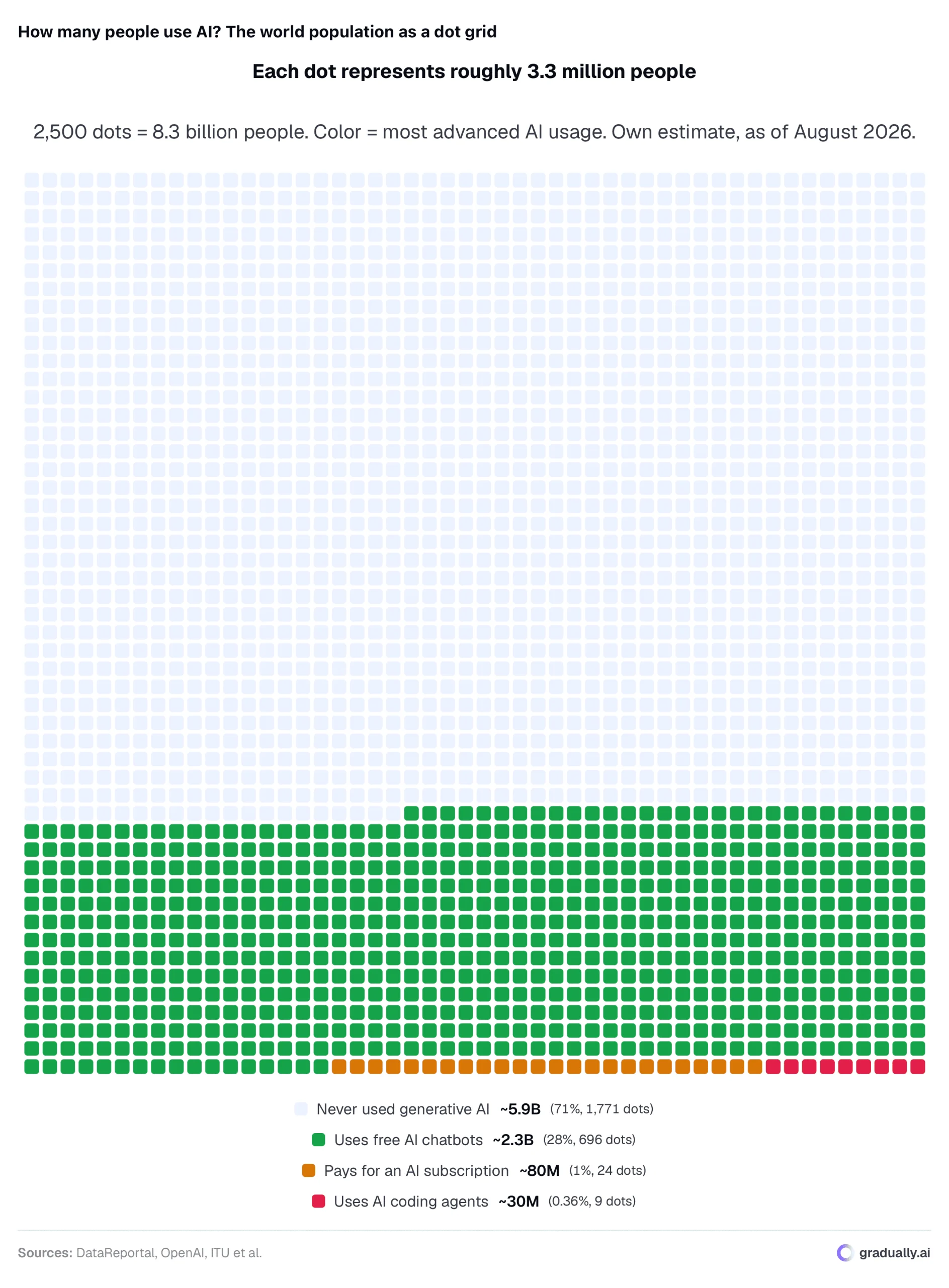
According to Gradually AI estimates, around 2.4 billion people, or 29% of the global population, use generative AI. The remaining 5.9 billion, or 71%, have not yet used generative AI. The calculation is based on DataReportal data for April 2026.
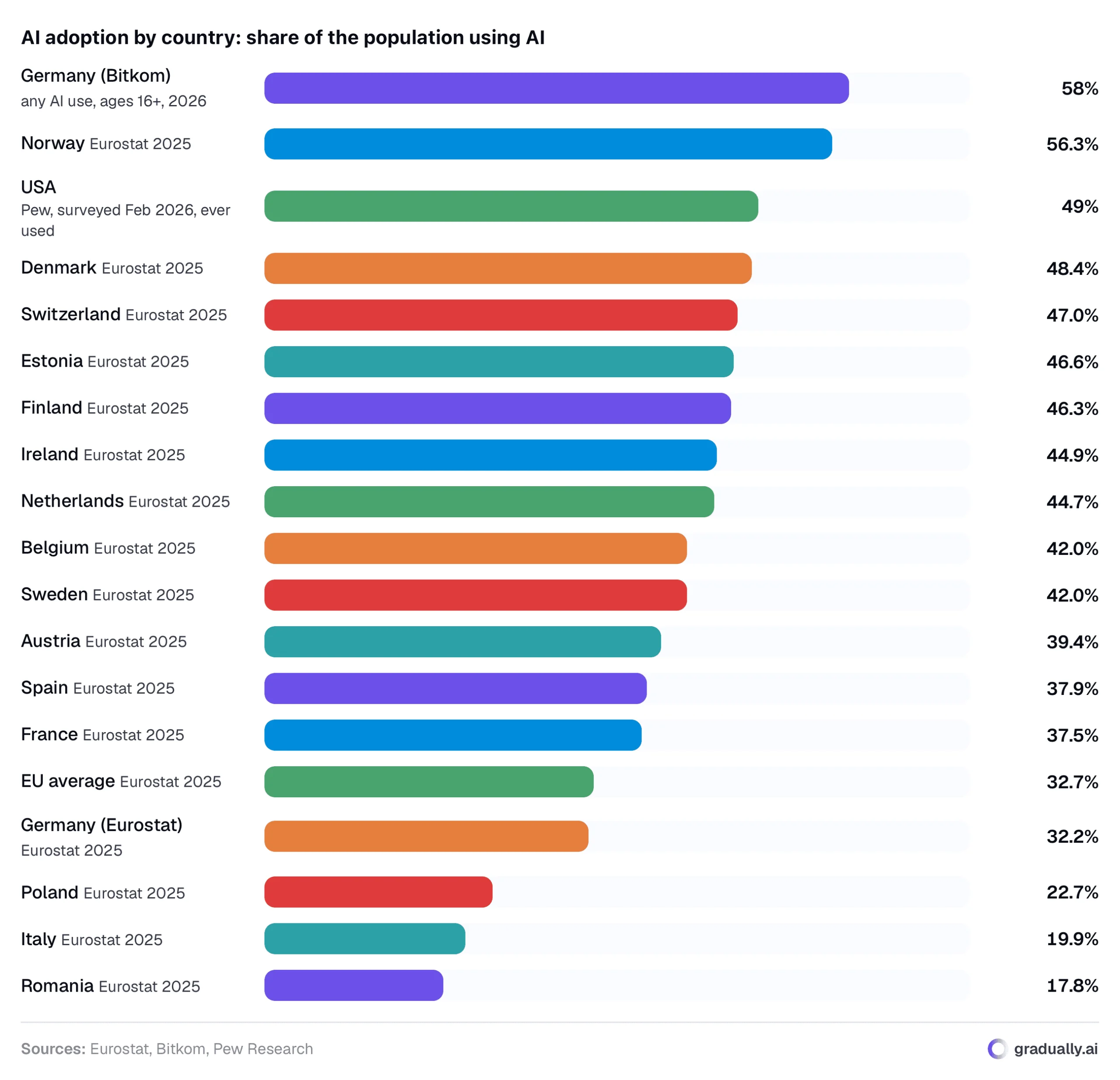
AI usage varies significantly by country. According to comparable Eurostat data for 2025, among the countries listed in the study, generative AI was used most in Norway, 56.3%, Denmark, 48.4%, Switzerland, 47%, Estonia, 46.6%, and Finland, 46.3%. The EU average was 32.7%, compared with 17.8% in Romania, 19.9% in Italy, and 22.7% in Poland.
Among people aged 16 to 24 in the EU, around 64% used generative AI, while among people aged 65 to 74, only 7% did.
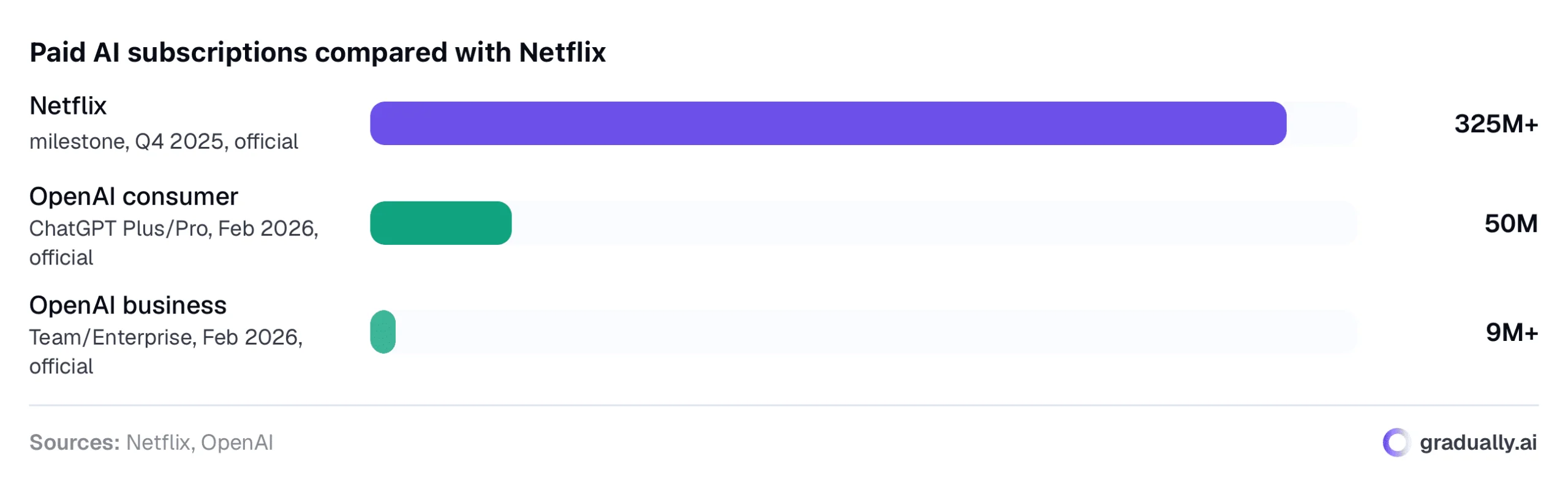
Even fewer people pay for AI, approximately 70-100 million. In its statistics, Gradually AI uses an average estimate of around 80 million, or 1% of the global population. At the same time, ChatGPT alone had 50 million paid subscriptions and more than 9 million business users as of February 2026.
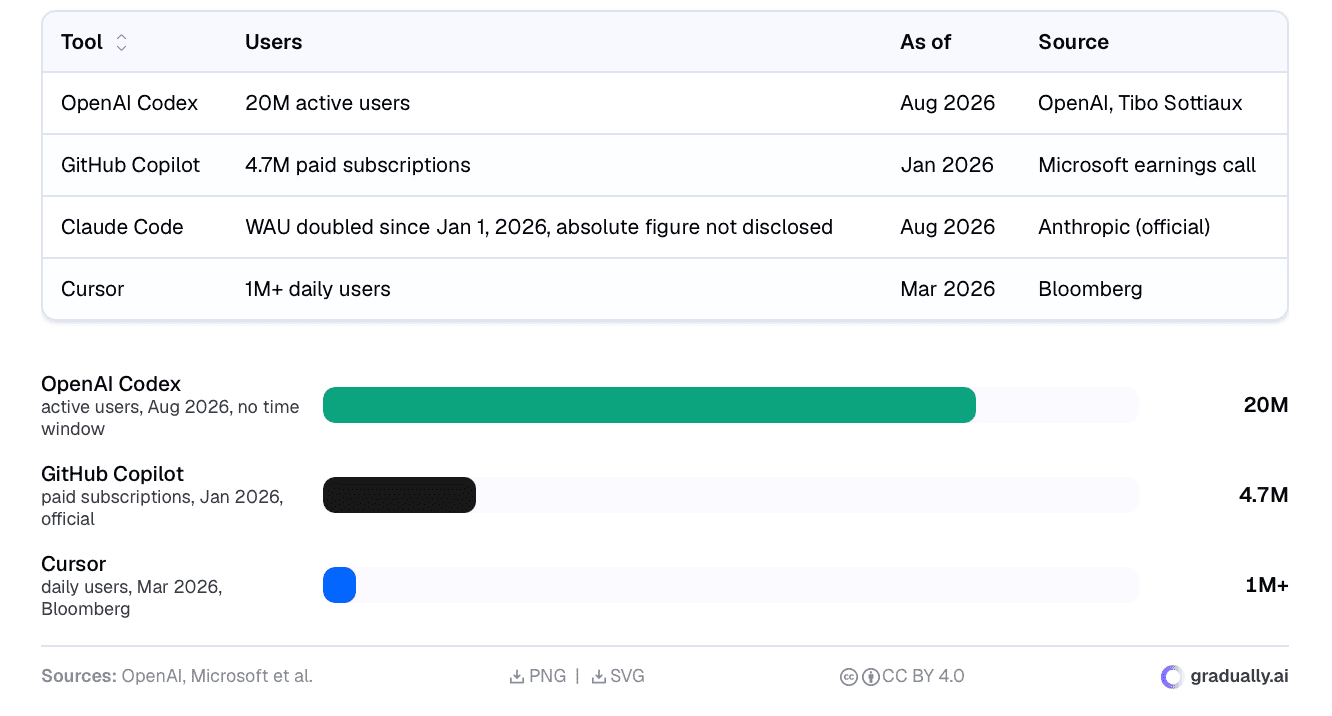
Even fewer people use AI agents for coding, approximately 25-35 million people, or around 0.36% of the global population. This includes Claude Code, Codex, and similar tools.
At the same time, AI is growing very rapidly. Over 12 months, the number of generative AI users increased by approximately 1.4 billion people.
Another approximately 2.2 billion people, 27% of the global population, had no internet access at all as of the end of 2025, so some people simply cannot use such services.
All figures are approximate because there are no exact global statistics. Gradually AI compiled data from DataReportal, OpenAI, Anthropic, Microsoft, ITU, and other sources. In the chart, each person is counted only in the most advanced category, for example, if they pay for AI, they are no longer counted separately as a free chatbot user.
- Source: Gradually AI








Comments