



From June 24 to 28, Tbilisi will bring together affiliate market participants around G GATE CONF 2026. The main conference will take place on June 26–27 at Expo Georgia, while side events will begin on June 24: guests can expect sports networking, closed meetings, a preparty, and evening events for teams, C-level executives, media buyers, advertisers, affiliate programs, and services.
We have collected all events around G GATE CONF in Tbilisi: from a padel tournament to the official afterparty, as well as places for walks, attractions, and restaurants with local cuisine.
All G GATE CONF 2026 events
Paid and free events are planned. There will be noticeably fewer of them than in Yerevan during MAC Affiliate Conference 2026, but the program will still make it possible to combine the business part, networking, and informal meetings.
More conferences are available in our calendar: https://cpa.rip/en/conf. If you are an organizer and want to add information about your event, write to us on Telegram: @io_aff.
Times and details may change — check the side event websites or contact the organizers.
June 24
16:00-23:00 — 1win Padel Day Tbilisi

The first event in the program around G GATE CONF is 1win Padel Day Tbilisi. The event will bring guests together for an evening of padel, networking, and sporting excitement. The format is designed not only for players: the organizers offer two participation options. Guests can step onto the court, take part in the tournament, and compete for prizes, or join as spectators, support the participants, and spend the evening communicating with industry representatives. Prior registration is required.
June 25
19:00 — AFFSTYLE

AFFSTYLE Pre Party G GATE CONF will take place on June 25 at Underwheel Club, one of the most scenic venues in Tbilisi, located on the slope of Mount Mtatsminda. It offers panoramic views of the evening city, while the venue itself combines a modern event space with the atmosphere of one of the Georgian capital’s most recognizable places. The event will bring together market participants before the start of the main conference. It is an opportunity to meet representatives of leading industry companies, discuss the latest trends in the affiliate market, and spend the evening in an informal setting.
Guests can choose between two participation formats: Company Base for $200 with access to all event zones, a welcome drink, and networking activities, and Company VIP for $400 with access to the VIP area, an extended bar, separate service, and priority entry. Tickets are purchased through the bot.
12:00-20:00 — FUTURUM PAYMENTS

The daytime business program on June 25 will be occupied by FUTURUM PAYMENTS. The event will take place at Paragraph Golf & Spa Tabori, Autograph Collection and will be dedicated to payments, banking, and the crypto industry. The program includes speeches, panel discussions, industry reports, round tables, expert mastermind sessions, a networking zone, a coffee break, lunch, and a VIP dinner.
The program focuses on payment infrastructure, cross-border settlements, acquiring, banking integrations, stablecoin payments, compliance, and the interaction between traditional finance and the digital asset industry. The organizers have prepared two participation formats: Standard Pass for $80 and VIP Pass for $250. The VIP ticket additionally provides access to the closed VIP Networking & Dinner with partners, speakers, and key market participants. Buy a ticket.
14:00-21:00 — INSIGHT
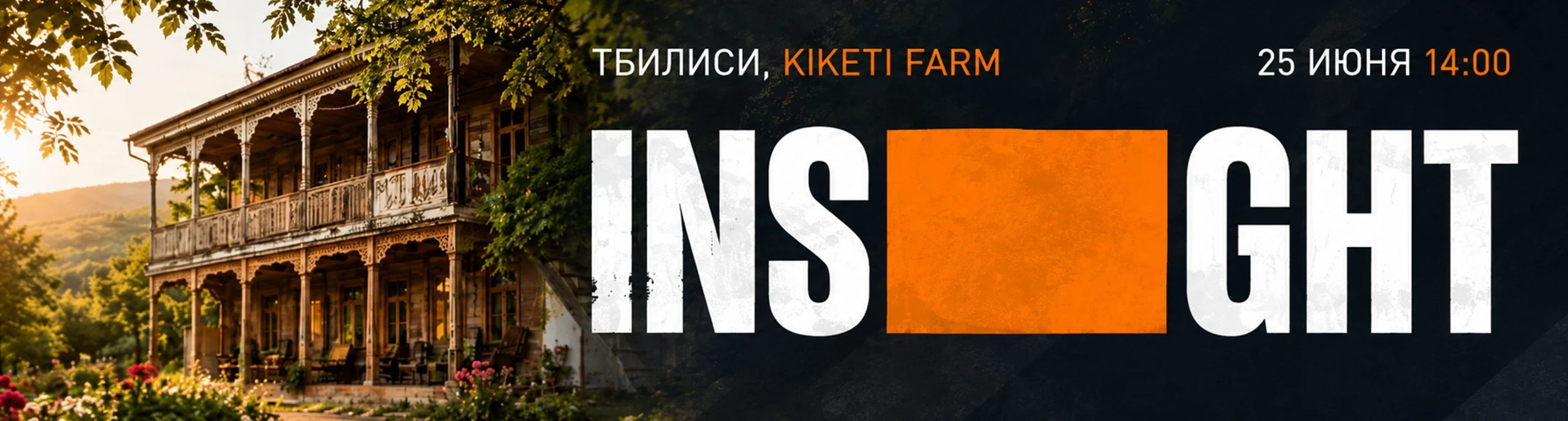
Also on June 25, the closed INSIGHT event by RUSH Recruitment Agency, Combo Cards, and JUST Brand Agency will take place for C-level representatives of the affiliate industry. The event will bring together around 200 participants at Kiketi Farm, a countryside winery near Tbilisi, among hills and vineyards.
The program includes talks analyzing real mistakes, losses, and conclusions, as well as live networking in an open-mic format without formal presentations. Guests can expect Georgian cuisine, local wines, informal communication, and new connections before the start of the main conference. Participation is available by prior registration, and the number of places is limited.
16:00 — WINWIN Partners private MMA event

On June 25, WINWIN Partners will hold a closed MMA event for representatives of the affiliate and iGaming industries. The central event of the evening will be a fight between BARS and MAMAJONOV in an open octagon. In addition to the main fight, the organizers have announced a full fight card, communication with market representatives in an informal setting, a closed autograph session with tournament participants, and performances by Renatko, Lyna Com, and secret guests.
Guests will have access to a lounge zone with a buffet, an unlimited bar, a hookah zone, and networking spaces. The number of places is limited, and participation is possible only after application approval.
MONOLIT

On the same day, MONOLIT will hold a closed event for teams and projects working with traffic. The format is deliberately non-public: no cameras, no publicity, a secret program, and a closed location. The stage will feature team and business model breakdowns, invited experts, and real cases. It is one evening for those who want to talk about traffic without unnecessary showcase and public noise. Applications are submitted through the bot.
June 26
G GATE CONF 2026

On June 26, the main program of G GATE CONF 2026 will begin. The conference will take place at Expo Georgia and will bring together affiliate marketing, media buying, and digital technologies. In 2026, the organizers highlight several directions: Nutra, iGaming, White Hat, Crypto & Finance, Dating, Adult, mVas, and Sweepstakes. Separate formats and activities are being prepared for each vertical.
19:00 — FINTECH 2.0

FINTECH 2.0 is a closed event by P2Private. The format is aimed at owners of payment solutions, payment aggregators, processing teams, representatives of cryptocurrency exchanges, merchants, and C-level market executives.
The event space will be designed as an interactive map of Georgia. Themed zones will be dedicated to individual regions of the country, their culture, gastronomy, and traditions. The program includes workshops on cooking khachapuri and khinkali, an introduction to Georgian crafts, and tastings of wines, cheeses, and local specialties. In addition, the organizers will introduce the “Cryptolari” game mechanic: the internal event currency can be earned by participating in activities and exchanged for souvenirs and gifts. Until June 22, a ticket is available for $350; from June 23 to 26, the price is $490.
20:00-01:00 — G GATE AWARDS

After the first day of the conference, G GATE AWARDS, the annual affiliate industry awards, will take place at the Tsiskvili complex at 99 Akaki Beliashvili Street. The complex is located in one of Tbilisi’s green areas and is known for its atmosphere of Georgian hospitality: spacious halls, open areas, national architecture, elements of traditional decor, and the feeling of a countryside venue within the city.
The ceremony will bring together representatives of leading companies, media buying teams, affiliate programs, advertisers, and market services. This year, the awards program includes 25 nominations.
Guests can choose from three ticket categories: Gala Pass for $200 with standing placement, an open bar, buffet, and show program; Gala Pass Seat for $300 with a table seat on the second floor; and VIP Seat for $400 with seating near the stage, dinner, and drinks.
21:00-03:00 — РartyJAN GEORGIA

After G GATE AWARDS, РartyJAN GEORGIA will take place on June 26. This is a closed event focused on communication, new connections, and the atmosphere of traditional Georgian hospitality. The program includes Georgian cuisine and shashlik by Gurgen, karaoke, a lounge zone with hookahs on an open terrace, and music by DJ Manuchi. The event location is not disclosed, and prior registration is required to participate.
June 27
Satoshkin Meetup

On June 27, as part of the final day of G GATE CONF 2026, Satoshkin Meetup will take place. The organizers are preparing a closed meeting for business owners and C-level executives from payment solutions, exchange services, iGaming, cryptocurrency projects, and related areas.
The main focus of the event is quality networking, experience exchange, and discussion of current market issues among professionals. Participation is possible only after prior approval. The organizers will review applications and form a guest list from the most experienced and active industry representatives. The number of places is limited.
19:00-02:00 — G GATE CONF 2026 Afterparty

The official G GATE CONF 2026 Afterparty will take place on June 27 from 19:00 to 02:00 at Villa Mosavali, a countryside venue among scenic hills near Tbilisi, where open spaces and views of nature create an atmosphere of rest away from the city noise.
The program includes networking, entertainment, headliner performances, bars, and special zones for communication. VIP areas will also be available for holders of tickets in the G MEMBER, ULTIMA, and LEGEND categories. After an eventful program, guests can expect a bright finale to the week: a summer night, music, communication, and the atmosphere of a big celebration that will last until dawn.
June 28
13:00-21:30 — Gostex FinTech Leaders Meetup

The final event of G GATE CONF 2026 will be the closed Gostex FinTech Leaders Meetup. On June 28 in Tbilisi, the meeting will bring together company founders, business owners, C-level executives, department heads, and fintech market experts.
The business program includes cases of AI implementation in fintech products and business processes, compliance, team scaling, and business development. The event will end with an evening program by the pool with a panoramic view of Tbilisi. Participation is possible only after approval by the organizers.
Attractions
Tbilisi has a large number of beautiful places, historical sites, and interesting attractions worth visiting. Let’s look at some of them.
Rezo Gabriadze Marionette Theater
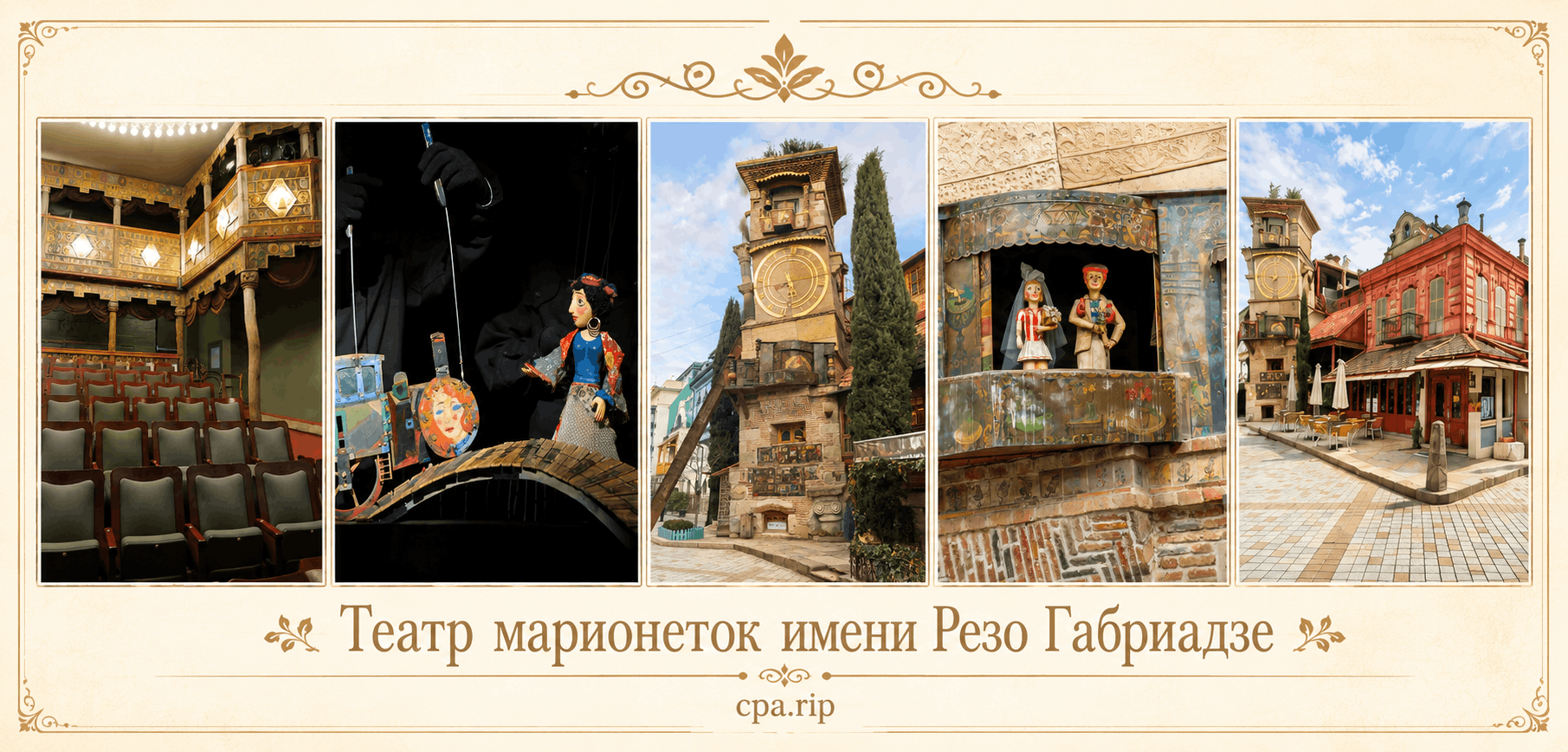
One of the most recognizable Instagrammable places in Old Tbilisi. The small theater on Shavteli Street opened in 1981, and its fairytale clock tower appeared nearby later, in 2010. It was created by Rezo Gabriadze, a Georgian artist, director, playwright, and screenwriter, author of the scripts for the films “Mimino” and “Kin-dza-dza!”. It is easy to recognize by its deliberately “crooked” shape, painted details, and ceramic tiles.
Every hour, an angel comes out of a small door and strikes the bell, and twice a day, at 12:00 and 19:00, the tower shows a short puppet scene called “The Circle of Life”. The theater itself is chamber-sized, with only 80 seats, so people come here not for scale, but for atmosphere: old Tbilisi, a narrow street, soft light, marionettes, and the feeling that the city turns into a stage set for a few minutes.
Nearby, you can walk to the Anchiskhati Church, have coffee at Gabriadze Café, or simply stay on Shavteli Street and wait for the next clock strike. You can also stop by Cafe Leila for pkhali, badrijani, vegetable dishes, lemonade, and a light pause.
Abanotubani Sulfur Baths
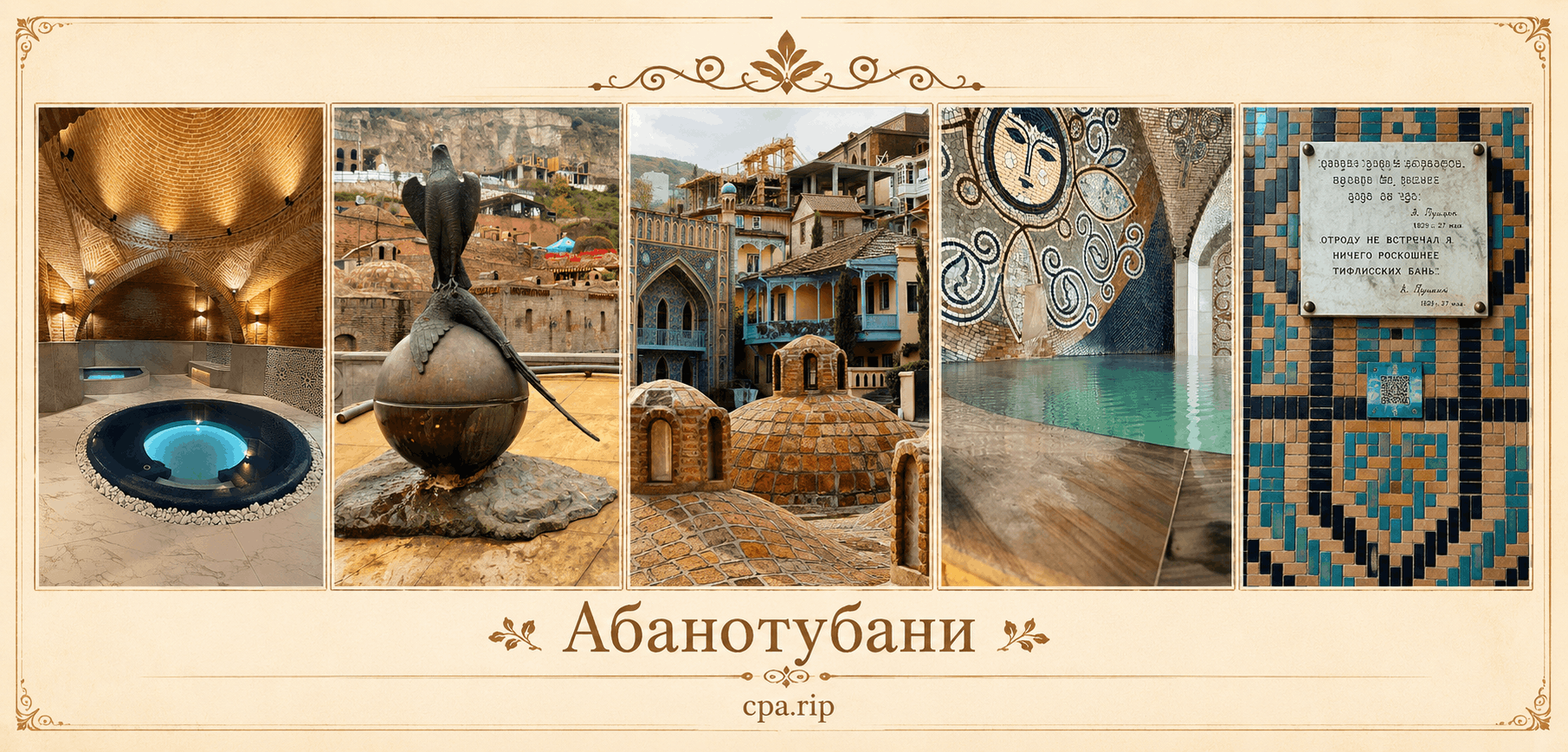
Abanotubani Sulfur Baths are one of the most atmospheric places in Old Tbilisi. They are easy to recognize by their brick domes, which seem to grow straight out of the ground, old facades, steam above the entrances, and the distinctive smell of sulfur. According to legend, it was here that King Vakhtang Gorgasali discovered hot springs and decided to found a new city. The name Tbilisi is also linked to this: from the Georgian “tbili”, meaning “warm”. The baths themselves have existed here for more than 1,500 years, although the buildings visible today belong to later periods: the bath district actively developed in the 16th–18th centuries, and the Orbeliani Bath received its eastern appearance in the second half of the 19th century.
People come here not only for photos, but also for a real Tbilisi experience: hot sulfur water, stone rooms, steam, kisi peeling, and an old urban tradition that has still not turned into a museum set. For locals, the baths were long a place of rest, conversations, and recovery. Public halls usually cost around 10–30 GEL per person per hour, while private rooms start at approximately 80 GEL and operate from morning until late evening. Nearby, across the river at 3 Metekhi Slope, is Old Metekhi Restaurant: the restaurant is located in the historic area, and the hall and balcony offer views of the old city, the Kura, and Narikala.
Meidan Bazaar
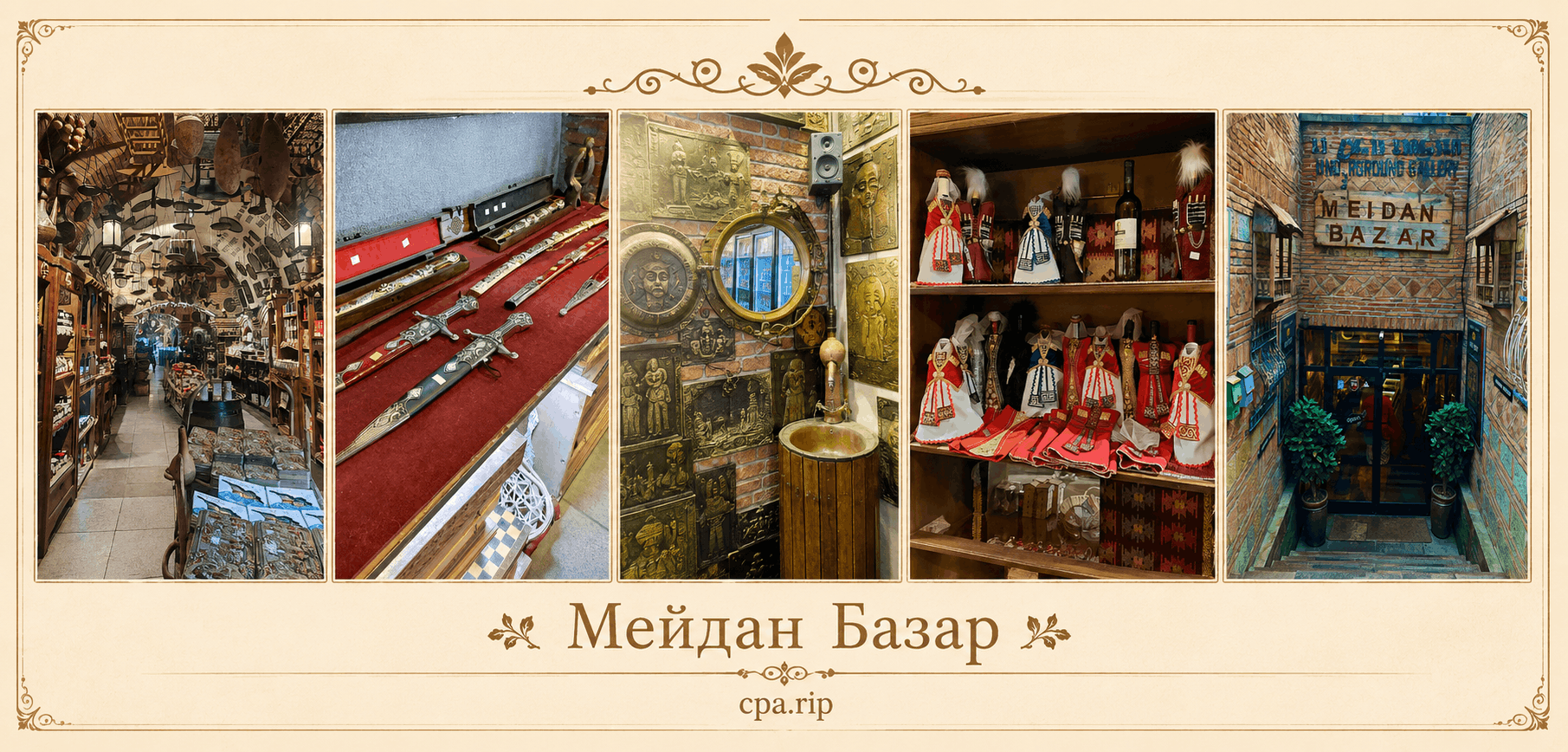
Meidan Bazaar is one of the most colorful corners of Old Tbilisi and a modern continuation of the old trading square. It is located under Meidan Square, in an area that has long been considered one of the main trading places not only in Tbilisi, but throughout the Caucasus. Merchants from the East came here, craft workshops operated nearby, and the square itself was not just a market, but a place for meetings, exchange of news, and city life. Today, the former trading rows are gone, but underground the atmosphere of the old bazaar remains: arched passages, brick walls, soft light, and the feeling that the city is briefly returning to its caravan past.
The value of Meidan is not in its scale, but in its details. It is not a large market for everyday shopping, but a compact showcase of Georgian culture, where wine, spices, churchkhela, tea, honey, jam, ceramics, jewelry, antiques, carpets, handmade items, and local souvenirs are gathered in one space. People come here to choose a gift, try something local, look at old things, and feel trading Tbilisi not through a museum, but through smells, objects, and conversations with sellers. Entry is free, and the approximate opening hours are daily from 10:00 to 22:00.
What else to see
Tbilisi does not come down to one main attraction. The city is better revealed through different places: old streets, churches, bridges, markets, and views of the hills. Together, they form the living history of a city where the past exists alongside modern life.
If you want to build Tbilisi into one route, after the Old City it is worth going up to Narikala. The fortress stands above the Kura and the historic quarters, so from here you can clearly see how the city is layered: sulfur baths, tiled roofs, Metekhi on the cliff, modern bridges, and new districts on the hills. Nearby is the “Mother of Georgia” monument, below are the Metekhi Church and the monument to Vakhtang Gorgasali, whose legend is associated with the founding of Tbilisi. This part of the city is built on contrasts: ancient walls, churches, balconies, steep streets, and views worth climbing for closer to sunset.
Another Tbilisi begins beyond the old streets. Rustaveli Avenue shows the city from a more ceremonial side: theaters, museums, wide facades, and urban life without a tourist postcard feel. People go up to Mtatsminda for the panorama, the funicular, and the view of the whole city, while Sameba Cathedral is visited for its scale: it is one of the main modern symbols of Tbilisi. The route can also include the Dry Bridge, where paintings, old books, vinyl, jewelry, and antiques are sold. If you want to see the city from another, more monumental side, it is worth going to the Chronicle of Georgia monument. It consists of 16 massive columns more than 30 meters high, depicting Georgian kings, queens, heroes, scenes from the country’s history, and biblical stories.
Where to sit and what to try
Georgian cuisine is part of the country’s culture: feasts, regional recipes, toasts, homemade wine, bread from the oven, walnut sauces, herbs, spices, and dishes that are prepared differently in different regions. Wine tradition holds a special place. The ancient Georgian method of producing wine in qvevri is included in the UNESCO list of intangible cultural heritage.
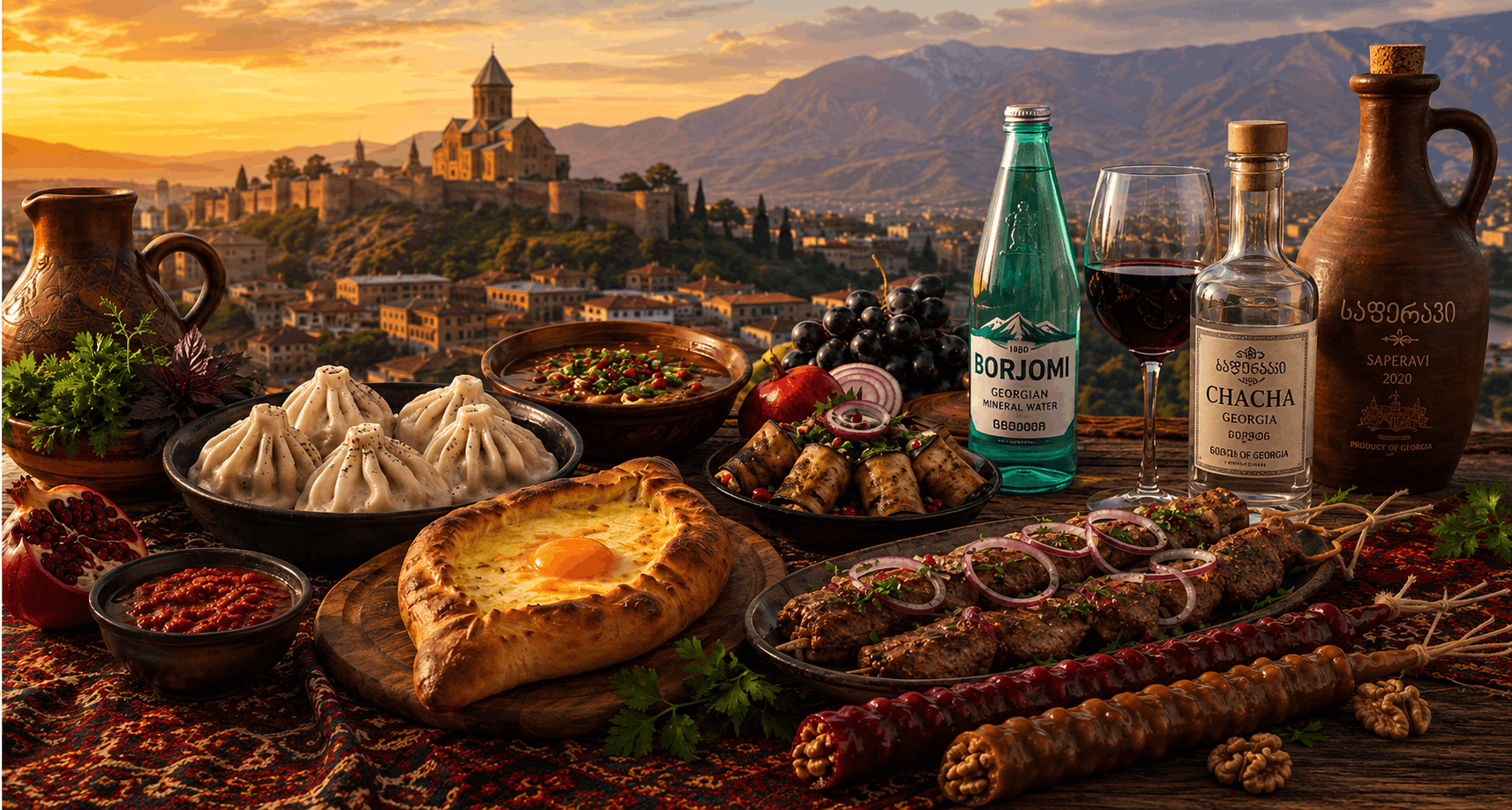
Khinkali
Khinkali are large dough dumplings with a meat filling and hot broth inside. On the official Georgia Travel website, khinkali are called “a child of Georgian cuisine”: their shape resembles the sun, and the folds resemble borjgali, an ancient Georgian solar symbol. It is sometimes said that proper khinkali should have at least 18–20 folds.
Where to try: Pasanauri, Sofia Melnikova’s Fantastic Douqan, or Khinkali Collection. Pasanauri is suitable for a first introduction to classic Georgian cuisine and khinkali without a complicated restaurant scenario. Sofia Melnikova’s Fantastic Douqan is a more atmospheric place with a large menu and a courtyard. Khinkali Collection can be chosen if you want to focus specifically on khinkali.
Khachapuri
Khachapuri is Georgian pastry with cheese. Different regions have their own versions: Imeretian, Megrelian, and Adjarian. “Khacho” means curd cheese, and “puri” means bread, literally “cheese bread”. Written mentions of the dish date back to the 15th–16th centuries. Georgia has a Khachapuri Index, an unofficial economic indicator that measures changes in the cost of preparing khachapuri. It is maintained by the ISET Policy Institute at the International School of Economics at Tbilisi State University.
Where to try: Puri Guliani or Cafe Daphna. Puri Guliani is suitable for a beautiful breakfast or lunch with pastries, Adjarian khachapuri, and lemonade. Cafe Daphna is a more intimate place with homemade Georgian cuisine, where you can try different types of khachapuri, including imeruli and lazuri.
Pkhali
Pkhali is a cold appetizer made from vegetables, herbs, walnuts, garlic, and spices. There are versions with spinach, beetroot, beans, or eggplant. It is not one strict recipe, but a culinary principle: a vegetable base, walnut dressing, herbs, and spices.
Where to try: Shavi Lomi, Barbarestan, or Keto and Kote. Shavi Lomi is suitable for dinner with the atmosphere of old Tbilisi and a modern presentation of Georgian dishes. Barbarestan is a more restaurant-style option with a historical concept and careful presentation. Keto and Kote can be chosen for the terrace, view, and a calm evening format.
Badrijani
Badrijani means eggplant in Georgian. Most often, this dish refers to fried eggplant rolls with walnut paste, pomegranate seeds, and herbs. The taste is based on balance: the eggplant should be soft but not greasy, while the walnut filling should be dense, spicy, and not overpower the vegetable base.
Where to try: Shavi Lomi, Barbarestan, Keto and Kote, or Pasanauri. Shavi Lomi and Barbarestan are worth visiting for a more expressive presentation, Keto and Kote for dinner on the terrace, and Pasanauri if you want to collect several basic Georgian dishes in one visit.
Kharcho
Kharcho is a thick soup or hot dish with meat, rice, herbs, garlic, spices, and a sour-spicy base. In classic versions, tklapi, a sour fruit leather usually made from cherry plum or plum, may play an important role. Outside Georgia, kharcho is often simplified to “spicy soup with rice”, but in Georgian cuisine, what matters more is not the spiciness itself, but the balance of acidity, spices, herbs, and meat flavor.
Where to try: Pasanauri, Bread & Wine, or Culinarium Khasheria. Pasanauri is suitable for an understandable traditional format, Bread & Wine for a hearty lunch in the center, and Culinarium Khasheria for those who want Georgian cuisine with a more modern author’s presentation.
Chkmeruli
Chkmeruli is chicken in garlic sauce. It is usually served hot, often in a ketsi, a clay pan. The sauce can be milky, creamy, or more garlic-forward. In chkmeruli, the sauce is no less important than the chicken, so bread is usually ordered with the dish to dip into the hot garlic base.
Where to try: Pasanauri, Shavi Lomi, or Keto and Kote. Pasanauri is for a simple traditional dinner, Shavi Lomi for a more atmospheric option, and Keto and Kote for a calm evening with Georgian cuisine and wine.
Mtsvadi
Mtsvadi is Georgian charcoal-grilled shashlik. It is served with onion, herbs, bread, and sauces, most often tkemali or adjika. In a Georgian feast, mtsvadi often appears at large gatherings, family celebrations, and countryside trips. Tkemali helps balance the fattiness of the meat and adds a sour fruit note to the dish.
Where to try: Pasanauri, Sormoni Meidan, or Georgian House. Pasanauri is suitable for a first hearty dinner with khinkali, khachapuri, and meat. Sormoni Meidan is a convenient option in the tourist part of the city. Georgian House can be chosen for a large dinner with traditional cuisine, a lively atmosphere, and wine.
Georgian cheeses
Georgia produces dozens of types of cheese: fresh, brined, smoked, stretchy, aged, mountain, festive, and rare regional varieties. The official Georgia Travel tourism portal writes about more than 60 unique Georgian cheeses.
Cheese in Georgia has historically been connected with households, pastures, and regional cuisine. In mountainous areas, cheese was a convenient product for storage and travel: milk spoils quickly, while cheese can be salted, aged, transported, and taken along. That is why many Georgian cheeses were born not in restaurants, but in village and shepherd culture.
Where to try: 8000 Vintages, Barbarestan, or Puri Guliani. 8000 Vintages is suitable for tasting Georgian wines with a cheese plate. Barbarestan is for a more restaurant-style introduction to local products. Puri Guliani is an option if you want to combine cheese, pastries, and khachapuri.
Churchkhela
Churchkhela is a Kakhetian sweet made from nuts and thickened grape juice. Nuts are threaded onto a string, dipped several times into a thick grape mass, and dried. Churchkhela is connected with peasant life, the grape harvest, and the need to make nutritious food that keeps for a long time.
Where to try: at markets, wine shops, and tastings. For a more polished format, 8000 Vintages is suitable: its tasting sets include Georgian wines, cheese, dried fruits, and churchkhela. If you want a more lively urban experience, you can go to a market and choose churchkhela from sellers who offer dozens of varieties.
Georgian wine
Georgia is considered one of the oldest wine-producing regions in the world. For Tbilisi, wine is not only a tradition, but also part of city life: small wine bars, family cellars, tastings, and restaurants with local varieties have long become a natural continuation of a walk through the old city.
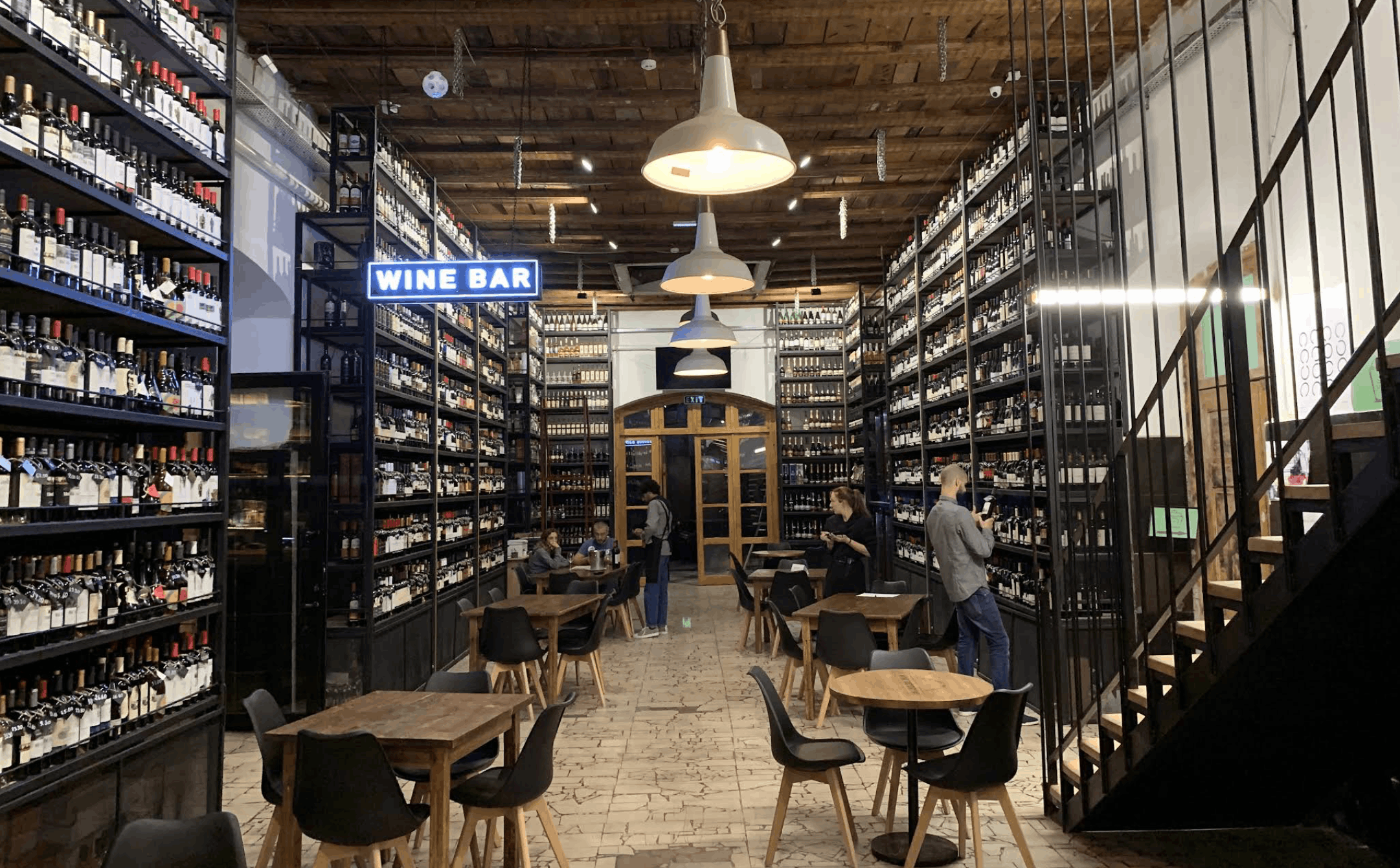
Where to try: 8000 Vintages, Vino Underground, or Wine Factory N1. 8000 Vintages is better suited for a detailed tasting and introduction to different regions. g.Vino is for a calm wine bar in the center. Vino Underground is for natural and qvevri wines. Wine Factory N1 is for an evening in a large gastronomic space with restaurants and bars.
Chacha
Chacha is a strong Georgian drink made from grape pomace left after wine production. Its strength usually starts at around 40%, while homemade chacha can be noticeably stronger than industrial versions. Therefore, it is better to taste it moderately, especially after wine.
Where to try: Chacha Time or Chacha Corner. Chacha Time is suitable for an evening bar with a large selection of chacha and cocktails based on it. Chacha Corner is a more intimate format for tasting and buying a bottle to take home.
Georgian lemonade
Georgian lemonade is a popular non-alcoholic drink with bright flavors: tarragon, pear, cream, feijoa, lemon, and other options. Tarragon is especially memorable for tourists — a green lemonade with estragon. Georgian lemonades have long become part of urban and restaurant culture: they are drunk with khinkali, khachapuri, shashlik, and spicy dishes.
Where to try: Lagidze Water or Puri Guliani. Lagidze Water is a classic spot for lemonades and quick dishes near Sameba. Puri Guliani is suitable if you want to combine lemonade with khachapuri, pastries, and a slow breakfast or lunch.
Mineral water
Mineral water is an important part of Georgian gastronomy. The most famous brand is Borjomi, associated with the resort of the same name. Borjomi springs have been known for a long time, but became especially famous in the 19th century. The first water bottling plant was built in 1890.
The uniqueness of Borjomi is that it is not just carbonated water, but natural mineral water of volcanic origin. It rises from a depth of around 9–10 km, while natural carbon dioxide pushes it to the surface. As a result, the water is naturally carbonated and comes out of the springs warm.
Where to try: in any Georgian cuisine restaurant, café, or store. In restaurants, Borjomi is usually ordered with hearty dishes, khinkali, khachapuri, mtsvadi, and late dinners.
Modern restaurant dinner
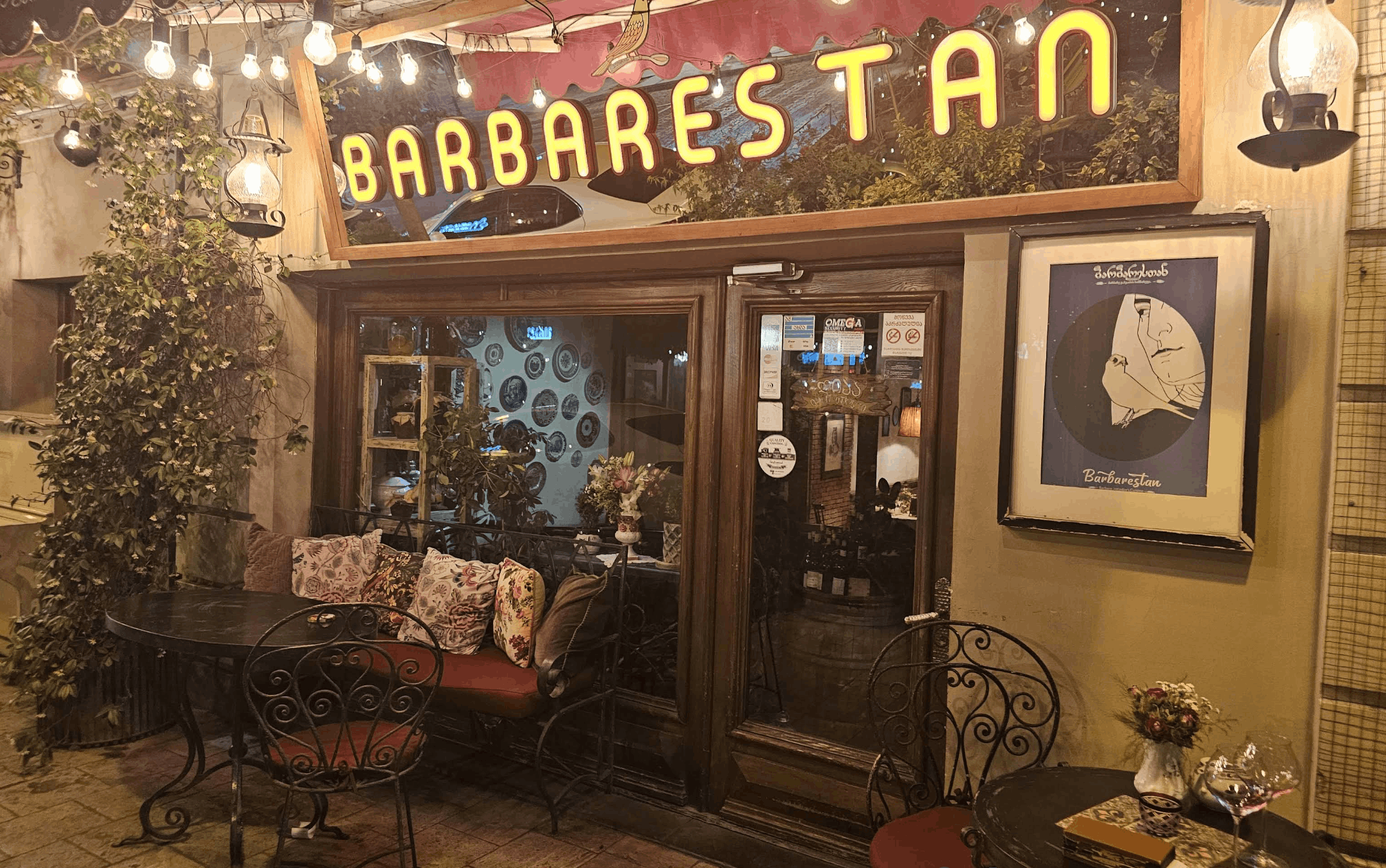
Barbarestan is one of the most famous restaurants in Tbilisi for a calm gastronomic evening. The concept is connected with historical Georgian cuisine, while reviews often note the service, atmosphere, wine list, and careful presentation. It is not a place for a quick snack, but an option for dinner that is better booked in advance.
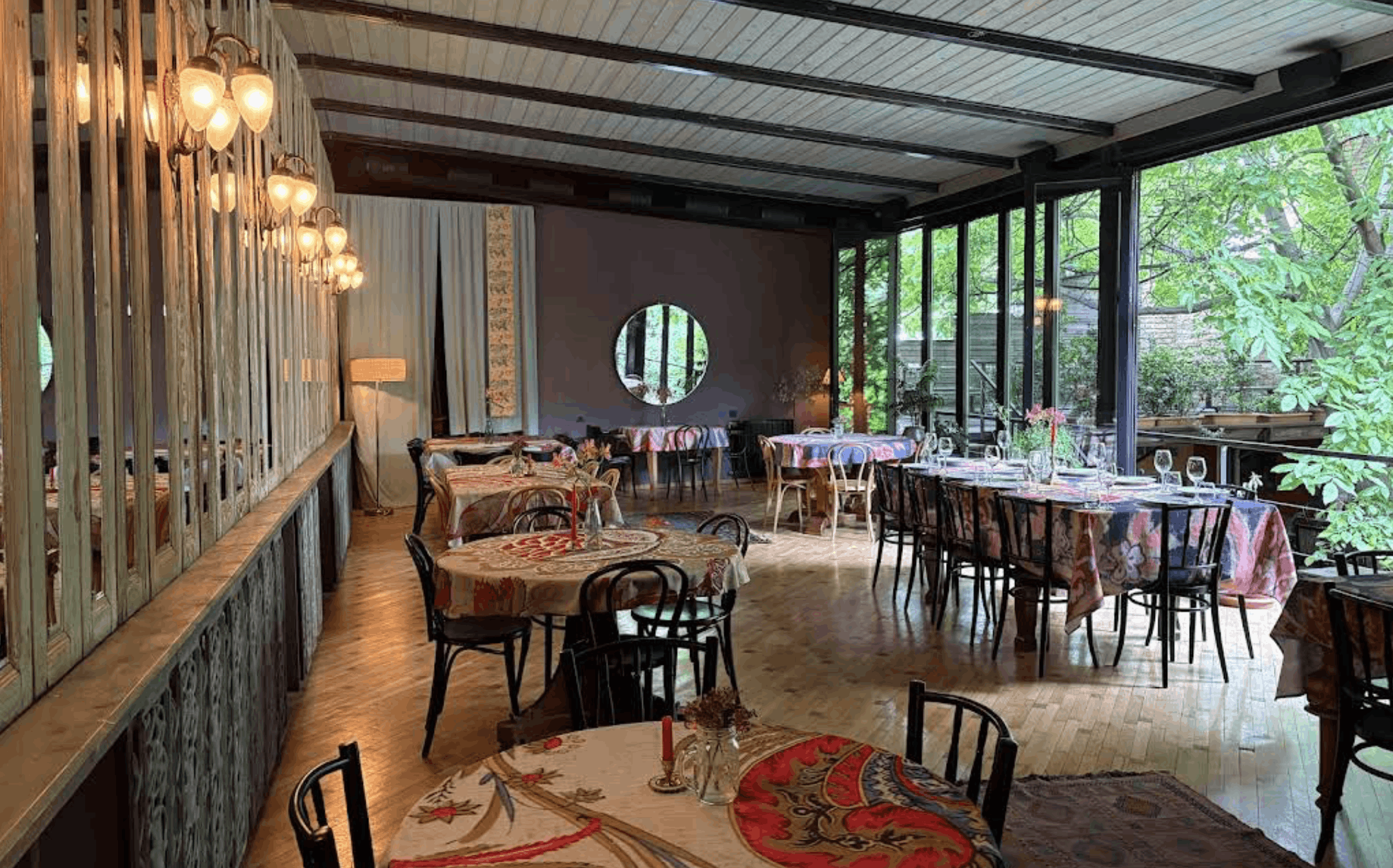
Shavi Lomi is a restaurant with a livelier and more informal atmosphere. People come here for Georgian cuisine in a modern interpretation, a courtyard, wine, and dishes that work well for a group. It is a good option if you want not a tourist hall on a busy street, but a more Tbilisi-style place for a long evening.
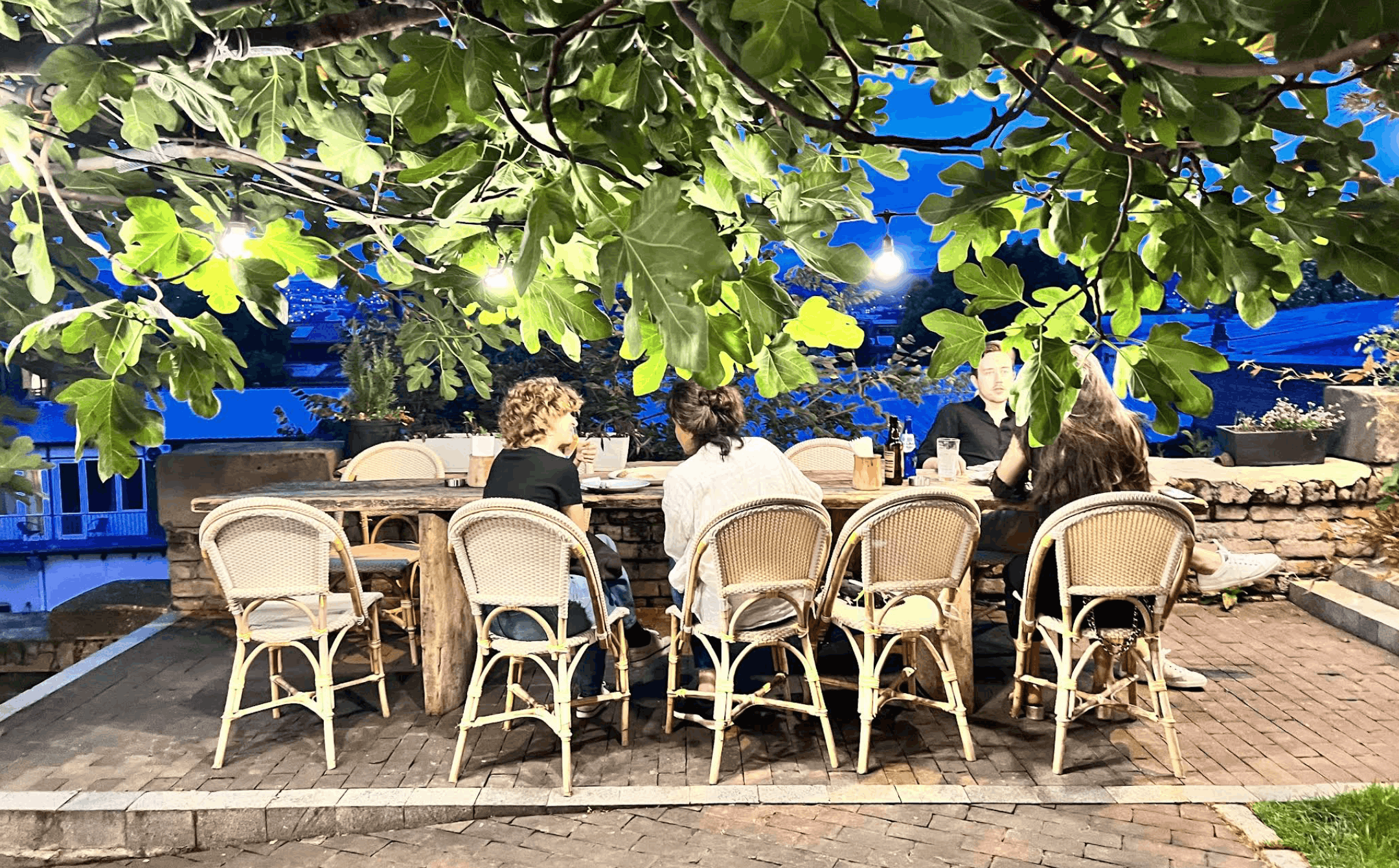
Keto and Kote is a restaurant in the Vera district, often chosen for its terrace, view, and calm atmosphere. The format is suitable for dinner with Georgian dishes, wine, and a softer restaurant scenario without the feeling of a noisy feast.
Wine Factory N1 is a gastronomic space in the building of a former wine factory. It is a convenient option for an evening without a strict plan: you can come for dinner, wine, or continue the route through several bars and restaurants within one space.








Comments