



We have compiled free services for AML checks of crypto wallets: Telegram bots, web tools, and services with a free limit. We explain what such checks are needed for and which services can be used.
Most of the listed services support different cryptocurrencies and networks. In this article, we review AML checks using USDT TRC20 as an example, since it is one of the main payment formats in the affiliate industry.
An AML check of a cryptocurrency address is an analysis of a wallet or transaction for links to risky sources of funds. Such checks are used before receiving, sending, or exchanging funds, as well as before transferring assets to centralized exchanges.
The check helps assess whether an address is linked to sanctioned wallets, fraudulent schemes, mixers, darknet markets, hacked services, unlicensed exchangers, or other high-risk categories.
An AML report usually shows the overall risk level, categories of fund sources, the share of funds from different types of sources, and additional information about the address or transaction. The report format depends on the specific service.
It is important to note that an AML check does not guarantee the absence of blocking or additional questions from an exchange, exchanger, or payment service. It is a tool for preliminary risk assessment.
Free and Freemium Services for AML Checks
This section includes services that offer a free check scenario: a trial, free limit, basic check without payment, demo check, and so on.
MistTrack
- Website: misttrack.io
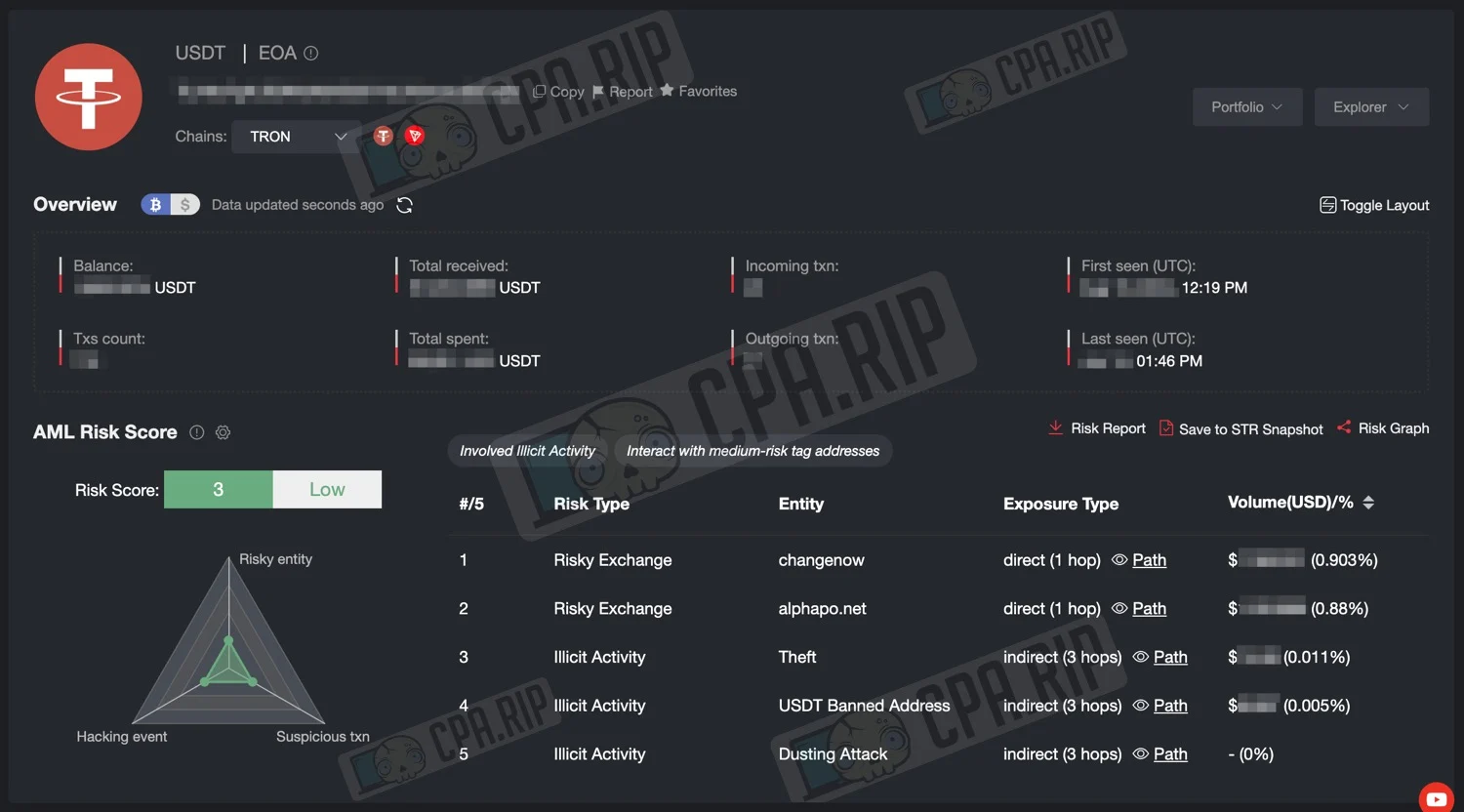
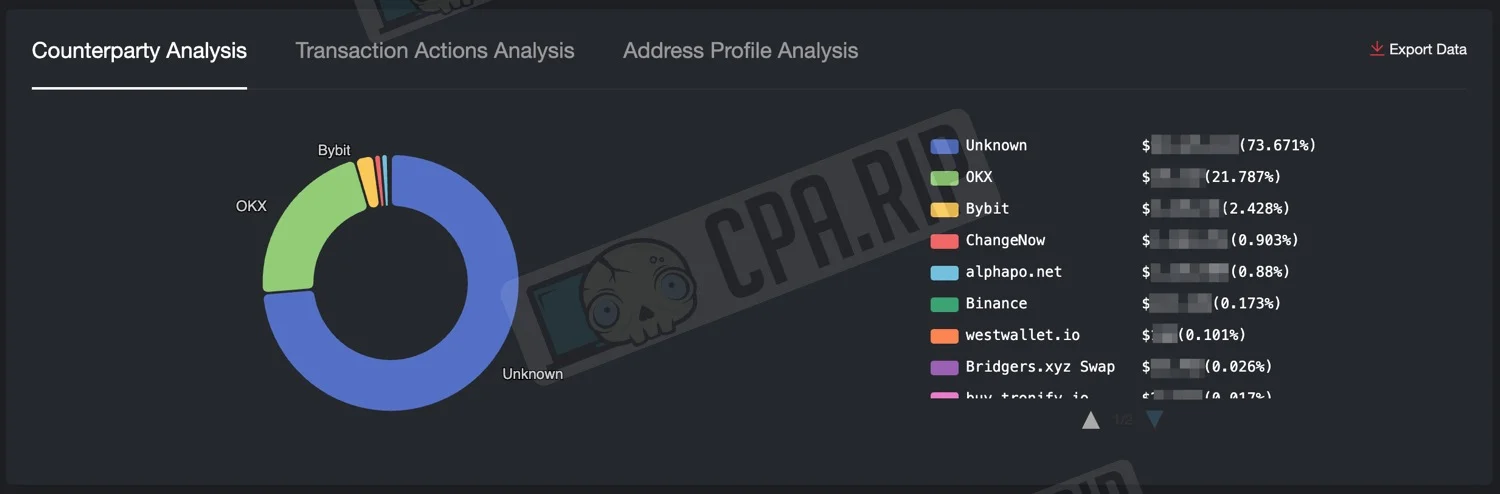
MistTrack is an on-chain analytics and AML check service by SlowMist. It is suitable for basic address checks, transaction analysis, and assessing links between wallets. The service can be used for an initial check of a USDT wallet before sending or receiving funds. A separate professional plan is available for advanced analysis. There is a free 7-day trial.
Supported networks:
- TRON-USDT
- ETH-USDT
- BSC-USDT
Example of a Free AML Check
Free check:
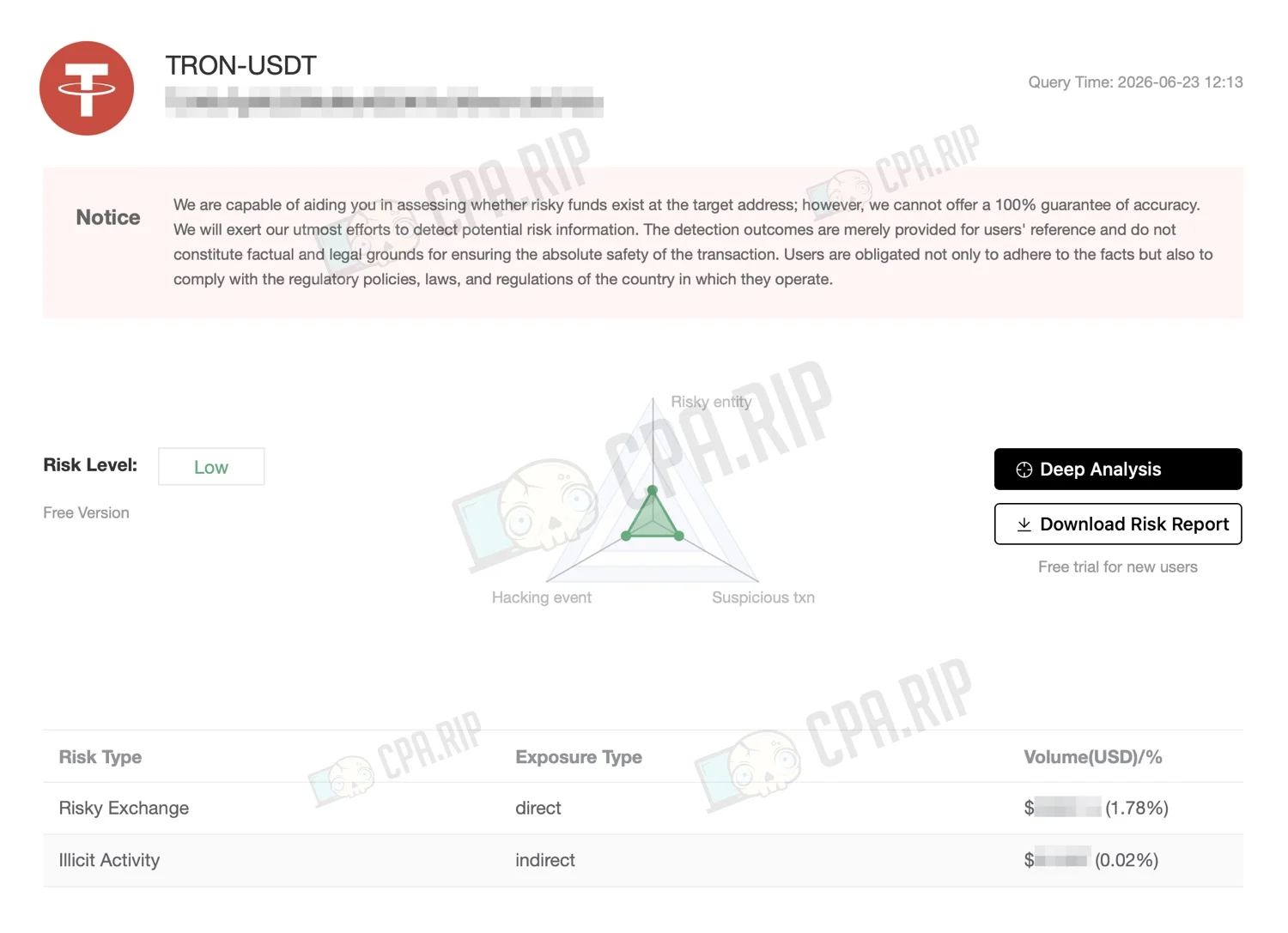
Check in the 7-day free trial mode without requiring card linking:
BitOK AML Bot
- Bot: @BitOK_AML_bot
- Website: bitok.org/aml-checks
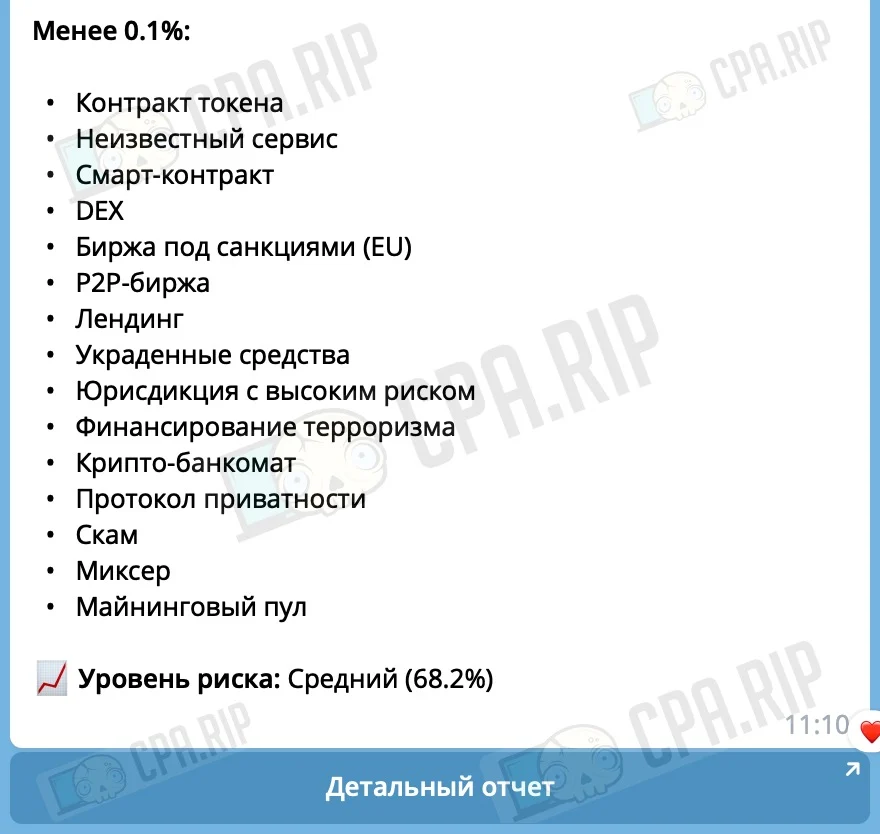
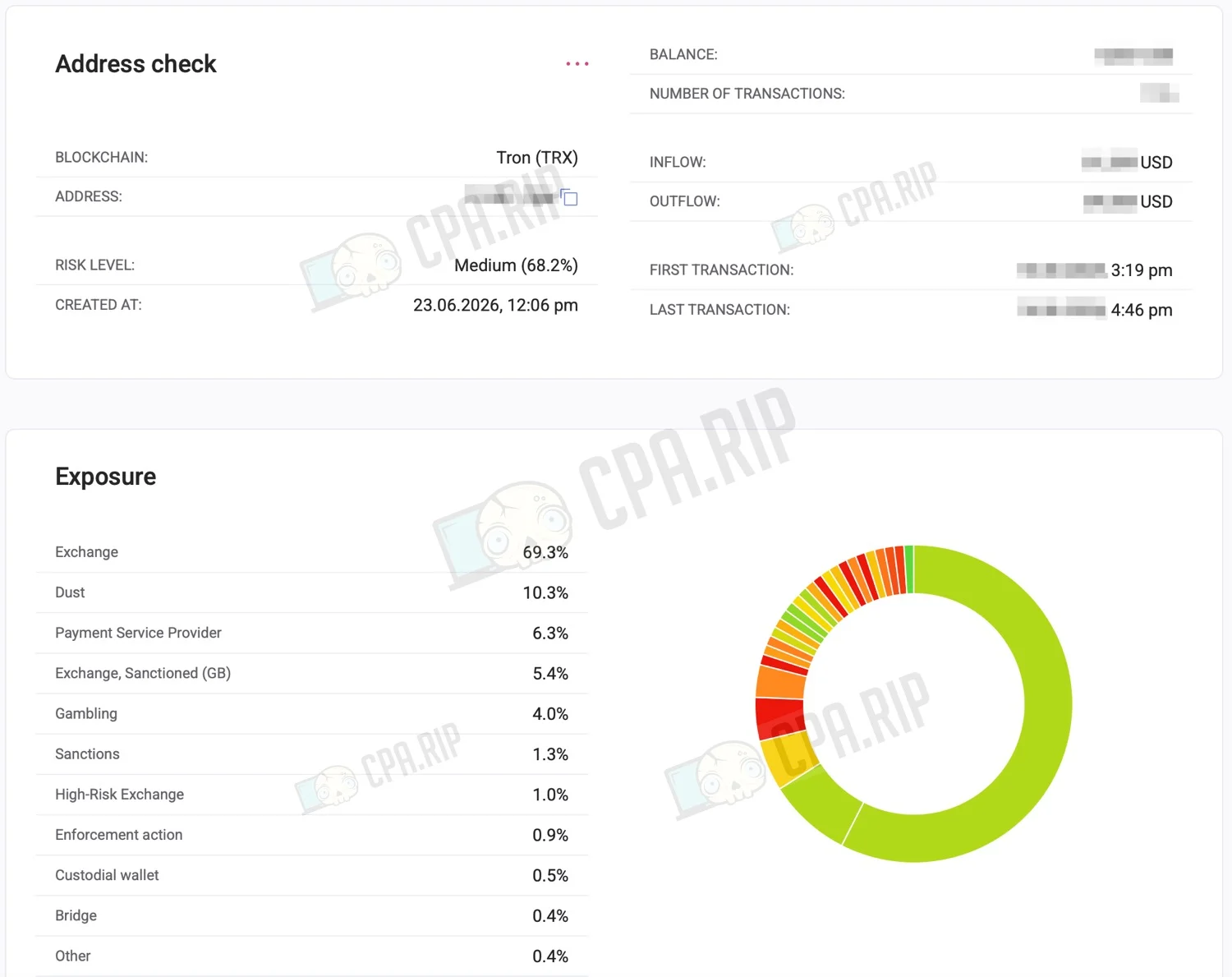
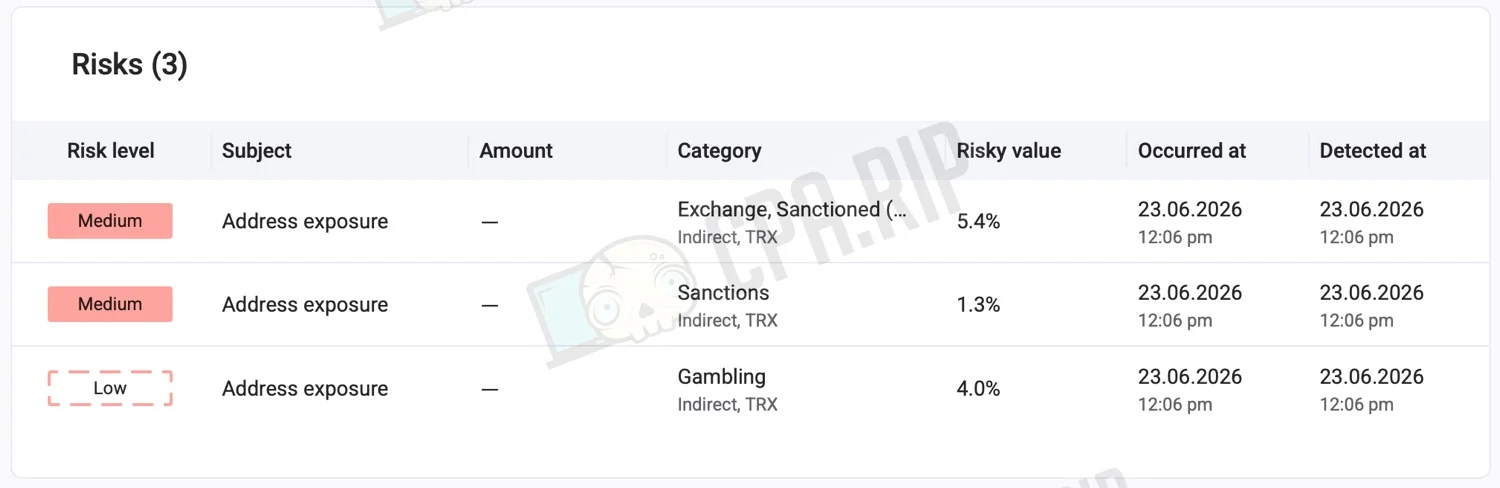
BitOK AML Bot is a convenient Telegram bot for AML checks of cryptocurrency addresses. Five free checks are available. A website check is also available.
Supported networks:
- BTC,
- TRX,
- ETH,
- BSC,
- LTC.
Example of a Free AML Check
In the bot:
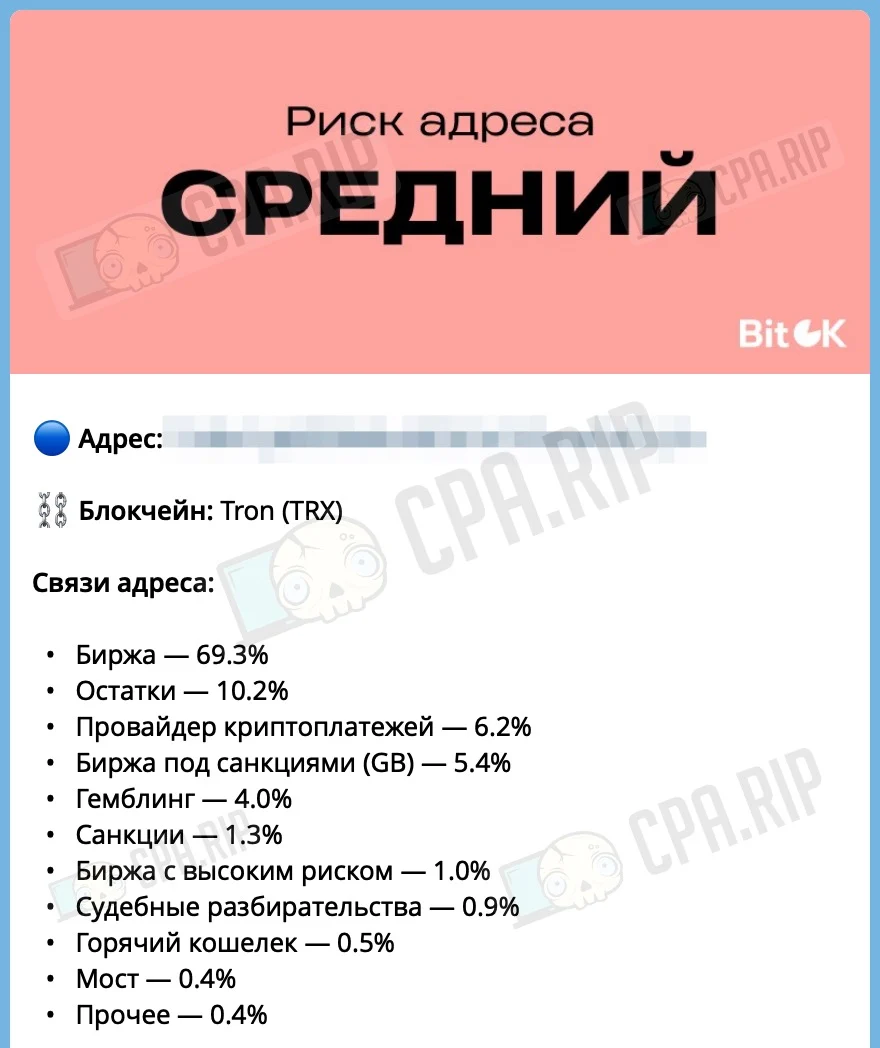
On the website:
AML Quppy Bot
- Bot: @QuppyAMLBot
- Website: quppyaml.com
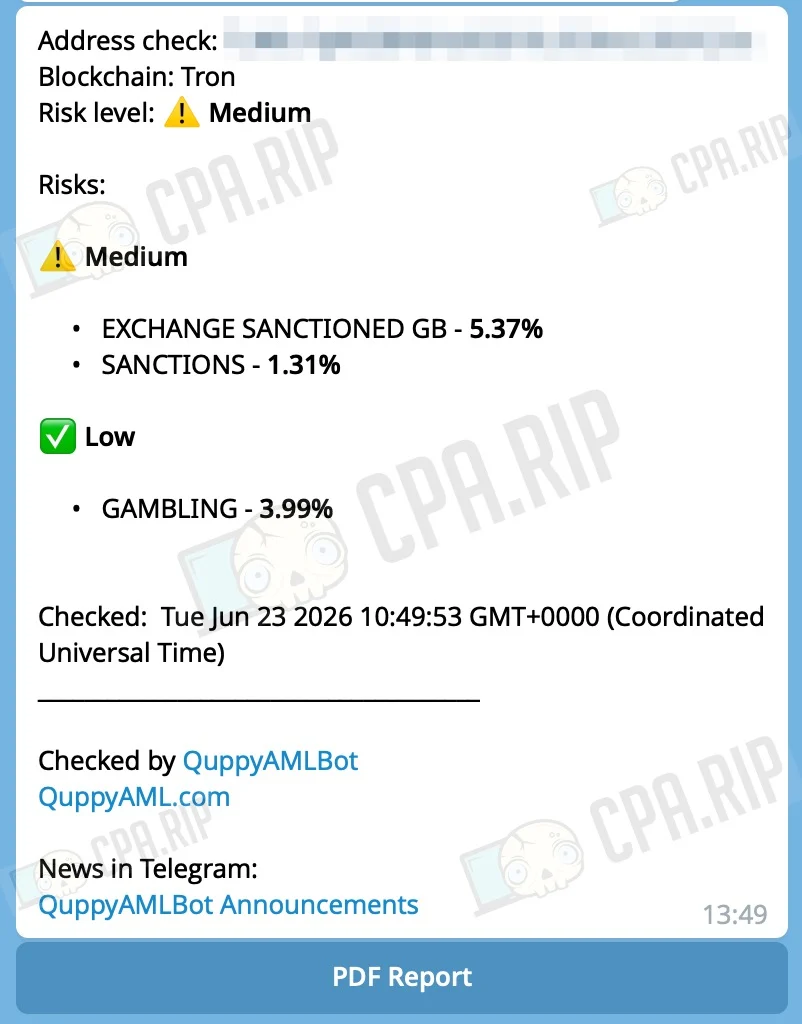
AML Quppy Bot is a Telegram bot for AML checks of cryptocurrency addresses and transactions. Five free checks are available.
Supported networks:
- Tron,
- Ethereum,
- Bitcoin,
- Litecoin,
- Binance Smart Chain,
- Solana,
- Polygon,
- Avalanche,
- TON,
- Arbitrum,
- Optimism.
Example of a Free AML Check
AMLBot
- Website: web.amlbot.com
- Bot: @cryptoaml_bot
AMLBot is a service for AML checks of cryptocurrency wallets and transactions. Checks are available through the web interface, mobile app, and Telegram bot. For businesses, wallet screening, transaction monitoring, and API are available.
Supported blockchains in free mode:
- Bitcoin,
- Tron,
- Ethereum,
- BNB Chain,
- Arbitrum,
- Avalanche,
- Polygon,
- Optimism, Base.
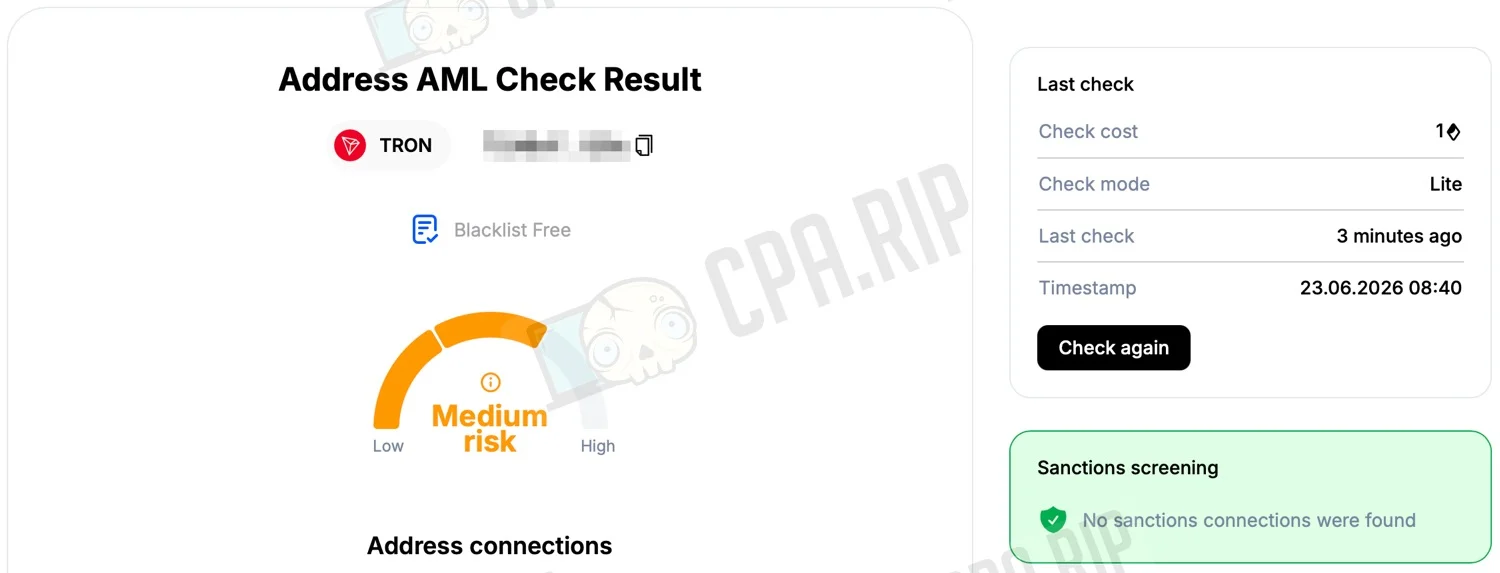
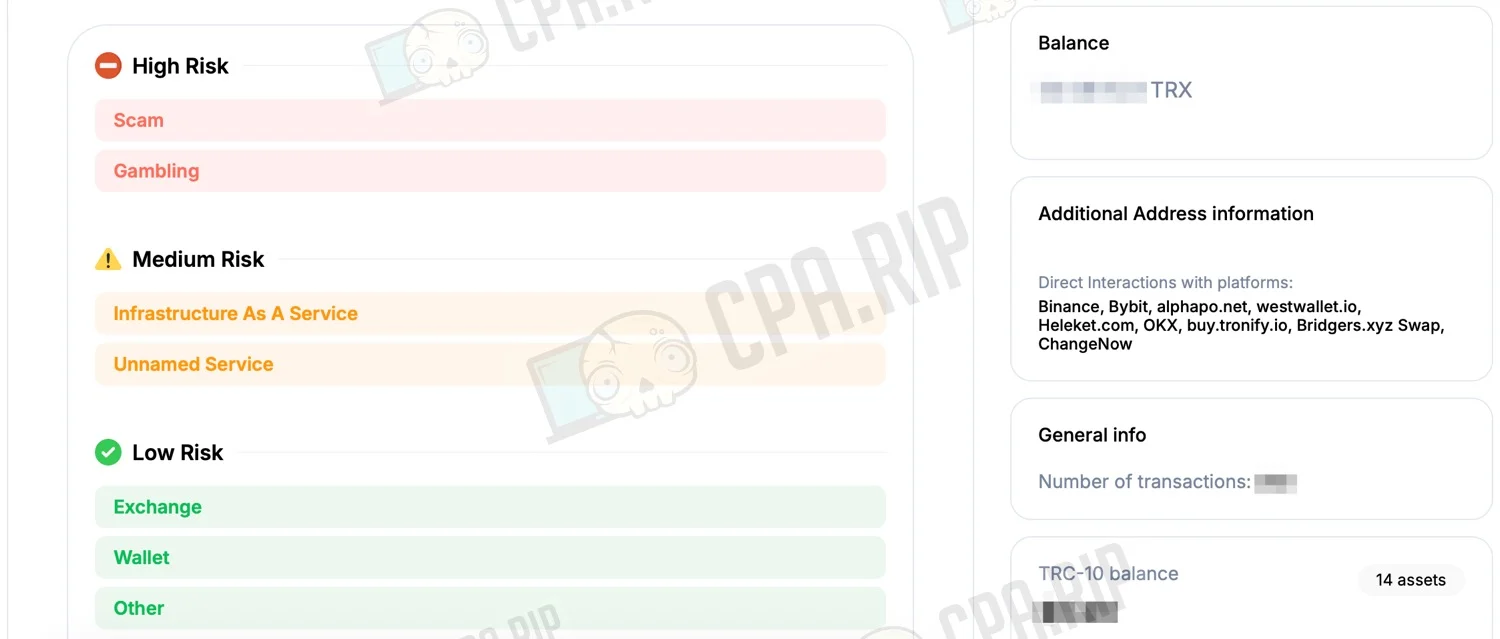
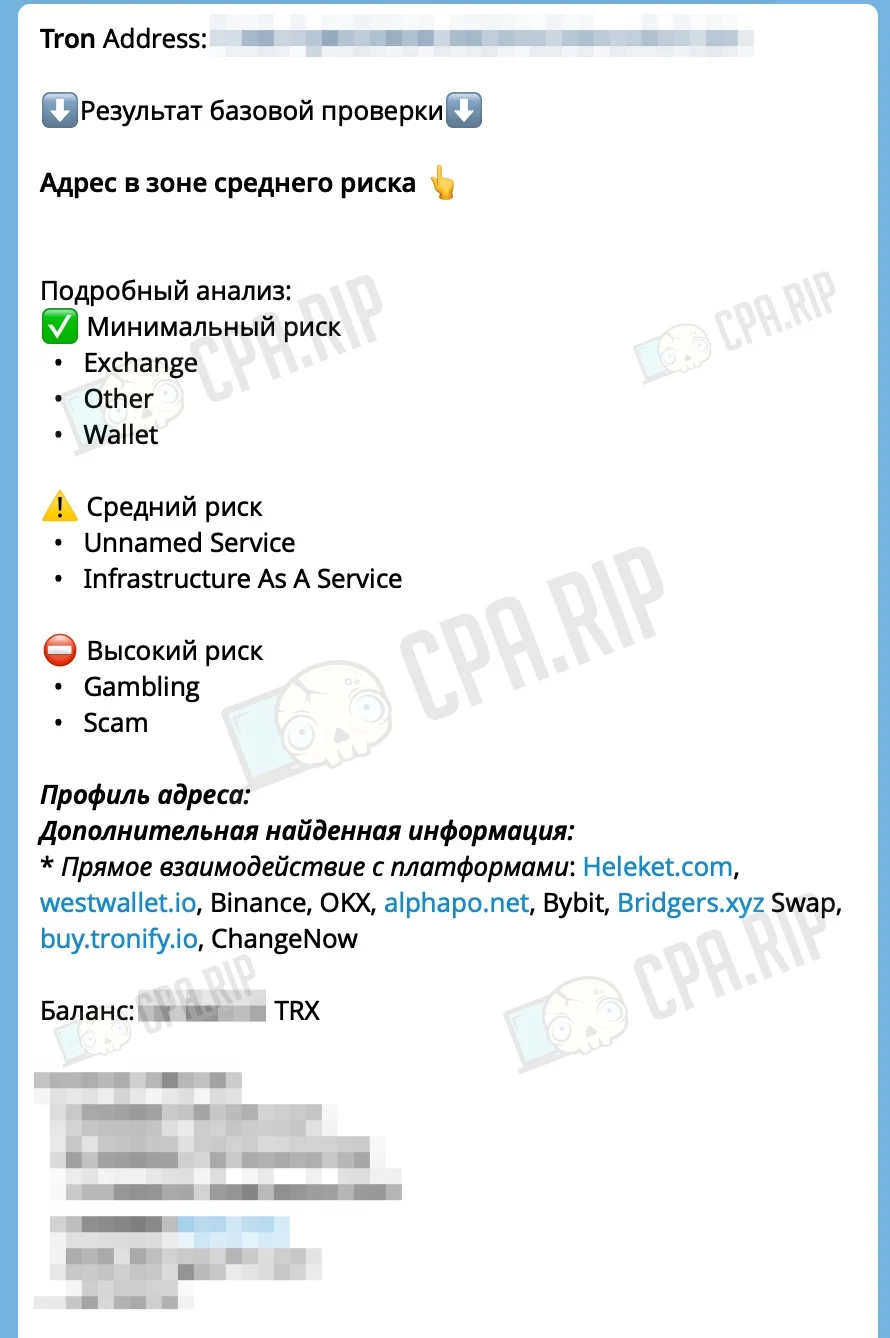
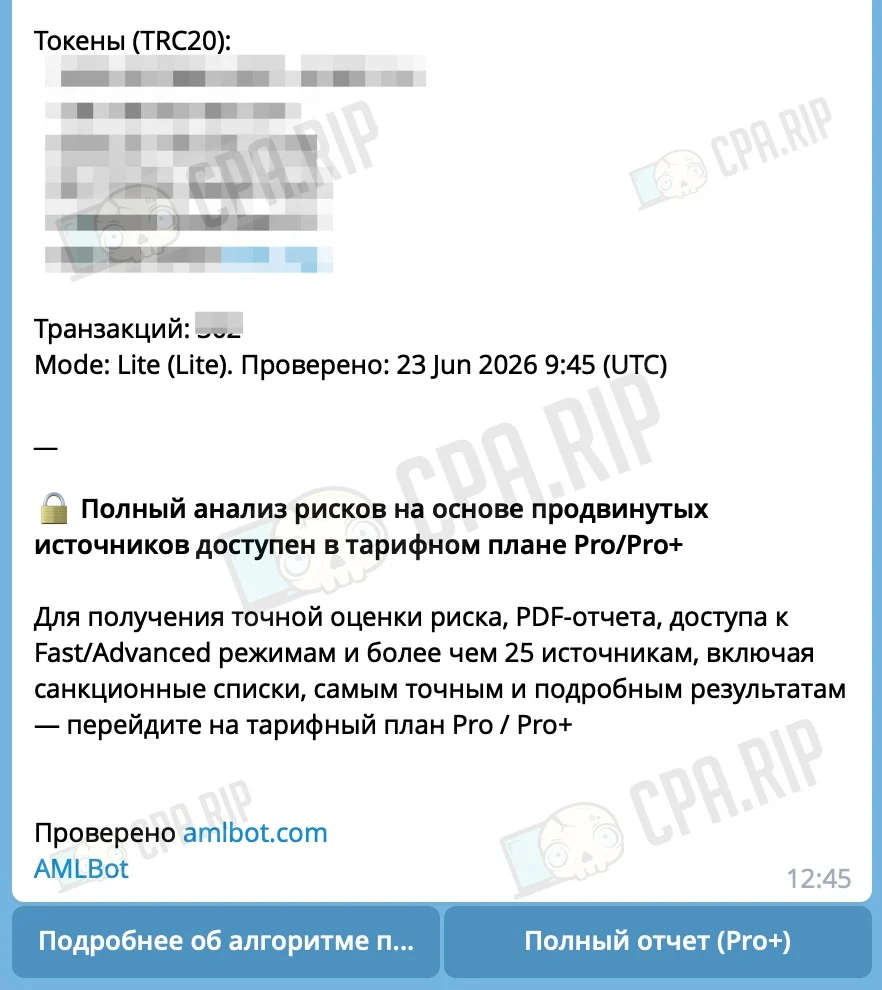
Example of a Free AML Check
On the website:
In the bot:
AML Crypto
- Website: btrace.amlcrypto.io
- Bot: @AMLCryptobot
AML Crypto is a service for AML checks of cryptocurrency addresses and transactions in networks. One free check is available.
Supported networks:
- Ethereum,
- Bitcoin,
- Tron,
- BSC.
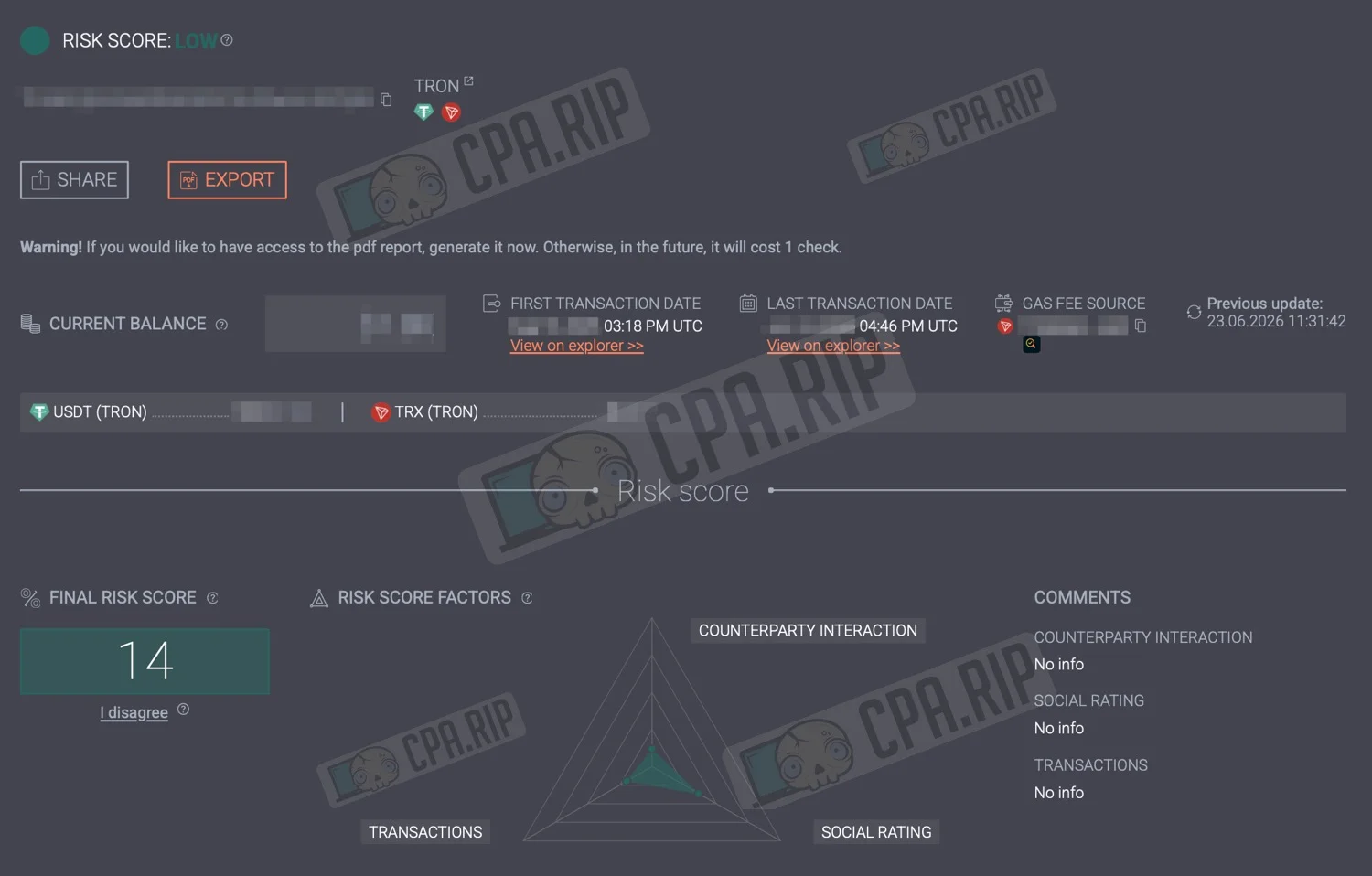
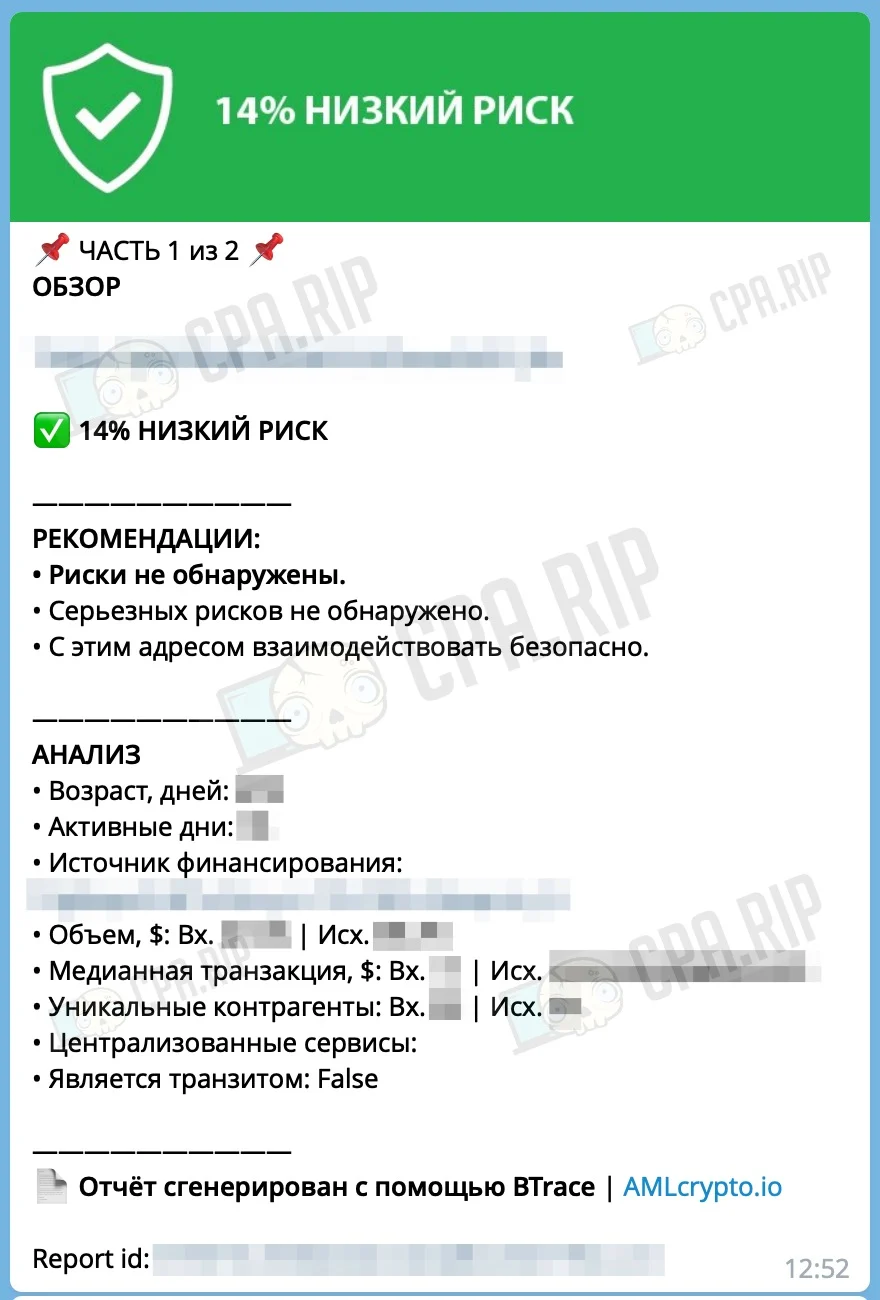
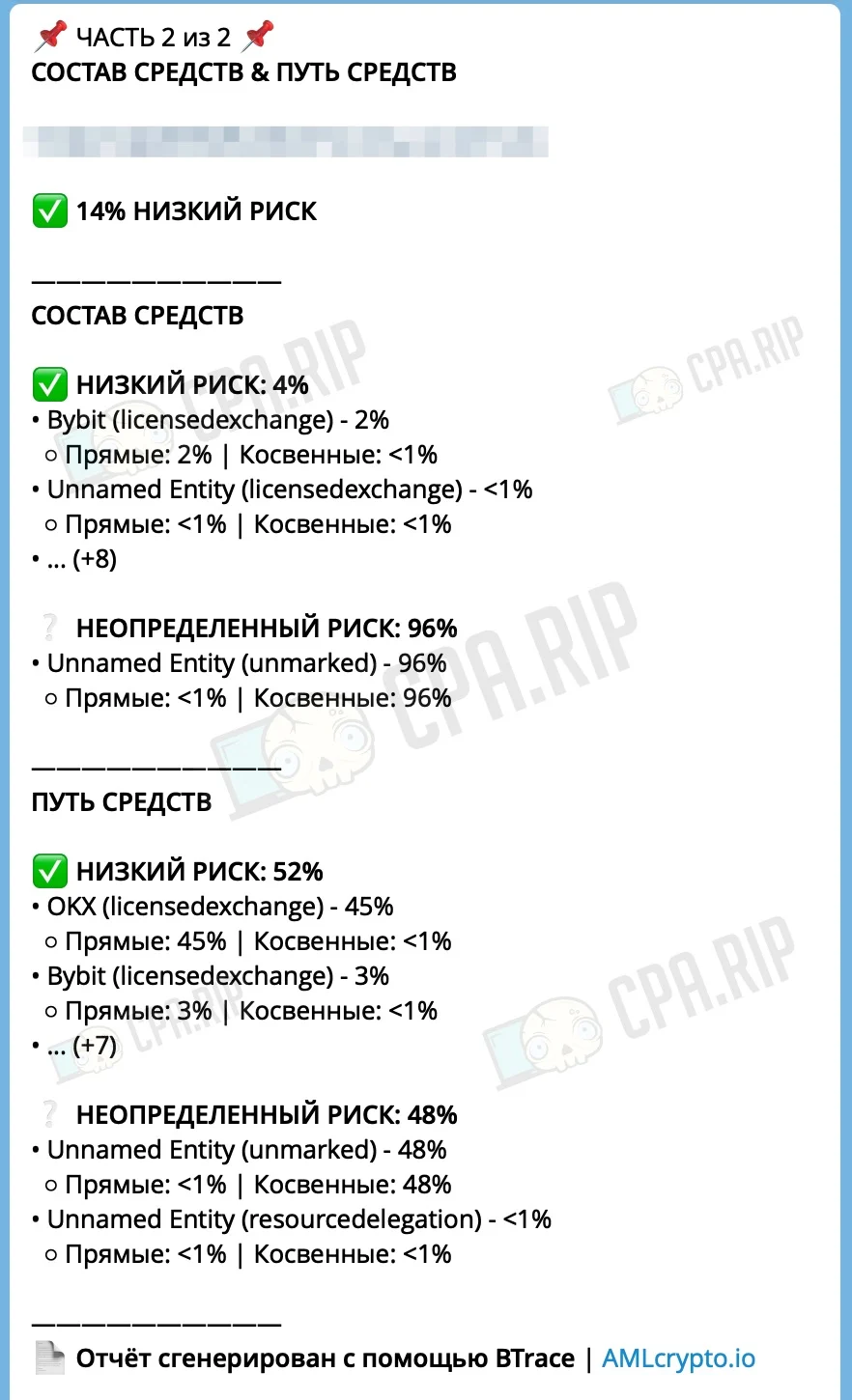
Example of a Free AML Check
On the website:
In the bot:
BitHide AML Crypto Check
- Website: bithide.io/aml-crypto-check
- Bot: @AMLBithideBot
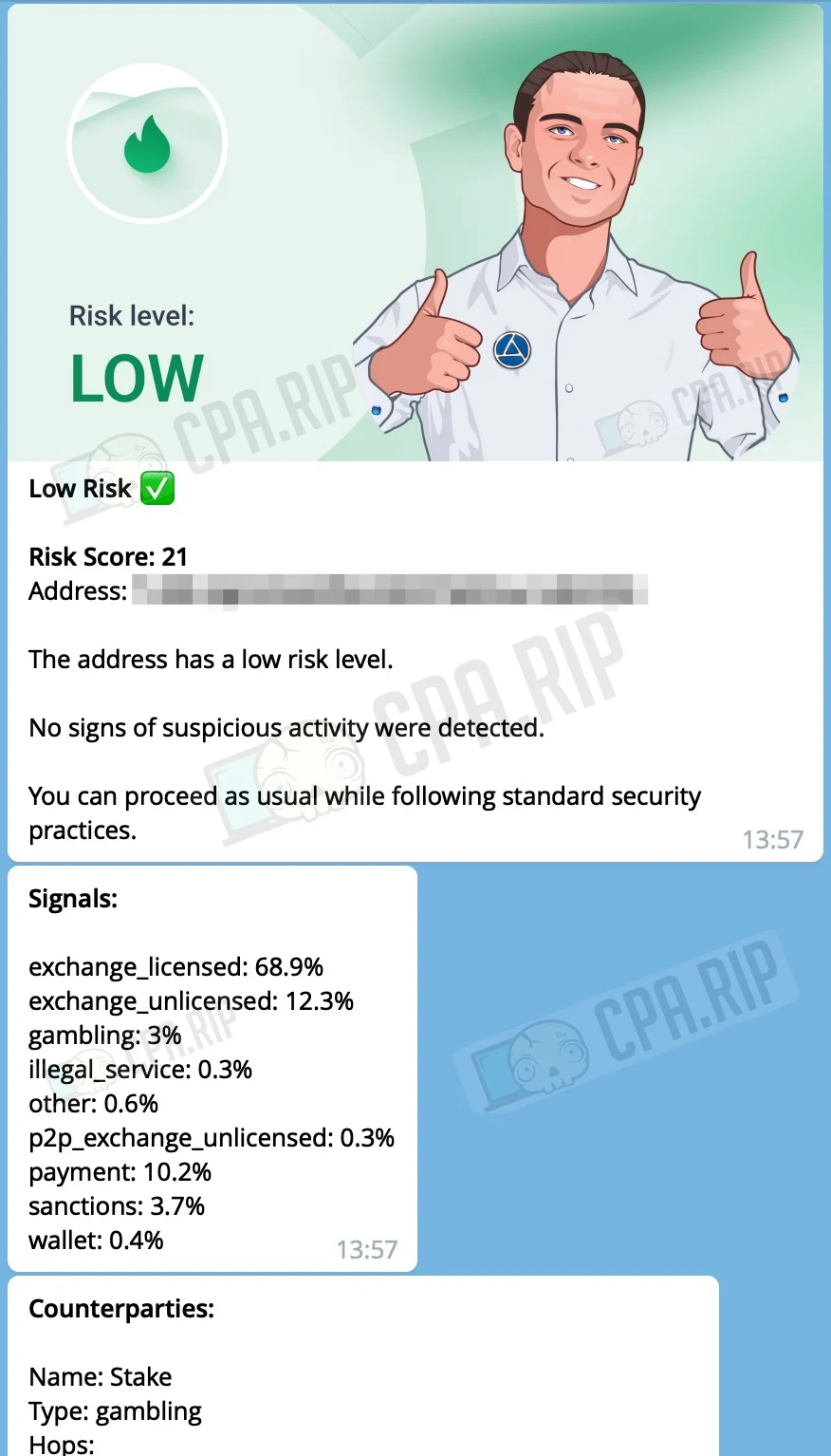
BitHide AML Crypto Check is a service for AML checks of cryptocurrency wallets and transactions. One free check is available through the Telegram bot.
Supported networks:
- Bitcoin,
- Tron,
- Ethereum,
- Litecoin,
- BSC.
Example of a Free AML Check
Scorechain
- Website: scorechain.com
- Bot: @ScorechainBot
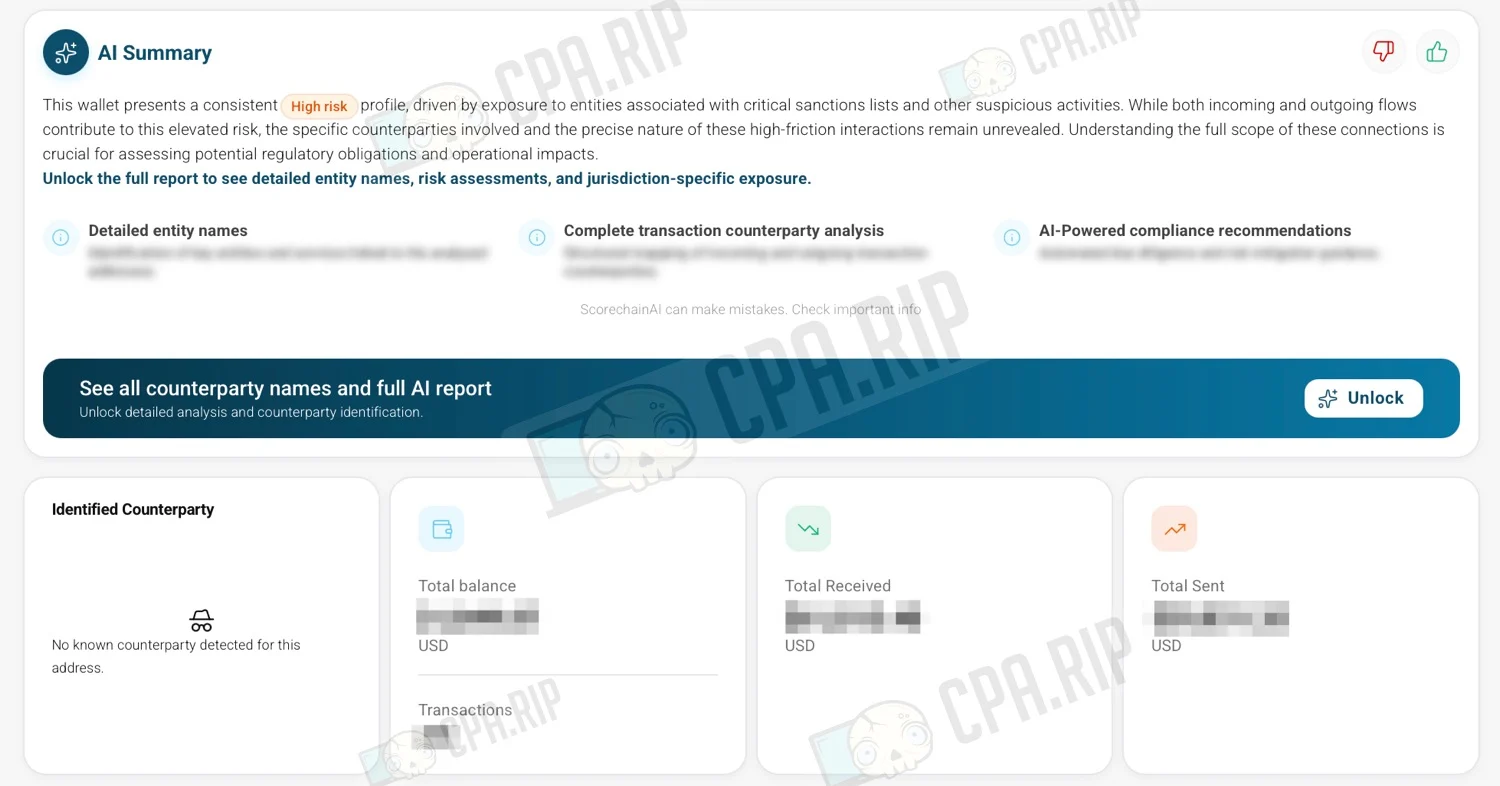
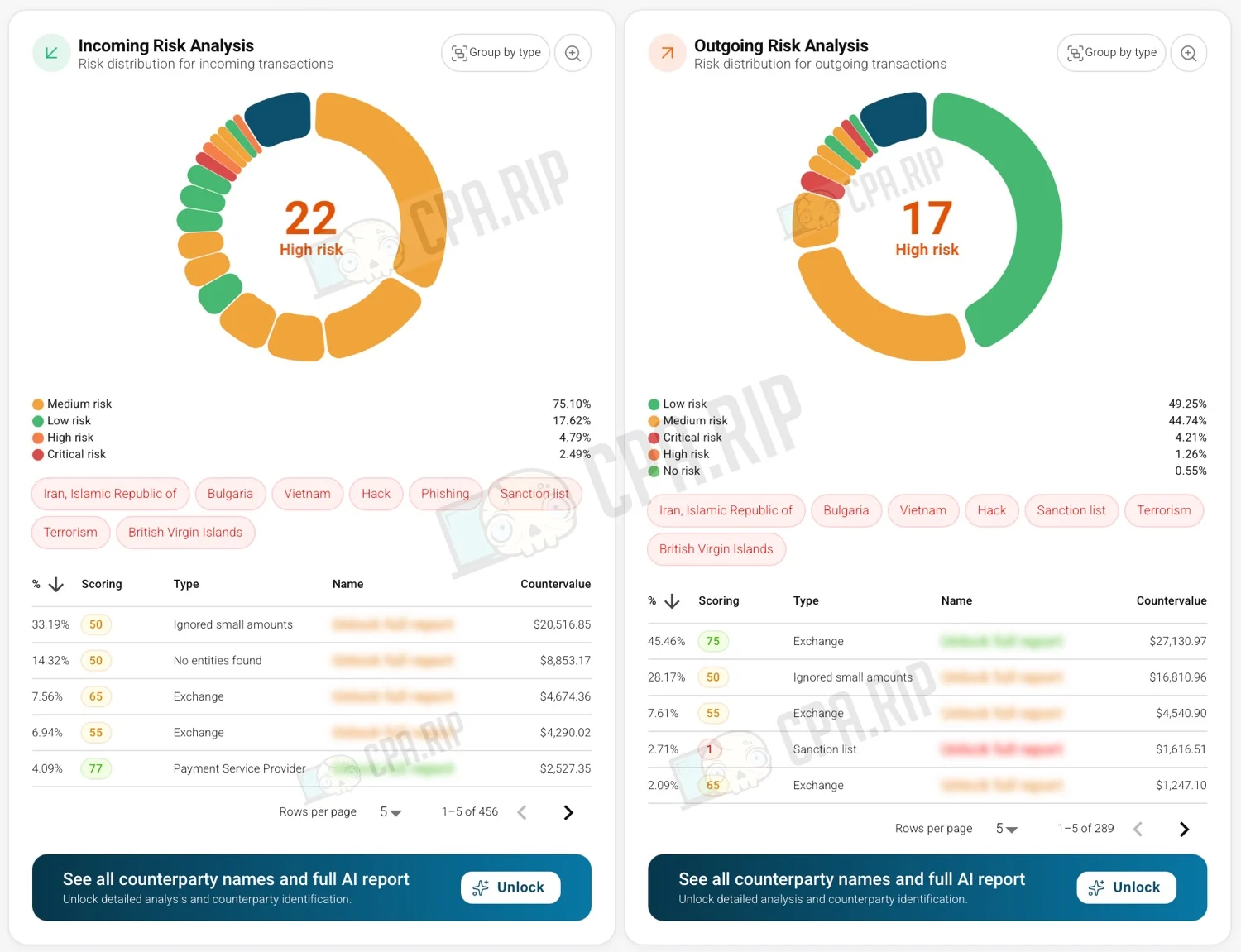
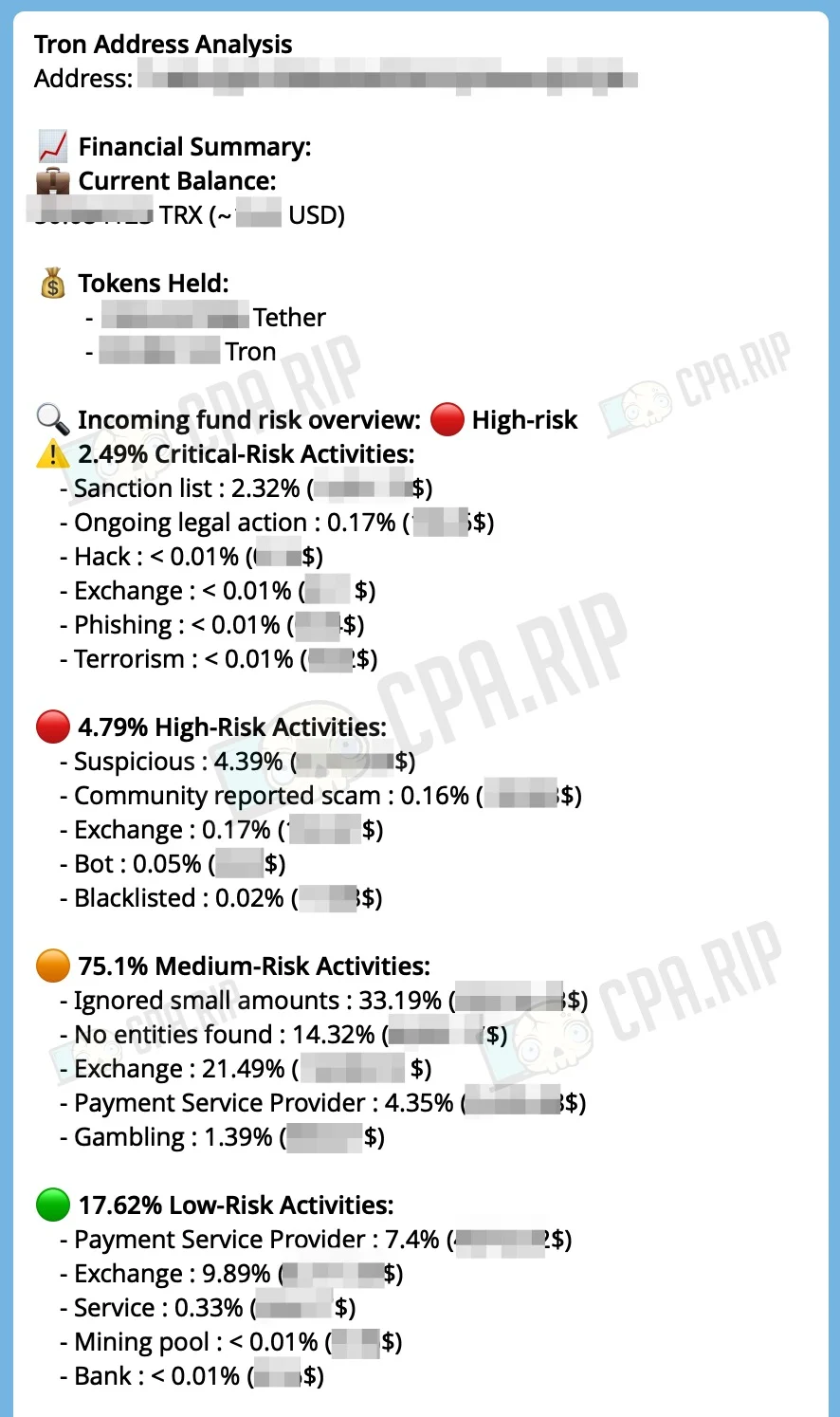
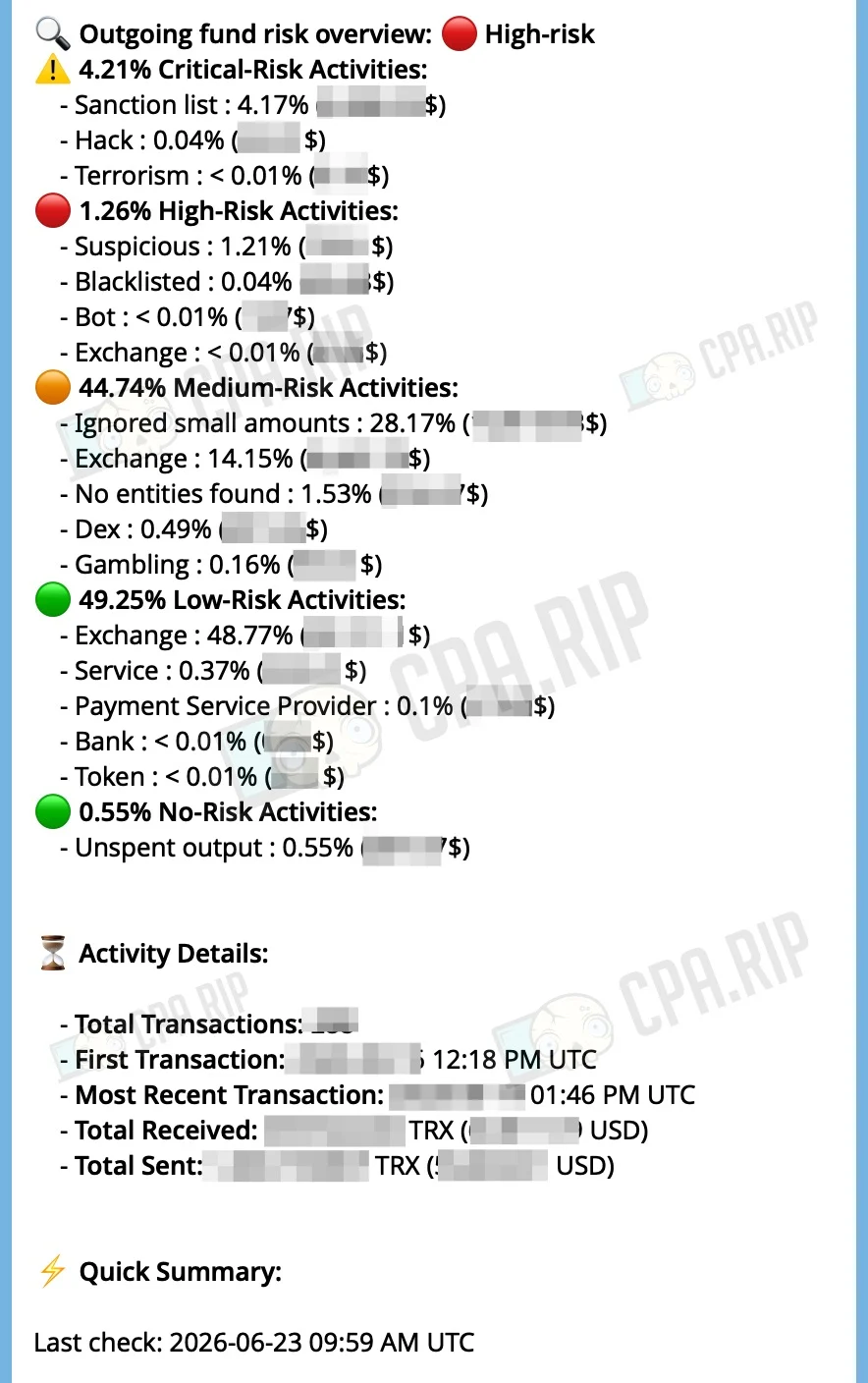
Scorechain is a cryptocurrency AML analytics and blockchain compliance service. A free AML wallet check and Telegram AML Bot are available for quick address risk assessment. Professional solutions for compliance teams are also available separately.
Supported networks:
- Bitcoin (BTC with Lightning Network detection)
- Ethereum (ETH and ERC20 tokens)
- Litecoin (LTC)
- Bitcoin Cash (BCH)
- Dash (DASH)
- XRP Ledger (XRP)
- Tezos (XTZ and FA2 tokens)
- Tron (TRX, TRC10, and TRC20 tokens)
- Binance Smart Chain (BNB, BSC, and BEP20 tokens)
- Polygon (MATIC and ERC20 tokens)
- Avalanche C-chain (AVAX and ERC20 tokens)
- Base (ETH & ERC20 tokens)
- Solana (SOL & SPL tokens)
- TON (TON & Jettons)
- Arbitrum (ETH & ERC20 tokens)
- Optimism (ETH & ERC20 tokens)
- Blast (ETH & ERC20 tokens)
- Dogecoin (DOGE)
- Ink (ETH & ERC20 tokens)
- Mantle (MNT & ERC20 tokens)
- Stellar (Lumens & Assets)
- Cardano (ADA and tokens)
- Algorand (ALGO and tokens)
Example of a Free AML Check
On the website:
In the bot:
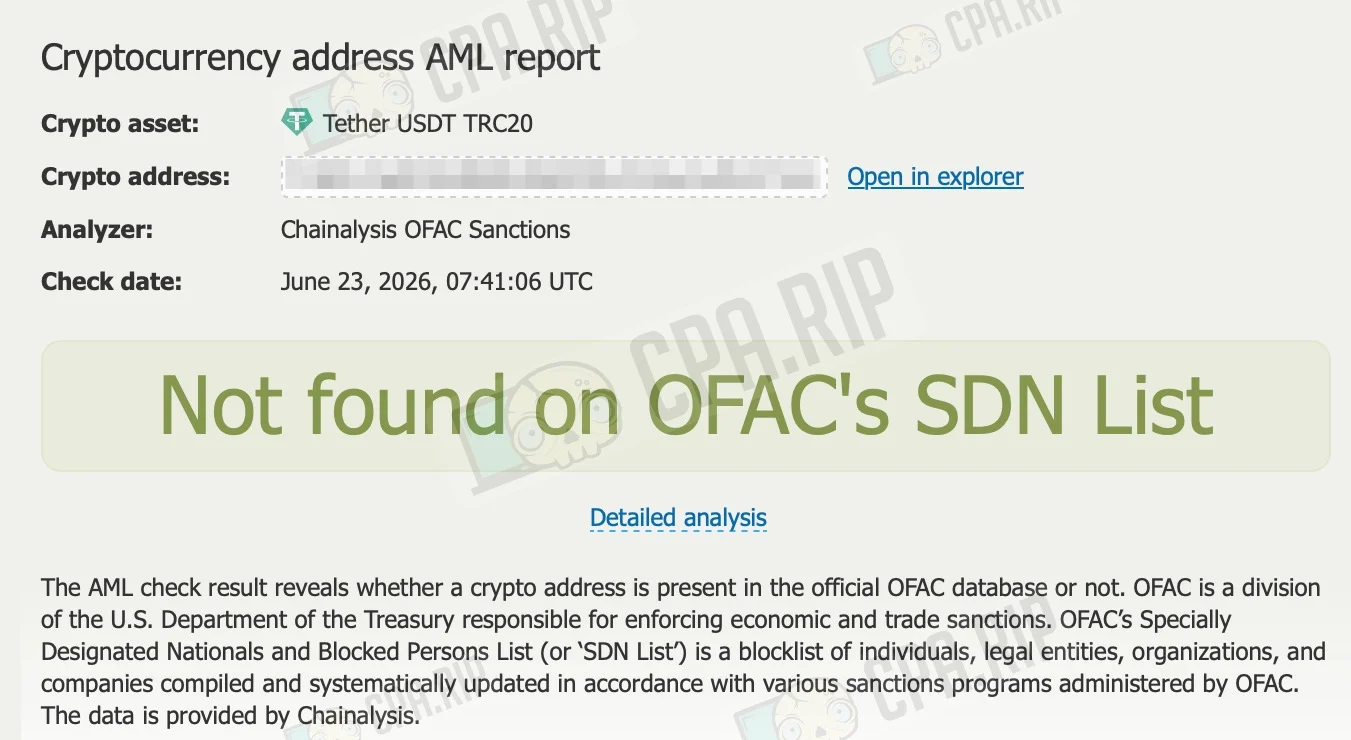
BestChange AML Analyzer
- Website: bestchange.ru/report
BestChange AML Analyzer is a form for checking a cryptocurrency address through several AML sources.
Available check options:
- Chainalysis OFAC Sanctions — free;
- CoinKYT — $0.50;
- GetBlock — $1.00;
- Match Systems — $0.50;
- Shard — $0.50;
- WamlApp — $2.00.
The service can be used to check an address before sending or receiving USDT. The free option is suitable for sanctions screening through Chainalysis OFAC Sanctions. Paid options provide additional checks through separate AML providers.
Example of a Free AML Check
When an AML Check Is Needed
AML checks are used before P2P deals, when receiving USDT from new counterparties, before sending funds to an exchange, when working with exchangers, OTC deals, contractors, and internal cryptocurrency payments.
For USDT, it is important to check the address in the specific network. For example, USDT TRC20, USDT ERC20, and USDT BEP20 operate on different blockchains, so the address and transaction need to be checked in the network where the transfer takes place.
How to Check a USDT Wallet
First, you need to determine the USDT network: TRC20, ERC20, BEP20, or another one. Then copy the wallet address or transaction hash, paste it into the AML check service, and start the analysis.
After the check, you need to assess the overall risk, categories of fund sources, and the share of funds from high-risk segments. If the risk is high, it is safer not to accept the transfer, request another address, or additionally check the origin of the funds.
What to Look at in the Check Result
The first thing to look at is the overall risk score. It may be displayed as a percentage, points, or risk statuses.
Risk categories are also analyzed: sanctions, scam, phishing, mixers, darknet, gambling services, hacked platforms, high-risk exchangers, unknown sources, and other groups. The higher the share of funds from risky categories, the higher the likelihood of problems when using the asset later.
Limitations of AML Checks
An AML check depends on the data of a specific service, because they use different databases, clustering algorithms, and scoring models, so the same address may receive different assessments. For large amounts, it is better to run checks in several services. Low risk does not guarantee the absence of questions from an exchange or exchanger, and high risk does not always mean that the funds have an illegal origin. The risk of an address may also change after new transactions.







Comments